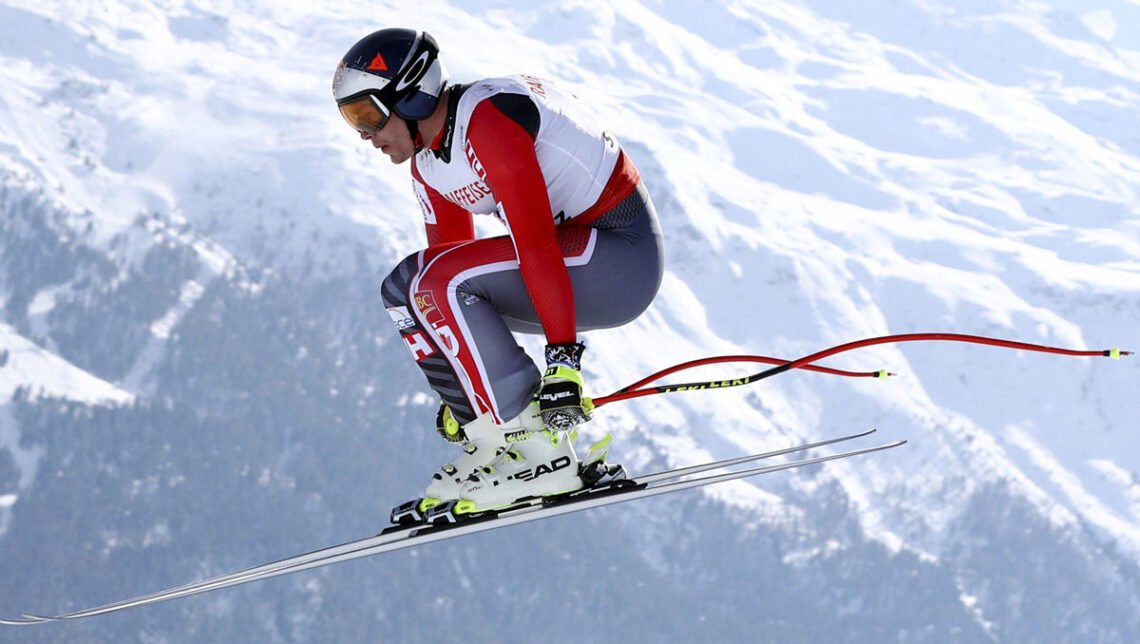
What does a man who has won nearly everything on ice—except an Olympic medal—have to teach the next generation? This isn’t just a trick question. It’s the paradox of Erik Guay, a Canadian skiing legend whose authority as a mentor is defined more by his incredible comebacks than his many victories.
His career is the stuff of legend. A two-time World Champion with 25 World Cup podiums, Guay stood at the pinnacle of a dangerous and unforgiving sport. But his journey from that peak to becoming a dedicated Erik Guay mentor is a story of profound transformation, offering a new model for elite athlete coaching.
This article goes beyond the headlines of his racing career. We’ll delve into how he is shaping future ski stars, exploring a unique ski training methodology forged in the crucible of injury, resilience, and an unparalleled understanding of the mental game required to win.
The Mind of a Champion: A Legacy Forged in Ice and Injury
To understand Erik Guay the mentor, you must first understand Erik Guay the survivor. His career wasn’t a simple highlight reel of victories; it was a masterclass in perseverance. He is Canada’s most decorated male alpine skier, but that title was earned through a relentless cycle of pain and recovery.
He endured an astonishing six knee surgeries and battled chronic back problems that would have ended most careers years earlier. Yet, this is the man who, at 35, became the oldest World Champion in alpine history at the 2017 St. Moritz event. That victory wasn’t just a win; it was a testament to a career built on mind over matter.
This experience is the foundation of his authority. He doesn’t just teach downhill racing technique; he teaches survival. He imparts the hard-won wisdom of a body pushed to its limits and a mind that refused to break. It’s a lesson in resilience in sports more valuable than any medal.
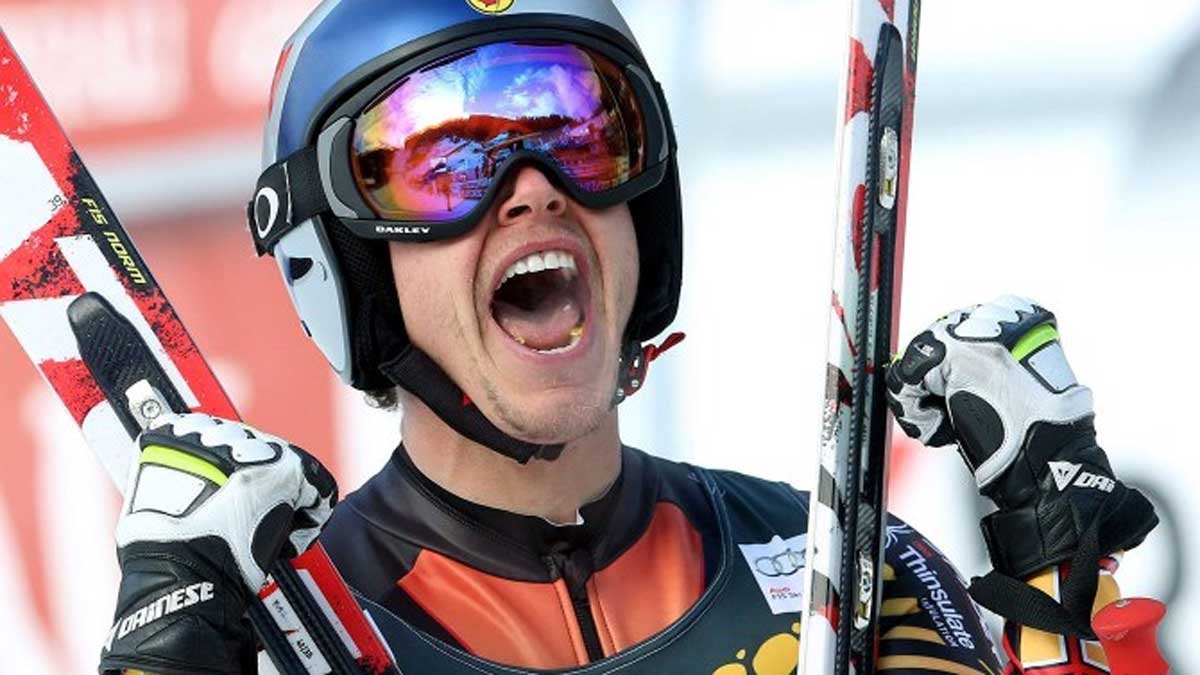
The Turning Point: Why a Champion Puts Others First
For every elite athlete, there comes a moment when the risks outweigh the rewards. For Erik Guay, that moment was brutally clear. In November 2018, during a training run at Lake Louise, he watched in horror as his teammate and friend, Manuel Osborne-Paradis, suffered a violent, high-speed crash.
The incident was a sudden, stark reminder of the sport’s unforgiving nature. For a 37-year-old father of four young daughters, the calculus of risk had irrevocably changed. He didn’t just withdraw from the race; he retired on the spot. In his own words, the decision was instant: “When Manny crashed, I thought I should just take the lift down.”
This wasn’t just an ending, but a powerful athlete to coach transition. Guay, who was inspired by the legendary “Crazy Canucks” of the 1980s, saw it as his turn to pass the torch. His move into mentorship wasn’t a quiet retirement; it was a conscious choice to “return the favour,” ensuring the next generation of Canadian skiers had the guidance he once looked up to.
Inside the Mentor’s Playbook: Erik Guay’s Coaching Philosophy
So, what does an Erik Guay mentor session look like? It’s far more than just tips on how to ski faster. His ski racing mentorship, now a key asset at Apex2100 International Ski Academy, is built on the principle of creating the “all-round athlete.”
His approach is deeply personal, directly shaped by his own brutal experiences. Having endured six knee surgeries, he possesses a unique and powerful perspective on injury prevention. He doesn’t just preach prehab and mobility; he teaches young athletes the crucial skill of listening to their bodies—a lesson he learned the hard way. This focus on long-term athlete development is a cornerstone of his mentorship.
Furthermore, Guay’s playbook is rich with psychological strategy. He leverages his own history of agonizingly close Olympic moments and high-stakes comebacks to mentor athletes on the mental game. He prepares them for the immense pressure of competition, helping them build resilience, maintain focus, and manage the crushing weight of expectation. As Apex’s Alpine Performance Director, Sasha Rearick, notes, “His achievements on the world stage, combined with his deep understanding of what it takes to compete at the highest level, will directly support our young athletes as they pursue their dreams of excellence.”
The Apex2100 Advantage: Crafting Stars at 2100 Meters
Erik Guay’s mentorship found its perfect home at Apex2100 in Tignes, France. This is no ordinary ski academy training program; it is an elite ecosystem designed to forge champions. Perched at a breathtaking 2100 meters, the academy offers year-round glacier access, providing an unparalleled training ground.
But it’s the holistic model that truly sets it apart. Apex2100 seamlessly blends a rigorous International Baccalaureate (IB) World School curriculum with world-class athletic training. This ensures that athletes are not just developing as skiers, but as well-rounded individuals prepared for life on and off the slopes.
Within this elite environment, Guay’s role is specific and impactful. As the Mentor-Coach for the men’s FIS athletes, he is not a distant figurehead. He is on the hill, working hands-on with an integrated team of coaches, educational specialists, and performance experts to implement his vision. He is a central figure in an institution dedicated to shaping future ski stars from the ground up.
The Champion vs. The Mentor: A Shift in Mindset
The transition from a world-class athlete to an effective alpine skiing coach is one of the most profound shifts in sports. It requires a fundamental change in perspective, moving from a world of intense self-focus to one dedicated to the growth of others. Erik Guay’s journey perfectly illustrates this evolution.
An elite athlete’s entire existence is geared towards personal performance and winning the next race. Success is measured in podium finishes and personal bests. For the mentor, however, the metrics of success are completely different. It’s about the mentee’s skill acquisition, their resilience in the face of failure, and their development as a person. The focus shifts from the self to the student.
This table breaks down the critical mindset shift that an Erik Guay mentor role demands, a change he has navigated with the same focus that once took him to the top of the FIS World Cup podium.
| Mindset | The Champion (Erik Guay the Racer) | The Mentor (Erik Guay the Coach) |
|---|---|---|
| Primary Focus | Personal performance, winning the next race. | Athlete development, long-term growth of others. |
| Measure of Success | Podium finishes, medals, personal bests. | Mentees’ skill acquisition, resilience, and character. |
| Handling Failure | Analyze personal error, focus on the next race. | Use failure as a teaching moment for the athlete. |
| Source of Knowledge | Intuitive, based on personal feel and experience. | Must articulate and transfer that knowledge systematically. |
| Motivation | Internal drive for personal glory and records. | External drive to nurture and elevate others. |
Frequently Asked Questions About Erik Guay
- 1. Did Erik Guay ever win an Olympic medal?
- No, Erik Guay never won an Olympic medal, though he came incredibly close. He finished fourth in the Super-G at the 2006 Turin Olympics, missing the podium by just one-tenth of a second. At the 2010 Vancouver Games, he finished fifth in both the downhill and Super-G, missing the Super-G bronze by a mere three-hundredths of a second.
- 2. Why did Erik Guay retire so suddenly?
- Erik Guay announced his immediate retirement in November 2018 after witnessing the severe training crash of his teammate, Manuel Osborne-Paradis. As a father of four, the incident was a stark reminder of the sport’s dangers, and he decided it was time to prioritize his family and his health over continuing to race.
- 3. How many World Championships did Erik Guay win?
- Erik Guay won two World Championship gold medals. He won the downhill title in 2011 at Garmisch-Partenkirchen and the Super-G title in 2017 at St. Moritz, where he also won a silver medal in the downhill.
- 4. What is Erik Guay doing now after retiring from ski racing?
- Since retiring, Erik Guay has remained a prominent figure in Canadian skiing. He serves on the Board of Alpine Canada, works as a mentor-coach for the Apex2100 International Ski Academy, and was instrumental in bringing the World Cup back to his home of Mont-Tremblant. He lives there with his wife and four daughters.
- 5. Who were the ‘Crazy Canucks’ and how did they influence Erik Guay?
- The ‘Crazy Canucks’ were a group of Canadian downhill racers in the late 1970s and early 1980s known for their fearless style. Guay has often cited them as his primary inspiration, stating they “set the bar for Canadian ski racing” and that he hoped his career would inspire the next generation in the same way.
A Legacy Beyond Medals
Erik Guay’s true legacy will not be defined by the Olympic medal that eluded him, but by how he is transforming his hard-won experience—the pain, the pressure, and the podiums—into a roadmap for the next generation. His mentorship is a rare and powerful blend of a champion’s grit and a survivor’s wisdom.
He is proving that the greatest victory for a World Champion mentor isn’t winning another race, but building the champions who come next. He is not just a former racer; he is an architect of the future of Canadian skiing.
For aspiring ski racers and fans of the sport, the path to greatness is about more than just talent. To see how champions are truly built, follow the journey of the athletes at Apex2100 and the living legacy of the ultimate Erik Guay mentor.