But all that snow comes with a catch. The weather in Whistler is a complex beast. It can deliver legendary powder days and brilliant blue skies, but it can also serve up challenging conditions. Understanding this weather isn’t just helpful; it’s the key to unlocking the perfect trip. It dictates when you should go, what you should pack, and how to stay safe.
This guide cuts through the confusion. We’ll dive deep into the science behind Whistler’s massive snowfall, break down the weather month by month, and give you the insider knowledge you need. From packing lists to safety tips, consider this your ultimate resource for planning your Whistler ski adventure around its most important feature: the weather.
Where is Whistler Ski Resort?
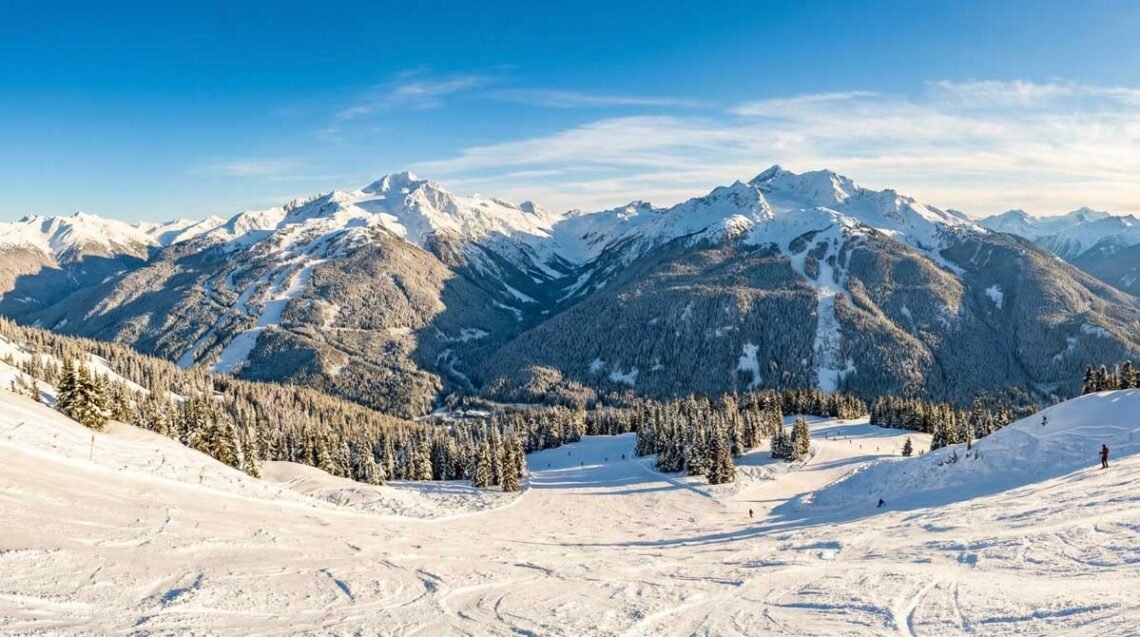
So, where exactly is this snow-covered paradise? Whistler Ski Resort is located in the heart of British Columbia, Canada. It’s a scenic two-hour drive north of Vancouver, making it surprisingly accessible for such a wild, mountainous region. The resort itself is nestled in the Fitzsimmons Range of the Coast Mountains, a massive chain of peaks that stretches along the Pacific coast.
The resort is made up of two distinct but connected mountains: Whistler Mountain, with a summit at 2,182 meters (7,160 feet), and Blackcomb Mountain, reaching 2,240 meters (7,347 feet). This high elevation is a critical piece of the weather puzzle. It’s what allows the resort to capture so much moisture from the nearby Pacific Ocean and turn it into the light, fluffy powder that skiers dream of. Spanning over 8,171 acres, it holds the title of the largest ski resort in North America, offering a seemingly endless playground for all skill levels.
This unique geographic position—a high-altitude resort sitting just 120 kilometers from the ocean—is the secret to its legendary winters. It’s a perfect storm of location, elevation, and Pacific moisture that creates the ideal conditions for epic snowfall, a topic we’ll explore next.
Why Whistler Gets So Much Snow
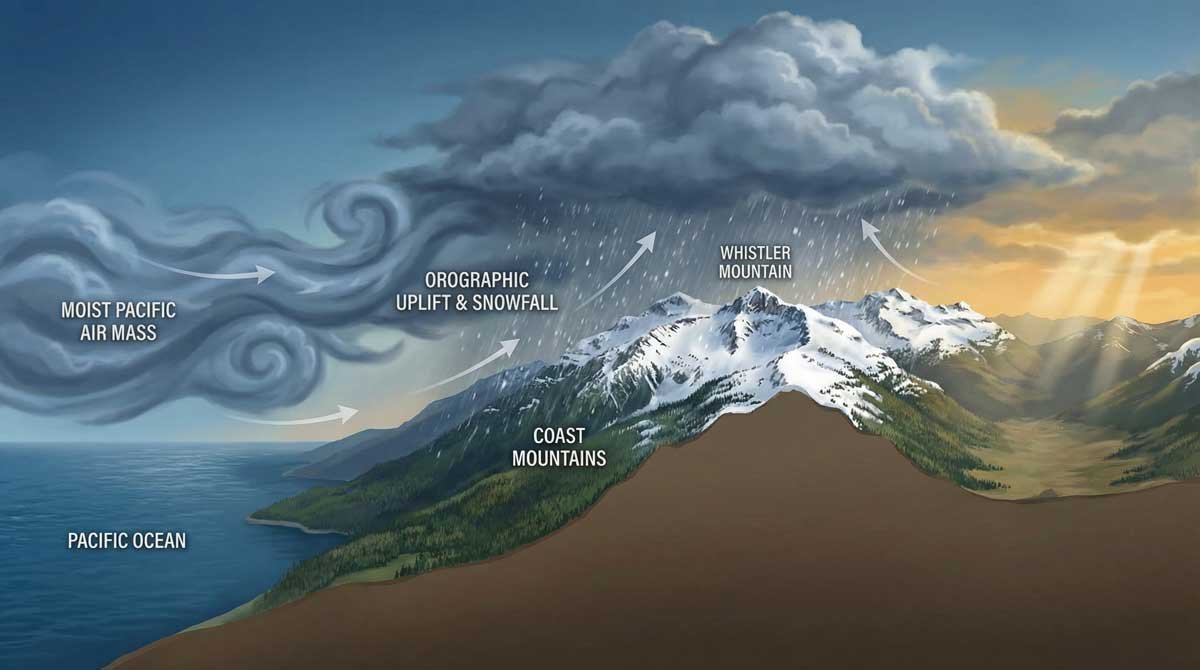
Whistler’s staggering annual snowfall of 11.7 meters (that’s 415 inches, or over 34 feet!) isn’t just a fluke. It’s the result of a perfect meteorological recipe. The resort’s location in the Coast Mountains of British Columbia is the primary ingredient. These mountains are the first major barrier for moist, Pacific air moving inland. As this air is forced to rise over the high peaks, it cools, condenses, and unloads massive amounts of precipitation.
This process, known as the orographic effect, is the engine of Whistler’s snow factory. The resort’s high elevation, with peaks soaring over 2,200 meters, ensures that most of this precipitation falls as snow, especially from November through March. Consistent storm systems rolling in from the Pacific Ocean provide a steady stream of moisture, feeding the cycle and blanketing the mountains in a deep, reliable snowpack that few other resorts in the world can match.
When compared to other famous Canadian resorts like Banff and Lake Louise, which receive around 300 inches of snow, Whistler stands out. While the Rockies offer colder, drier powder, Whistler’s coastal proximity gives it a sheer volume of snow that provides an exceptionally long and dependable ski season. It’s this unique combination of geography and meteorology that solidifies Whistler’s reputation as a true powder paradise.
Whistler Weather by Month: A Seasonal Guide
Navigating Whistler’s nearly 200-day ski season can be daunting. Do you crave deep winter powder or sunny spring laps? Each month offers a distinct personality. Here’s a breakdown to help you find your perfect time to experience Whistler Canada skiing.
November: Early Season Magic
November is for the eager. The resort often opens mid-month, and the vibe is electric. While not all terrain is open, an average snowfall of 249 cm (98 inches) builds a solid base on the upper mountain. You’ll find smaller crowds and great deals, making it a savvy choice for those who don’t mind a bit of unpredictability in the weather. Pack GORE-TEX; you might see rain at the base and snow up high.
December: The Festive Kick-Off
December is when winter truly arrives. The village glitters with holiday lights, and the mountains are coated in a festive blanket of white, with an average of 227 cm (89 inches) of fresh snow. The Christmas period is magical but also incredibly busy. If you plan to visit then, book everything—lessons, lodging, dinner reservations—well in advance. The early part of the month offers a sweet spot of expanding terrain and fewer people.
January: Peak Winter Powder
Welcome to the heart of the storm. January is for the powder purist. The mountain is hammered with consistent snowfall, averaging 2 to 2.5 meters (6.5 to 8 feet). This is when you’ll find those iconic images of skiers waist-deep in light, dry powder. Between storms, the skies can open up to reveal stunning, crisp bluebird days. It’s cold, with alpine temperatures often dipping below -10°C, but the rewards are immense.
February: The Deepest Days
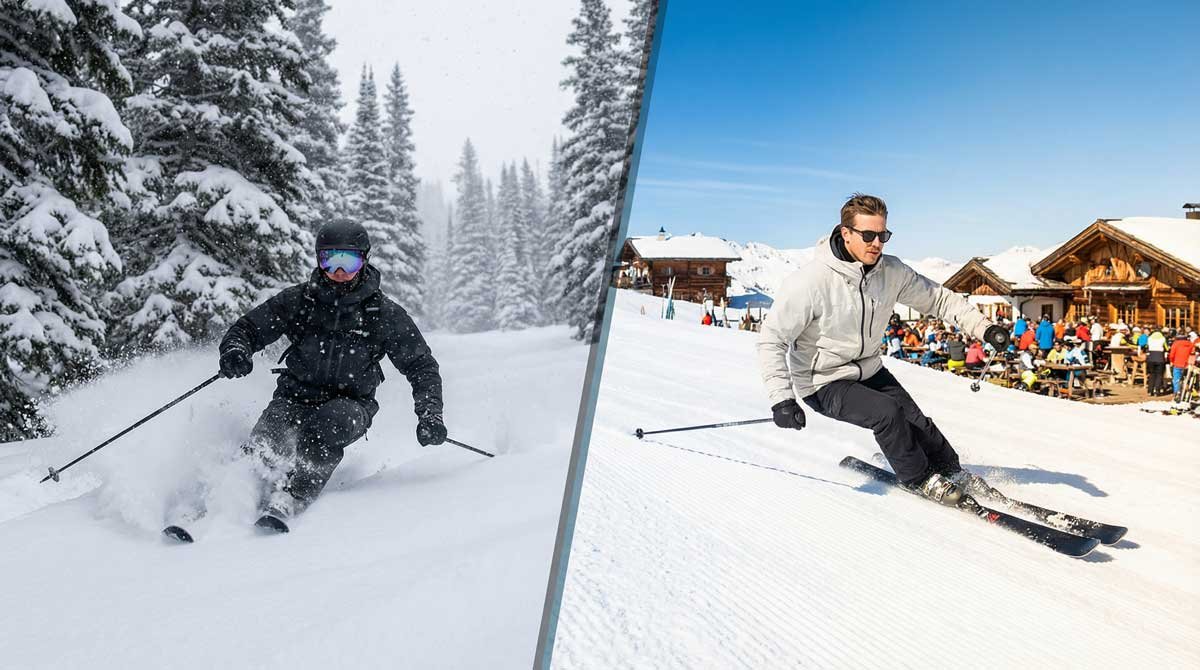
If January is the heart of the storm, February is its soul. This month often sees the deepest snowpack and the most powder days, with snowfall averaging an incredible 2 to 3 meters (6.5 to 10 feet). It’s the prime time for serious skiers and riders who live for deep turns. The secret is out, however, so expect peak season crowds and prices. This is the time to demo a pair of fat powder skis and experience Whistler at its most legendary.
March: The Best of Both Worlds
March offers a beautiful transition. You still get significant storms, with an average of 2 meters (6.5 feet) of snow, but the sun begins to show its face more often. The result? Surprise powder days followed by brilliant sunshine. The temperatures start to warm up, making for more comfortable days on the mountain. It’s a fantastic month for those who want a mix of serious skiing and a more relaxed, sunny spring vibe.
April: Spring Skiing Splendor
April is all about the sun and the smiles. The crowds thin out, the days are longer, and the patios in the village come alive. While snowfall is less, averaging 1 to 1.5 meters (3 to 5 feet), it often falls up high, refreshing the alpine. Lower down, the snow softens into perfect corn snow, ideal for carving. It’s a month of goggle tans, hero snow, and some of the best value of the season.
May: The Dual-Sport Finale
May is Whistler’s victory lap. The ski season is winding down, but the adventure is far from over. The upper mountain, particularly Blackcomb, often remains open for skiing well into the month. At the same time, the Whistler Mountain Bike Park opens, creating the unique opportunity to ski in the morning and bike in the afternoon. The weather is mild, the crowds are gone, and the energy is a celebration of mountain life.
Whistler Microclimate: Alpine vs. Valley Weather
Understanding Whistler’s weather requires thinking in layers. The conditions at the base of the mountain in Whistler Village (675 meters) can be dramatically different from what’s happening in the high alpine (over 2,000 meters). This is Whistler’s microclimate at play, and knowing how it works is crucial for a successful day on the slopes.
The key factor is the freezing level. This is the altitude at which the air temperature drops to 0°C (32°F). In deep winter, the freezing level often sits well below the valley, meaning everywhere from the village to the peak gets snow. However, especially in the shoulder seasons (November, April, May), the freezing level can rise. It might be raining in the village but dumping fresh powder in the alpine. Always check the freezing level on the daily snow report.
As a general rule, expect the temperature to drop about 0.65°C for every 100 meters you go up. This means the alpine can easily be 10°C colder than the valley. It also receives more wind and significantly more snow. While the valley might be socked in with clouds, the sun could be shining brightly above them in the alpine bowls. This is why layering your clothing is not just a suggestion in Whistler; it’s a necessity.
Weather Safety & Preparation: Skiing Smart in Whistler
Whistler’s wild weather is what makes it special, but it also demands respect. Being prepared for the mountain’s changing moods is fundamental to a safe and enjoyable trip. The raw power of the Coast Mountains means conditions can shift in an instant, and underestimating them can have serious consequences.
Avalanche safety is paramount, especially if you venture beyond the groomed runs. Whistler Blackcomb has a highly professional ski patrol that manages avalanche control within the resort boundaries, but the risk is never zero. Always obey rope lines and closures. If you plan to explore the backcountry, you must have proper training, carry the right gear (transceiver, shovel, probe), and check the daily avalanche forecast from Avalanche Canada before you go.
Cold exposure is another real danger. With alpine temperatures often dropping below -10°C (14°F), and wind chill making it feel even colder, frostbite can occur in minutes on exposed skin. Dress in warm, waterproof layers, and never use cotton as a base layer, as it holds moisture. Visibility can also drop to near-zero during a storm, creating whiteout conditions. In such weather, slow down, stay with a partner, and stick to runs with tree-lining for definition.
Packing Guide by Season: What to Wear for Whistler Skiing
Packing for Whistler is a science of layering. The right clothing system allows you to adapt to the mountain’s changing moods, from a frigid, windy alpine peak to a sunny, calm valley floor. Here’s how to build your kit based on the season.
Winter Essentials (November – March)
This is the time for your warmest gear. Think of your clothing as a three-part system. Your base layer, next to your skin, should be merino wool or a quality synthetic to wick moisture away. Your mid-layer provides insulation; a fleece or down-filled vest works perfectly. Finally, your outer shell—a waterproof and windproof GORE-TEX jacket and pants—is your shield against the elements. Don’t forget insulated gloves, a warm hat, a neck warmer or balaclava, and goggles with a low-light lens for storm days.
Spring Essentials (April – May)
As the sun gets stronger, you can shed some bulk, but layering remains key. You might switch to a lighter base layer and a thinner mid-layer. A waterproof shell is still crucial for spring storms and for protection from wet, slushy snow. This is the time for sunglasses, high-SPF sunscreen, and a lighter pair of gloves. Many skiers will carry a backpack to store a layer if they get too warm during the day.
Best Time to Visit Whistler: A Decision Guide
So, when is the absolute best time for your Whistler ski trip? The answer depends entirely on what you’re looking for. Whistler’s long season offers something for everyone, but the perfect time for a powder hound is very different from the ideal trip for a family on a budget. Here’s a simple guide to help you decide.
- For Deep Powder: If your dream is to be floating through waist-deep, light-as-air powder, book your trip between mid-January and the end of February. This is when the resort receives its heaviest and most consistent snowfall.
- For Best Value: To get the most bang for your buck, aim for the early season in November or the late season from April to May. You’ll find lower prices on everything from lift tickets to lodging and enjoy a mountain with far fewer crowds.
- For Sunshine and Good Times: If you love carving on perfectly groomed runs under a blue sky, March and April are your months. You get a fantastic mix of sunny days, still-excellent snow coverage, and a vibrant après-ski scene.
- For Families: The Christmas holidays in December offer a magical, festive experience, but be prepared for crowds. For a more relaxed family trip with better value and warmer weather, consider spring break in March.
Whistler vs. Other Canadian Resorts: A Weather Perspective
How does Whistler’s weather stack up against other iconic Canadian ski destinations like Banff and Lake Louise? While all three offer world-class skiing, their weather patterns are distinctly different. Whistler, as a coastal resort, gets significantly more snow—a whopping 415 inches on average compared to the 300+ inches in the Rockies. This maritime climate means a deeper and more reliable snowpack throughout a longer season.
The trade-off is that Whistler’s snow can be heavier and wetter, and the freezing level can fluctuate, sometimes bringing rain to the valley. Banff and Lake Louise, located deep in the continental climate of the Rocky Mountains, are known for their colder temperatures and lighter, drier “champagne powder.” However, their seasons can be shorter, and they don’t receive the sheer volume of snow that Whistler does.
| Resort | Annual Snowfall | Climate | Snow Quality |
|---|---|---|---|
| Whistler | 415 inches | Coastal/Maritime | Heavy, abundant, reliable |
| Banff/Lake Louise | 300+ inches | Continental | Light, dry, cold |
Reading Whistler Weather Forecasts: A Quick Guide
To truly master Whistler, you need to speak its language—the language of weather forecasts. Don’t just glance at the temperature. Look for these key metrics to make smarter decisions on the mountain. The official Whistler Blackcomb website and the RWDI alpine forecast are your best sources.
- Freezing Level: This is the most important metric. If the freezing level is at 1,000 meters and you are skiing at 2,000 meters, you’re in the snow zone. If it rises to 2,000 meters, the snow will be wet and heavy, or it might be raining.
- Alpine vs. Valley Temperatures: Always check both. A 10-degree difference is common and will dictate how you layer your clothes.
- New Snowfall (24hr): This tells you if it’s a powder day. Anything over 15 cm is great. Over 30 cm is epic.
- Wind Speed and Direction: High winds (over 40 km/h) can lead to lift closures, especially in the alpine. It also dramatically increases wind chill.
Frequently Asked Questions About Whistler Weather
- 1. What is the best month to ski in Whistler?
- The best month depends on your priority. For the deepest powder, January and February are unbeatable. For a mix of sunny days and good snow, March is fantastic. For the best value and fewest crowds, aim for early November or April.
- 2. How cold is it on top of Whistler Mountain?
- It’s significantly colder than in the village. In mid-winter, alpine temperatures often range from -7°C to -15°C (5°F to 19°F), not including wind chill. Always dress in warm layers and check the alpine forecast specifically.
- 3. Does Whistler, Canada have snow?
- Absolutely. Whistler is one of the snowiest ski resorts in North America, receiving an average of 11.7 meters (415 inches) of snow per year. Its long season runs from November to May, offering reliable snow conditions.
- 4. Is Whistler open for skiing yet?
- Whistler Blackcomb typically opens for skiing in mid-to-late November and closes in late May. For the most current operational status, always check the official Whistler Blackcomb website.
- 5. What is the freezing level and why does it matter?
- The freezing level is the altitude where the temperature is 0°C (32°F). It’s a critical metric in Whistler because it determines whether precipitation falls as rain or snow. A low freezing level (e.g., below 1,000 meters) is ideal for snow quality across the entire mountain.
Your Perfect Whistler Adventure Awaits
Whistler’s weather is the lifeblood of its legendary status. It’s a powerful force that shapes the mountains and defines the experience. By understanding its rhythms—the deep storms of January, the sunny afternoons of April, the critical importance of the freezing level—you transform from a simple visitor into a savvy mountain traveler. You’re no longer just hoping for good conditions; you’re planning for them.
Whether you come seeking the thrill of a powder day or the simple joy of a perfectly groomed run under a blue sky, Whistler has a season for you. The key is to align your expectations with the mountain’s reality. Use this guide to choose your perfect time, pack the right gear, and read the signs the mountain gives you. Your ultimate Whistler ski resort adventure, perfectly in tune with the weather, is waiting.
References & Resources
- Whistler Blackcomb Official Website – Official resort information, conditions, and booking
- Tourism Whistler Weather & Snow Report – Real-time weather and snow forecasts
- Wikipedia – Whistler Blackcomb – Historical and technical information
- Avalanche Canada – South Coast Forecast – Avalanche risk assessments
- OnTheSnow – Whistler Snow Report – Daily snow and weather updates