Skiing is easier to learn and snowboarding is easier to get good at, and almost everyone who does both agrees on that split. You will make real turns on skis your first morning; on a snowboard you will spend two or three days falling before anything clicks.
That one-line answer hides the question that actually matters, which is not about the sports at all. It is about you: how many days you have, how old your knees are, whether you have ever stood on a skateboard, and who you are going with. Work through those and the choice usually makes itself.
The First Week, Day by Day
The two learning curves are shaped differently, and the shape decides everything about a short trip:
| Stage | Skiing | Snowboarding |
|---|---|---|
| First morning | Snowplow stops and first turns on the beginner slope | Balance and edge drills, frequent falls, sore wrists and tailbone |
| Day 2–3 | Riding lifts, exploring green runs | The famous “click”: edges start linking into turns |
| End of week 1 | Comfortable on most easy and some intermediate runs | Getting down easier runs with occasional falls |
| Season and beyond | Technique keeps demanding refinement for years | Progression accelerates; steeps and powder come sooner |
The pattern comes straight from people who teach and ride both. Phil Teare of The Ski Gathering, one of the rare instructors equally split between the two sports, describes the first snowboard week as an investment that pays off in week two, while a first ski week is fun almost from the start. The community version of the same conclusion is blunter. Asked whether skiing is easier than snowboarding, the top answer on r/snowboardingnoobs, a forum of snowboarders, reads in full:
“Short answer, yes. Long answer, yes.”
– r/snowboardingnoobs, January 2026 (220 upvotes)
Why Skiing Feels Easier on Day One
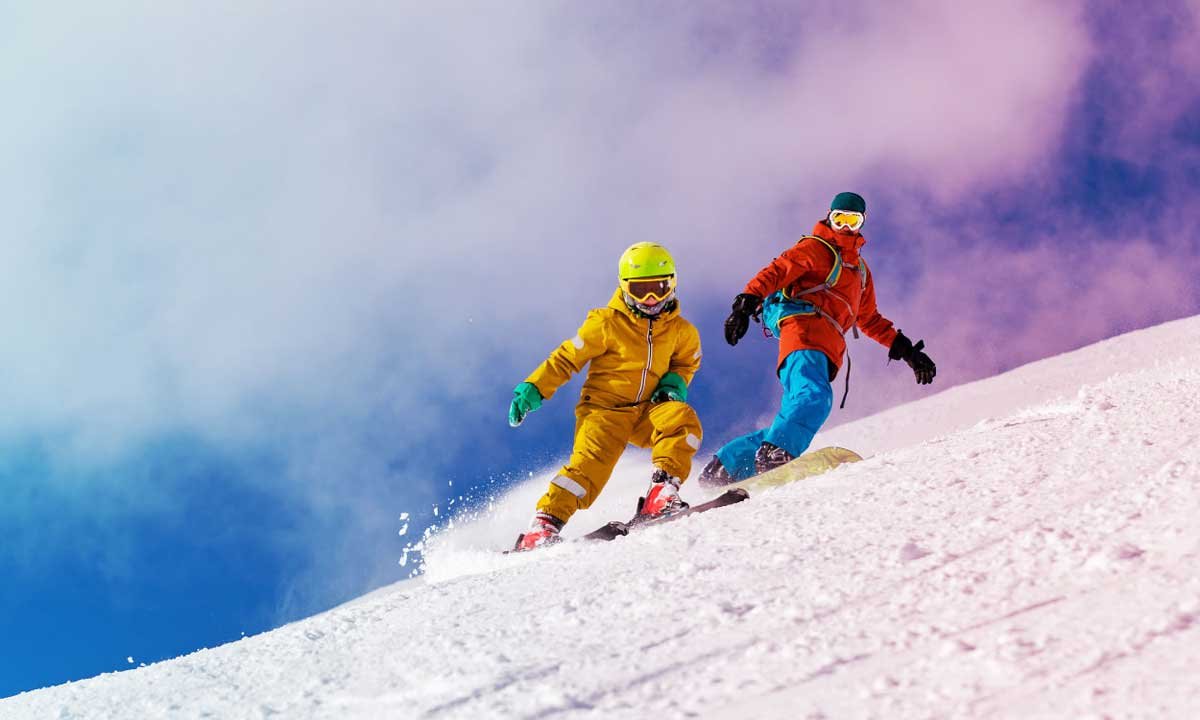
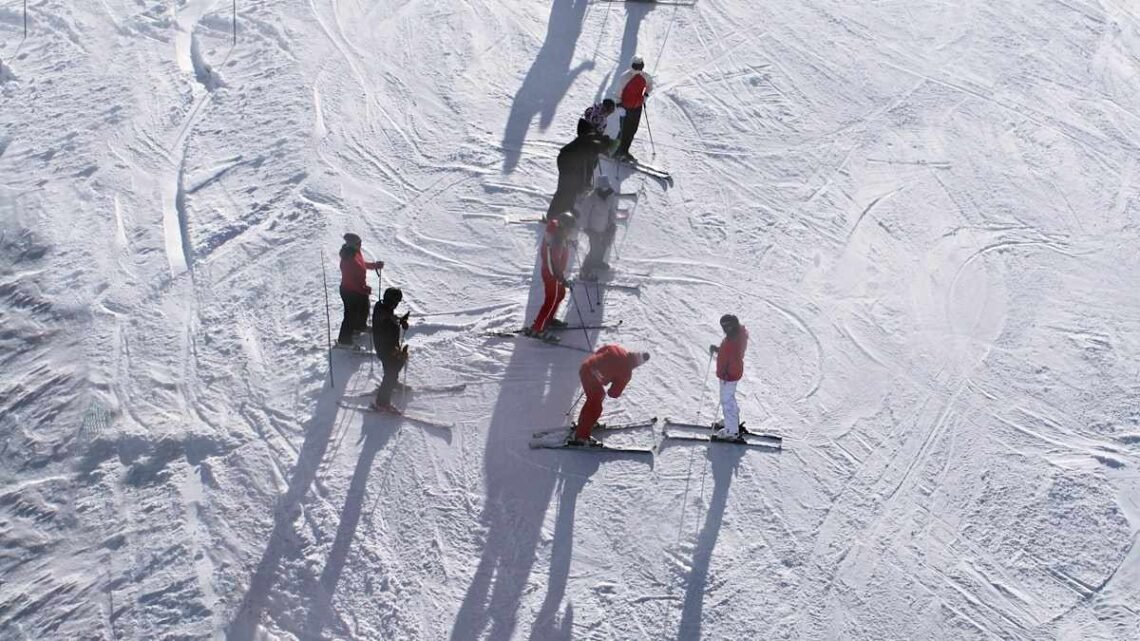
The mechanics stack in skiing’s favor at the start. You face forward, the way your body already knows how to move. Your legs work independently, so a wobble on one side gets caught by the other. Poles add two more balance points, and the snowplow gives you a brake within the first hour that requires no technique at all, just pushing your heels apart.
A snowboard takes all of that away at once. You stand sideways, both feet bolted to one board, with no poles and only two edges, and the price of missing an edge is the ground. The falls themselves are part of why day one exhausts people; most of a first snowboard session is spent standing back up.
The mountain itself also sides with skiers early on. Chairlifts scoop a skier up and release them with no drama, while a snowboarder has to unclip the back foot and ride off one-footed, which is why the top of every chairlift has a small collection of fallen beginners. Flat sections mean poling along on skis and unclipping to walk on a board. T-bars and button lifts, still common in Europe, are genuinely hard on a snowboard; even competent riders blow the takeoff on a vicious one.
Where Snowboarding Wins
Give the board a week and the ledger starts flipping. Once turns link, snowboard progression outruns skiing: the technique that gets you down a groomed blue is much closer to the technique for steeps and powder, so the jump to advanced terrain is smaller. Skiing is the deeper technical well; strong skiers spend decades chasing a cleaner turn, which is either the sport’s charm or its curse depending on your temperament.
Comfort is not close. Snowboard boots are soft, warm, and walkable; ski boots are the most uncomfortable footwear most people ever buy, and the walk to the lift in them is its own sport. Off-piste, a snowboard floats through powder with technique that feels like a natural extension of groomed-run riding, while powder skiing initially feels like starting the sport over. And for anyone coming from a skateboard or surfboard, the sideways stance is already wired in, which erases most of the brutal first days.
Deciding by Your Situation
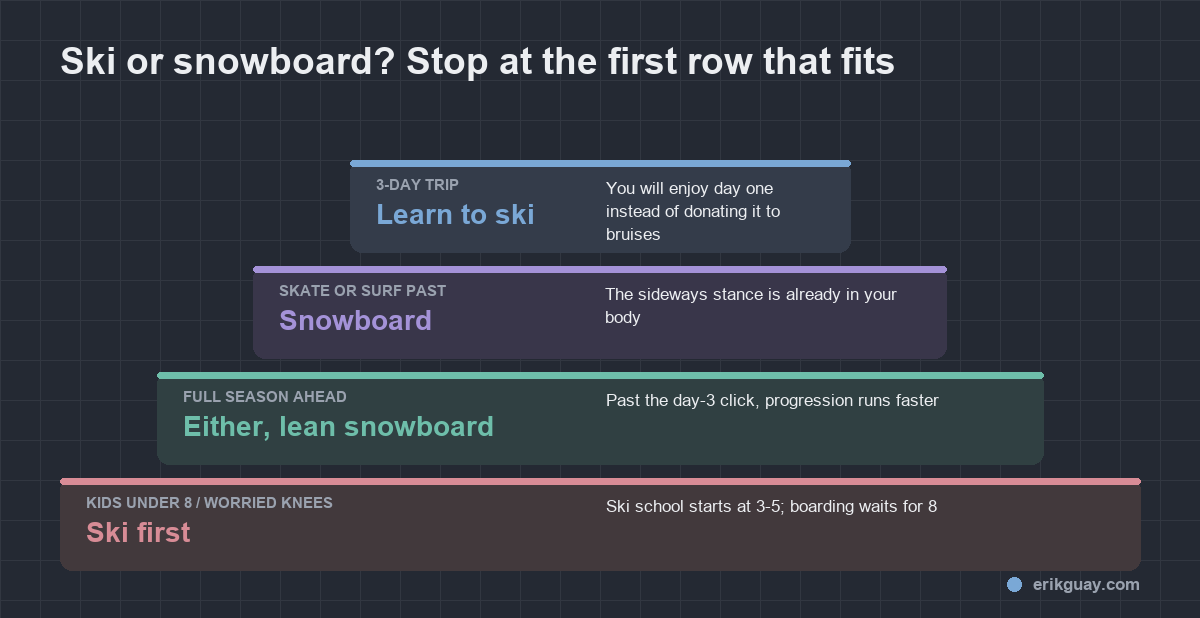
When beginners ask skiing vs snowboarding which is easier for their specific trip, the useful reply is a short checklist. Run yourself down this list and stop at the first row that fits. A three-day trip means ski: you will actually enjoy the trip instead of donating it to bruises. A full season or a multi-year plan tilts toward snowboard, since the hard part is short and the progression payoff is long. A skateboard or surf background says snowboard. Traveling with kids under about 8 means ski, because ski school takes children from age 3 to 5 while snowboard instruction generally starts years later. Learning alongside friends who already ride one sport, pick theirs; the chairlift conversations and the waiting-around problem both get better.
Age 30-plus with a desk job deserves its own row. Falling is the whole cost of learning to snowboard, and falling costs more at 35 than at 16. Plenty of adults still choose the board for the knees’ sake, like this skier-turned-rider explaining the switch:
“Not 20 but I did ski for about 5 then switched . My knees feel way better and I have way more confidence on the mountain, it just feels more natural for me and my joints. I also don’t want to be 40 and blow an ACL so snowboarding is better for that.”
– r/snowboarding, February 2026 (10 upvotes)
Whichever way you land, book a lesson with an actual instructor. The saddest recurring thread in every beginner forum is a relationship strained by a partner who tried to teach, and an instructor gets you further in two hours than a patient friend does in two days. If you stay torn, spend half a day trying the other sport; lift tickets cost the same either way and the experiment answers the question better than any article.
Injuries: The Honest Split
Neither sport is the safe one; they just break different things. A review of snow-sport injury data on PubMed found overall injury rates in snowboarders remain higher than in skiers, with the wrist as the most common snowboard injury and ACL sprains as skiing’s signature damage. The wrist gap is a beginner problem specifically, because beginners fall constantly and instinctively catch themselves on their hands, which is why wrist guards are the single best purchase a new rider can make, along with padded shorts and a helmet.
Skiing concentrates its risk in the knees: legs that can move independently can also twist independently, and a binding that fails to release in a slow fall puts the whole load on the ACL. For a first-timer at beginner speeds, the honest summary is that the snowboarder will hurt more that week in small ways, the skier carries slightly more of the rare-but-serious knee risk over the years, and a lesson plus protective gear moves the odds more than the choice of sport does.
Skiing vs Snowboarding Which Is Easier: FAQ
Who gets hurt more, skiers or snowboarders?
Snowboarders get injured at a higher overall rate, driven by beginner wrist injuries from falls, according to injury surveillance data indexed on PubMed. Skiers see fewer injuries overall but more knee ligament damage, since skis load the ACL in twisting falls that snowboards’ fixed stance largely prevents.
Is a skier or a snowboarder faster?
Skiers are faster. The speed-record gap is wide (skiing’s record sits above 250 km/h, snowboarding’s well below), and on ordinary groomed runs a tucked skier outruns a boarder while feeling more stable doing it. For beginners the difference is irrelevant; both will and should be slow.
Is snowboarding more exhausting than skiing?
In the first days, yes, because a beginner snowboarder spends the day falling and standing back up, which is its own workout. Once both riders are competent the effort evens out, with skiing loading the thighs harder and snowboarding demanding more from the core.
Is skiing or snowboarding more fun?
People who do both call it a tie that depends on the day: skis win for covering ground fast on groomed runs and lazy cruising days, boards win for playful terrain and powder. Fun follows competence in either sport, which is one more argument for picking whichever you can get competent at within the days you have.
So: count your days, check your knees, remember your skateboard. If the answer is still fuzzy, learn to ski this trip, try a board for half a day once you are comfortable on snow, and let the mountain settle the argument.