Did you know that an estimated 7 out of 10 skiers are on the wrong ski length? It’s a staggering statistic, but it highlights a common frustration. You’ve finally decided to invest in your own gear, stepping away from the unpredictability of rental equipment. You walk into a ski shop, full of excitement, only to be confronted by a wall of hundreds of skis, all in different lengths, shapes, and colors. The initial thrill quickly turns into a paralyzing wave of confusion, dominated by a single, nagging question: what length skis do I actually need?
The Foundation: Decoding the Height-Based Sizing Rule
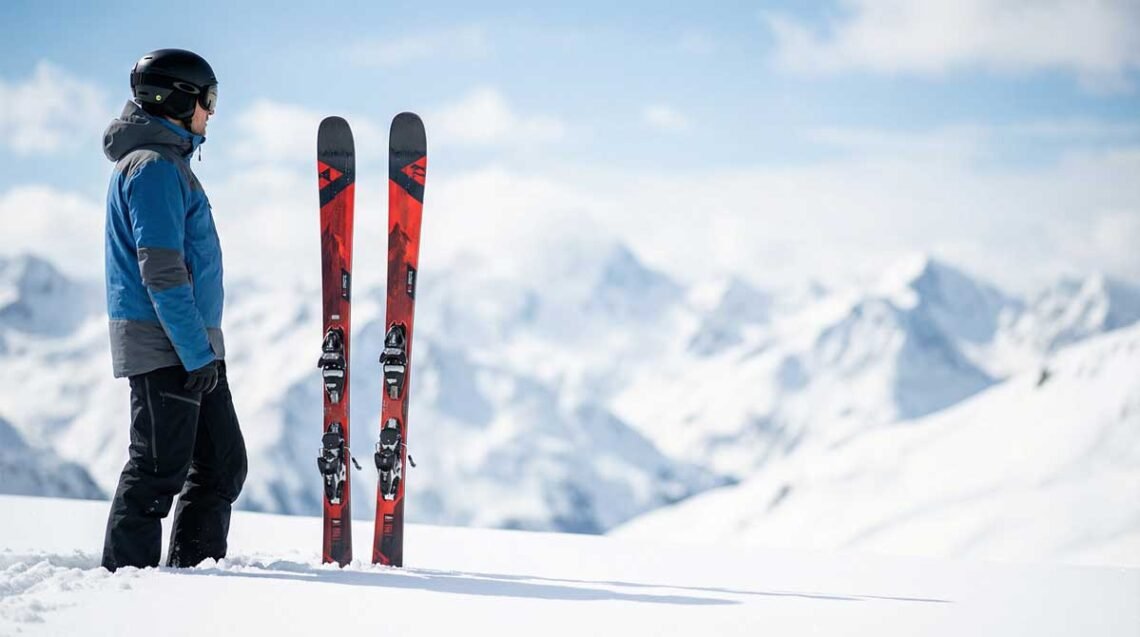
Before we dive into the nuances of weight, terrain, and ski design, we need to start with the fundamental principle of ski sizing: your height. For decades, the most common piece of advice you’ll hear is to stand a pair of skis upright and see where the tip lands in relation to your face. This visual check is a surprisingly effective starting point, providing a solid foundation that we can then refine with more specific factors.
The Chin-to-Nose Rule: Your Starting Point
The classic rule of thumb states that for the average adult skier, the correct ski length should fall somewhere between your chin and the top of your head. This range provides a safe and effective window for the vast majority of recreational skiers. A ski that reaches your chin will generally be more maneuverable and easier to control, while a ski that reaches the top of your head will offer more stability and float. Think of this as your personal sizing spectrum. Where you fall on that spectrum depends on the more detailed factors we’ll explore shortly.
Adjusting for Your Ability Level
This is the first and most critical refinement to the height rule. Your experience and confidence on the snow directly impact how a ski will feel and perform. A length that’s perfect for an expert could be a nightmare for a first-timer.
Here’s how to adjust the height rule based on your ability:
- Beginner Skiers: If you are new to the sport or still working on linking smooth, controlled turns, you should aim for a ski length that is on the shorter end of the spectrum, typically reaching your chin. Shorter skis are significantly easier to pivot and maneuver, which helps build confidence and makes the learning process far less intimidating. They are more forgiving of mistakes and require less physical effort to initiate a turn.
- Intermediate Skiers: Once you are comfortable on all green and most blue runs, and can confidently link parallel turns, you can start to move up in length. For intermediates, a ski that reaches somewhere between your nose and eyebrows is the ideal sweet spot. This length provides a great blend of maneuverability for exploring more varied terrain while offering increased stability as your speed and confidence grow.
- Advanced & Expert Skiers: If you can ski the entire mountain with confidence, from steep, icy groomers to deep powder bowls, you’ll benefit from a longer ski. Advanced and expert skiers should look for a length that reaches from their forehead to the top of their head, or even slightly longer. This additional length provides a larger platform, which translates to superior stability at high speeds, better floatation in soft snow, and more power to charge through variable conditions.
From Visuals to Centimeters: A More Precise Measurement
While the visual check is a great starting point, ski shops and manufacturers work in centimeters. To translate the height rule into a more precise measurement, you can use a simple formula. For a quick estimate, especially for beginners, you can take your height in centimeters and subtract a certain amount.
A Simple Formula for Beginners:
Your Height in cm – 15 cm = A Good Beginner Ski Length
For example, a person who is 175cm tall (approximately 5’9″) would get a good starting length around 160cm. This formula provides a conservative length that prioritizes control and ease of use. As you progress, you will likely add 5-10cm to this initial length.
To provide a clearer picture, let’s look at some real-world examples that combine the height rule with ability level adjustments:
| Skier Height | Beginner (Chin) | Intermediate (Nose) | Advanced (Head) |
|---|---|---|---|
| 5’0″ (152cm) | 140-145 cm | 145-152 cm | 152-158 cm |
| 5’4″ (163cm) | 150-155 cm | 155-163 cm | 163-170 cm |
| 5’8″ (173cm) | 160-165 cm | 165-173 cm | 173-180 cm |
| 6’0″ (183cm) | 170-175 cm | 175-183 cm | 183-190 cm |
| 6’4″ (193cm) | 180-185 cm | 185-193 cm | 193-200 cm |
This table provides a general guideline. Remember that these are starting points, and the next sections will help you dial in your perfect length with even greater precision.
Beyond the Basics: 4 Critical Factors That Fine-Tune Your Ski Length

If choosing the right ski length was as simple as measuring your height, this article would end here. But the mountain is a complex environment, and the perfect ski is one that complements not just your body, but your unique approach to sliding on snow. Height gets you in the ballpark, but it’s the next four factors—ability, weight, ski design, and terrain choice—that will truly dial in your ideal length and unlock your full potential. Think of yourself as a pilot in a cockpit; height sets the baseline altitude, but these are the critical instruments you’ll use to navigate the skies with precision and confidence.
1. Your Skiing Ability: The Most Important Adjustment Dial
More than any other factor, your current skill level dictates how you should adjust your ski length. A ski is a tool, and the right tool for a master craftsman is often entirely wrong for an apprentice. The goal is to find a length that provides the right balance of support and challenge to help you progress, not hold you back.
For the Aspiring Beginner:
If you’re just starting your journey on snow, your primary goals are control, confidence, and making it down the hill with a smile. This is where shorter skis are your best friend. By choosing a length on the shorter end of your recommended range (chin height, or roughly your height in centimeters minus 10-15cm), you gain several key advantages. Shorter skis are significantly easier to turn and pivot at slow speeds, which is the fundamental skill you’re working to master. They are more forgiving when you make a mistake, and they require less physical force to maneuver, meaning you can ski longer without getting exhausted. A common mistake for enthusiastic beginners is buying skis that are too long with the idea of “growing into them.” This almost always backfires, leading to a frustrating experience that can stall progression for an entire season. Start short, build a solid foundation of skills, and you’ll be ready to move up in length sooner than you think.
For the Confident Intermediate:
This is where things get interesting. As an intermediate, you’re no longer just surviving—you’re starting to thrive. You can link turns confidently on most groomed runs and are beginning to explore more of what the mountain has to offer, from bumpy terrain to the occasional foray into the trees. Your ski length should evolve with you. While you don’t want to jump to a ski that’s too long and demanding, sticking with a beginner-length ski will hold you back. A ski that’s too short will feel unstable and chattery as you start to ski faster. This is the time to move into that mid-range length, somewhere between your nose and eyebrows. This length provides the stability you need to build speed and confidence on steeper terrain, while still being maneuverable enough to handle tighter spots and improve your carving technique.
For the Accomplished Advanced & Expert:
For those who see the mountain as their personal playground, a longer ski becomes a powerful asset. At this level, you are generating significant speed and skiing in demanding conditions. Stability is paramount. A longer ski provides a larger, more stable platform underfoot, acting like the long wheelbase of a high-performance car. It smooths out vibrations at speed, offers superior floatation when the snow gets deep, and provides the power needed to bust through crud and variable snow. Many expert skiers choose a length that matches their height or is even a few centimeters taller, especially for powder or big-mountain skiing. This is the realm where you trade a degree of quick-turn maneuverability for uncompromising stability and performance.
2. Your Body Weight: The Overlooked Power Factor
While height is the primary determinant of ski length, weight is the engine that drives the ski. It’s the force that bends the ski into an arc, allowing it to carve a turn. Two skiers of the same height but with significantly different weights will have vastly different experiences on the same pair of skis. Ignoring your weight is like trying to tune an engine without knowing its displacement—you’re missing a critical piece of the puzzle.
Simply put, a heavier skier exerts more force on a ski than a lighter skier of the same height. This means a heavier skier can bend a longer, stiffer ski more easily, harnessing its power and edge grip. A lighter skier on that same long, stiff ski would struggle to engage the edge, feeling like the ski is controlling them rather than the other way around.
A Simple Guideline for Weight Adjustment:
- Lighter than Average for Your Height: If you are on the lighter side, you should lean towards the shorter end of your recommended size range. Consider sizing down by 2-5 centimeters from the standard height-based recommendation. This will allow you to properly flex the ski and engage its sidecut without having to exert excessive force, making for a more responsive and less fatiguing experience.
- Heavier than Average for Your Height: If you are heavier for your height, you have more power to drive your skis. You should lean towards the longer end of your recommended size range, considering an increase of 2-5 centimeters. A longer ski will provide a more stable platform to support your weight, preventing the ski from feeling “washy” or unstable, especially at speed or in challenging snow.
Let’s illustrate with an example. Consider three male skiers, all 5’10” (178cm) tall, but with different weights:
| Skier Profile | Recommended Length (Intermediate) |
|---|---|
| 5’10”, 150 lbs (Lighter) | 168-173 cm |
| 5’10”, 180 lbs (Average) | 173-178 cm |
| 5’10”, 210 lbs (Heavier) | 178-183 cm |
As you can see, a 30-pound difference in weight can easily justify a 5cm difference in ski length, a significant change that can dramatically alter how the ski performs.
3. Ski Design: How Shape and Profile Change the Equation
Not all skis are created equal. The design of a ski—its width, shape, and the way it curves up at the tip and tail (its “rocker” profile)—has a profound impact on how it interacts with the snow, and therefore, the ideal length for you. A 180cm powder ski and a 180cm carving ski will feel like two completely different animals.
Waist Width Matters:
- Carving Skis (Under 90mm): These skis are the scalpels of the ski world, designed for precision on firm, groomed snow. Their narrow waist allows for lightning-fast edge-to-edge transitions. Because they are so efficient at engaging the edge, you can often ski them slightly shorter than an all-mountain ski without sacrificing performance.
- All-Mountain Skis (90-114mm): This is the versatile, do-it-all category. For these skis, your standard height and ability-based recommendations are generally the most accurate. They are designed to provide a balance of carving performance on groomers and float in softer snow.
- Powder Skis (115mm+): These are the surfboards of the ski world, built to float on top of deep snow. Their wide platforms require more surface area to achieve that float. Consequently, powder skis are almost always skied longer—often at or even above your actual height—to maximize floatation and stability in deep, untracked snow.
The Impact of Rocker:
“Rocker” (also called reverse-camber) refers to the upward curve of the ski’s tip and tail. A traditional “cambered” ski has an upward arc in the middle, with the contact points near the tip and tail. Rocker brings those contact points closer to the center of the ski. This makes the ski feel shorter and more maneuverable on hard snow than its measured length would suggest. Therefore, for a ski with a significant amount of tip and tail rocker, you can often choose a slightly longer length without it feeling unwieldy.
4. Terrain and Style: Matching Your Skis to Your Playground
Finally, where and how you ski is the last piece of the puzzle. Do you spend your days making perfect arcs on pristine corduroy, or are you hunting for powder stashes in the trees? Your preferred terrain and personal style will guide you to the perfect spot within your recommended size range.
- The Groomer Specialist: If you love the feeling of laying down clean, carved turns on groomed runs, a shorter, more responsive ski is your ally. A length on the lower end of your range will be quicker edge-to-edge and feel more energetic in and out of turns.
- The All-Mountain Explorer: If you ski a bit of everything—groomers in the morning, bumps in the afternoon, and maybe some trees if the snow is good—you’ll want a length that offers versatility. A mid-range length will provide the stability needed for speed on open runs and the maneuverability required for tighter spots.
- The Powder Hound: For those who live for deep days, length equals float. A longer ski provides more surface area, helping you stay on top of the snow and maintain speed. Don’t be afraid to size up, especially if you’re choosing a dedicated powder ski.
- The Mogul Master / Tree Skier: In bumps and tight trees, agility is king. A shorter ski is much easier to pivot and swing around in tight quarters. If this is your primary playground, err on the shorter side of your recommended range.
Your personal skiing style also plays a huge role. If you are a more cautious, relaxed skier who prefers to make skidded turns at slower speeds, a shorter ski will be more comfortable and less demanding. If you are an aggressive, powerful skier who likes to charge hard and fast, a longer, more stable ski will provide the platform you need to feel secure.
Peek Behind the Curtain: How the World’s Best Skiers Choose Their Length
Ever wonder what the pros are skiing on? While recreational skiers prioritize a balance of performance and ease of use, professional athletes push their equipment to the absolute limit, demanding skis that can perform under immense pressure and at terrifying speeds. Their choices, governed by a mix of FIS (International Ski Federation) regulations, personal preference, and a relentless quest for a hundredth-of-a-second advantage, offer a fascinating glimpse into the pinnacle of ski performance. While you shouldn’t necessarily ski the same length as an Olympian, understanding their logic can help you make a more informed decision about your own gear.
Olympic Athletes: A Game of Millimeters and Mandates
In the world of elite ski racing, equipment choice is anything but arbitrary. The FIS sets strict regulations for ski length and sidecut radius for each discipline to ensure a level playing field. These rules are designed around the unique demands of each event, from the high-speed gliding of Downhill to the rapid-fire turns of Slalom.
Here’s a look at the minimum ski lengths mandated for Olympic-level competition, which reveals the dramatic difference in equipment required for each discipline:
| Discipline | Men’s Minimum Length | Women’s Minimum Length | Key Characteristics |
|---|---|---|---|
| Downhill | 218 cm | 210 cm | Longest and most stable for maximum speed |
| Super-G | 210 cm | 205 cm | A blend of speed and turning ability |
| Giant Slalom (GS) | 193 cm | 188 cm | Shorter for more aggressive, large-radius turns |
| Slalom (SL) | 165 cm | 155 cm | Shortest and quickest for rapid, tight turns |
Source: NBC Olympics Alpine Skiing 101
What’s immediately striking is how incredibly long these skis are compared to what you’d find at a local resort. A 218cm (over 7 feet!) downhill ski is a specialized tool built for one purpose: going as fast as humanly possible in a straight line. Conversely, a 165cm slalom ski is designed for lightning-quick agility, allowing racers to snap between gates that are only a few feet apart. This illustrates a core principle: the faster you go and the larger your turns, the longer your ski should be. The slower you go and the tighter your turns, the shorter your ski should be.
Case Study in Excellence: The Bode Miller Approach
Bode Miller, one of the most electrifying and unconventional ski racers in American history, was known for his powerful style and his deep understanding of his equipment. His ski choices throughout his career highlight the dramatic specialization required at the elite level. During his dominant years, Miller, who stands at 6’2″ (188cm), would use skis at the absolute extremes of the spectrum.
For the blistering speeds of the Downhill, he would be on 215cm skis, the FIS minimum at the time, to maximize stability and glide. Yet, for the technical precision of the Slalom, he would downsize by a staggering 23% to 165cm skis, again the minimum length allowed. This massive 50cm difference underscores a critical lesson: there is no single “perfect” ski length. The right length is always relative to the task at hand. While you may not need a quiver of four different race skis, it shows that what works for high-speed carving on a groomer is fundamentally different from what you need in tight trees or deep powder.
The Freeride World Tour and Social Media Influencers
Away from the race course, in the world of freeride competitions and social media, athletes have more freedom to choose their lengths based on style and terrain. Here, you see a trend towards longer skis, especially in powder-focused disciplines. Many professional freeride skiers will choose a ski that is significantly taller than they are, often in the 185cm to 195cm range for men of average height. This provides the float and stability needed to charge down steep, ungroomed faces and land large airs.
Popular ski YouTubers and Instagram influencers often echo this sentiment, but with a more relatable approach for the average skier. They frequently advocate for choosing a ski based on its intended purpose. You’ll often hear them advise having a “daily driver” all-mountain ski that falls in the traditional nose-to-forehead height range, and then a dedicated “powder ski” that is 5-10cm longer for those special deep-snow days. Their message reinforces the idea that as you progress, you may want to build a small quiver of skis tailored to different conditions, rather than searching for one “magic” ski that does it all perfectly.
Real-World Scenarios: Four Skiers, Four Perfect Lengths
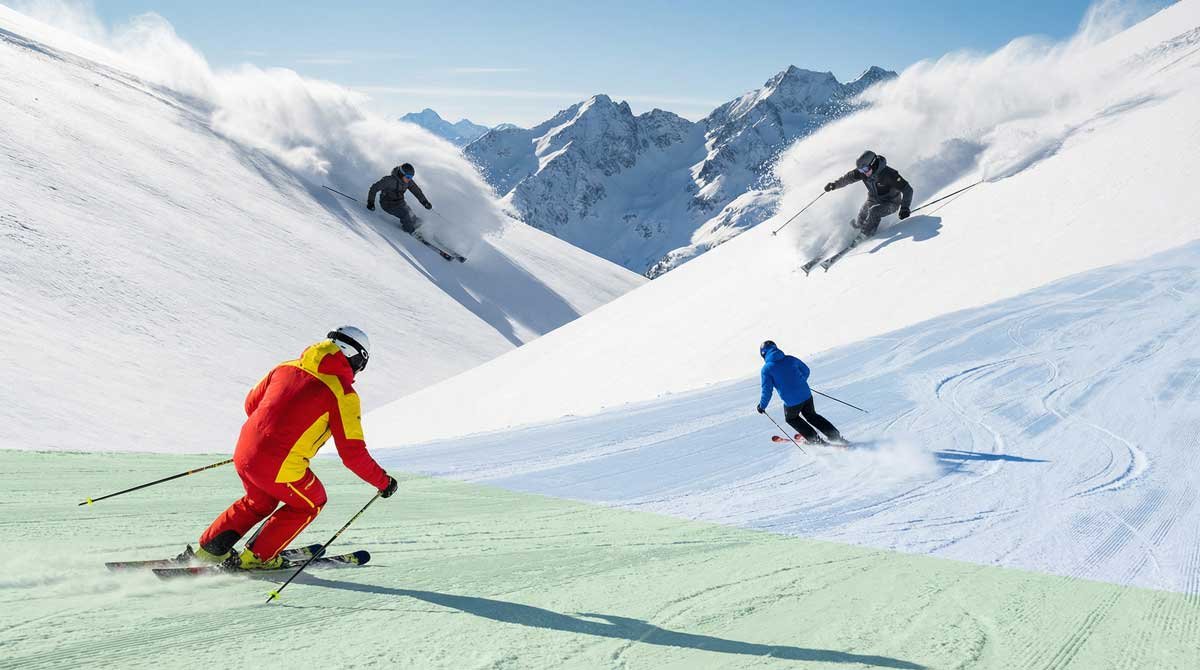
Theory is great, but seeing it in practice is better. To bring all these concepts to life, let’s walk through four common scenarios. These are real-world examples based on thousands of skier profiles, designed to help you see yourself in their stories and understand the decision-making process from start to finish.
Case Study 1: The Cautious Beginner – Sarah, 5’3″
- The Skier: Sarah is a 32-year-old who has decided to finally learn to ski after years of watching her friends have all the fun. She’s 5’3″ (160cm), weighs 125 lbs, and considers herself athletic but cautious. Her goal is to feel safe and in control.
- The Mistake: On her first rental experience, the shop was busy, and she was handed a pair of 158cm skis. The logic was that they were “just below her height.” On the snow, the skis felt long and unwieldy. She struggled to initiate turns, crossed her tips constantly, and ended the day exhausted and demoralized.
- The Solution: For her next trip, Sarah did her research. Understanding that beginners should start with a chin-height ski, she requested a shorter length. At a different shop, the technician listened to her experience and put her on a pair of 148cm skis. This length came right to her chin.
- The Outcome: The difference was night and day. The shorter skis were incredibly easy to pivot, allowing her to feel the sensation of a controlled turn for the first time. Her confidence soared. She spent less time fighting her equipment and more time focusing on her technique. By the end of the weekend, she was happily linking wedge turns down the entire beginner slope.
Case Study 2: The Aspiring Intermediate – Mark, 6’1″
- The Skier: Mark is 6’1″ (185cm), weighs 200 lbs, and has been skiing for three seasons. He’s a solid intermediate who is comfortable on all blue runs but feels his progress has plateaued. He wants to start skiing faster and explore some off-piste terrain.
- The Problem: Mark has been skiing on the same 170cm skis he bought when he was still a beginner. They felt great when he was learning, but now, as he tries to ski faster, they feel chattery and unstable. In even a few inches of fresh snow, the tips seem to dive, and he feels like he’s going over the handlebars.
- The Solution: Mark realized his shorter, beginner-oriented skis were holding him back. Given his height and weight, and his goal of skiing more aggressively, he needed a longer, more stable platform. After demoing a few pairs, he settled on a pair of all-mountain skis in a 184cm length. This new length came right to the top of his forehead.
- The Outcome: The longer skis felt like a revelation. Suddenly, he had the stability he was missing. The skis tracked smoothly at speed, and the chatter was gone. The extra length and wider platform also provided significantly more float, allowing him to venture off the groomed runs with newfound confidence. He felt like he had finally unlocked the next level of his skiing.
Case Study 3: The All-Mountain Expert – Chloe, 5’7″
- The Skier: Chloe is an expert skier who has been on the slopes for over 20 years. She’s 5’7″ (170cm) and 140 lbs. She skis the entire mountain, from carving up groomers to navigating tight tree runs and seeking out powder stashes.
- The Strategy: Chloe doesn’t have one perfect ski length; she has two. She has a “daily driver” and a “powder ski.” Her daily driver is a versatile all-mountain ski in a 172cm length. This is just slightly taller than she is, providing the stability she needs for speed but remaining nimble enough for bumps and trees. For deep powder days, she switches to a dedicated powder ski in a 180cm length. The extra length and significant rocker profile allow her to float effortlessly.
- The Logic: Chloe understands that one ski can’t do everything perfectly. Instead of compromising, she has invested in a small quiver. Her 172cm ski is her go-to for 80% of her ski days, but having the longer 180cm option for those special powder days allows her to maximize her enjoyment in all conditions. This approach is common among dedicated, expert skiers.
Case Study 4: The Lightweight Ripper – David, 5’9″
- The Skier: David is 5’9″ (175cm) but only weighs 145 lbs. He’s an aggressive and athletic skier who loves to make quick, energetic turns and ski fast on groomed terrain.
- The Challenge: Based on his height and advanced ability, many charts would recommend a ski in the 175-180cm range. However, because of his lighter weight, David found that skis in this length felt stiff and unresponsive. He struggled to bend the ski into a deep carve and felt like he was always fighting the equipment.
- The Solution: David learned to factor in his weight. He downsized his skis, opting for a powerful carving ski in a 168cm length. While this might seem short for an advanced skier of his height, it was the perfect match for his weight. He could properly flex the shorter ski, engaging the entire edge and generating explosive energy out of his turns.
- The Lesson: This is a perfect example of how weight can be just as important as height. An aggressive, skilled skier who is lighter for their height will often have more fun and perform better on a slightly shorter ski that they can fully command.
The Brand Factor: Do Different Ski Brands Size Differently?
Once you’ve narrowed down your ideal length range, you might think you’re ready to buy. But there’s one more layer of complexity to consider: the brand. Just as a size 10 shoe can fit differently between Nike and Adidas, the stated length of a ski can feel different from one brand to another. This isn’t a conspiracy to confuse you; it’s a result of different design philosophies, manufacturing processes, and measurement techniques.
Why Brand Sizing Varies
There is no single, universally enforced standard for how ski length is measured. Some brands measure the ski’s length “along the curve” of the base from tip to tail, which can result in a longer measurement. Other brands measure the “straight-line” or “projected” length, which is the direct distance from tip to tail as if the ski were flat. A ski with a lot of tip and tail rocker will have a much larger discrepancy between these two measurements.
Furthermore, a brand’s design philosophy plays a huge role. A company known for making aggressive, race-inspired skis might design their skis to feel more stable and powerful at a given length, while a brand focused on playful, freestyle skis might design theirs to feel more maneuverable and forgiving at the same stated length.
A General Guide to Brand Tendencies
While these are generalizations and can change with new models, here are some tendencies that have been observed in the ski industry. Always treat this as a rough guide and demo skis whenever possible.
- Salomon & Atomic: These two brands, part of the same parent company (Amer Sports), often share technology and have similar sizing philosophies. They are generally considered to be true to their stated length. Their all-mountain and carving skis are known for being precise and responsive, and their sizing recommendations are typically very reliable.
- Blizzard & Nordica: These brands are known for producing powerful, stable skis, particularly in their all-mountain and freeride lines (like the Blizzard Black Pearl or Nordica Enforcer). Some skiers feel that their more traditional, camber-dominant skis can feel a bit longer and more powerful than their stated length would suggest, due to their strong construction.
- K2 & Line: Often associated with a more playful, freestyle-oriented approach, skis from K2 and Line frequently incorporate significant rocker. Because of this, a 180cm K2 ski with a lot of rocker might feel shorter and more maneuverable on hardpack than a more traditional 180cm carving ski. You may find yourself comfortable on a slightly longer K2 or Line ski than you would be on a more traditional brand.
- Rossignol & Dynastar: These classic French brands have a long history in racing and all-mountain performance. Their sizing is generally considered to be in the middle of the road—fairly true to length. Their race-inspired skis will feel powerful for their size, while their more freeride-oriented skis will feel more versatile.
How to Navigate Brand Differences
So, what’s a skier to do? First, don’t panic. The differences are usually subtle, within a few centimeters of feel. Use the brand’s own sizing chart as your primary reference. Second, and most importantly, demo, demo, demo. This is the single best way to know for sure. Renting a few different models from different brands in your target length range will give you an undeniable feel for what works for you. If you can’t demo, read multiple reviews from trusted sources and look for comments on how the ski’s length feels in relation to its stated measurement.
A Guide for Women: Specific Sizing Considerations
For years, the ski industry took a “pink it and shrink it” approach to women’s gear, simply offering smaller, prettier versions of men’s skis. Thankfully, those days are largely behind us. Today, manufacturers recognize that women often have different physiological and biomechanical needs, and they design skis specifically to meet them. This also means that sizing considerations can be slightly different.
Why Women-Specific Guidance Matters
On average, women have a lower center of gravity and less body mass than men of the same height. This isn’t a disadvantage; it’s a biomechanical reality that affects how a skier interacts with their skis. A ski designed for a 180-pound man will likely feel overly stiff and demanding for a 140-pound woman, even if they are the same height and ability level. Women-specific skis are engineered to account for this, typically featuring:
- A Softer Flex: They are designed to be easier to bend, allowing lighter skiers to engage the ski’s sidecut and carve a clean turn without having to use excessive force.
- A More Forward Mounting Point: The bindings are often mounted a centimeter or two further forward on the ski. This accommodates a woman’s different center of gravity and makes turn initiation feel more natural and intuitive.
- Lighter-Weight Materials: They often use lighter wood cores or composite materials to reduce swing weight, making the skis less fatiguing and more maneuverable.
Sizing Adjustments for Women
Because women-specific skis are designed to be more forgiving and easier to flex, women can often ski a length that is very true to the standard height-based recommendations without needing to size down aggressively. A beginner woman who is 5’5″ can confidently start on a ski in the 150-155cm range (chin to nose height) and not feel overwhelmed, because the ski is built for her.
Weight remains a critical factor. A lighter woman should still err on the shorter side of her recommended range, while a stronger, heavier woman can confidently ski a longer length. The most important takeaway is to seek out women-specific models and trust that they are designed to work with your body, not against it.
Your Journey as a Skier: A Progression Guide to Ski Length
Your first pair of skis won’t be your last. As your skills improve, your confidence grows, and your ambitions on the mountain expand, your equipment needs will evolve. Understanding when and how to upgrade your ski length is a key part of your progression as a skier. Sticking with a ski that is too short for too long can ingrain bad habits and hold you back from reaching your full potential.
Signs You’ve Outgrown Your Skis
How do you know it’s time for a longer pair? Look for these telltale signs:
- You Feel Unstable at Speed: The most common sign. As you start to ski faster, your shorter skis will begin to feel “chattery” or unstable. You’ll feel vibrations underfoot and a lack of confidence when letting them run.
- You’re Craving More: You find yourself wanting to ski steeper terrain or venture into ungroomed snow, but your current skis feel like they are sinking or getting knocked around.
- You Can Overpower Them: You can bend the ski so easily that it feels “washy” or doesn’t hold an edge when you try to carve a powerful turn. You’re ready for a stronger, more stable platform.
- You’ve Reached a Skill Milestone: You’ve mastered parallel turns on all blue runs and are starting to feel comfortable on black diamonds. Your technique has surpassed your equipment.
A Typical Progression Path
- Beginner to Intermediate: This is usually the biggest jump. After one or two seasons, a beginner who has mastered the basics will be ready to move from a chin-height ski to a nose-height ski, typically an increase of 5-10cm. This move will provide the stability needed to start carving and exploring more of the mountain.
- Intermediate to Advanced: This transition is more gradual. You might move up another 3-5cm in length as you start to ski faster and more aggressively. This is also the point where you might start thinking about a ski with a different width or profile for specific conditions.
- Advanced to Expert: At this stage, changes in length are often about specialization. You might get a longer powder ski for deep days or a powerful carving ski for groomer days, building a small quiver rather than just replacing one pair.
The Power of Renting and Demoing
Never underestimate the value of renting, even as an advanced skier. Renting is not just for beginners. It’s the perfect way to test-drive different lengths and models before you commit to a purchase. If you think you’re ready to move up in length, rent a pair of demo skis in your target size for a day. It’s a small investment that can save you from a very expensive mistake.
Troubleshooting: “My Skis Just Feel…Wrong.”
Sometimes, despite all your research, you end up on a pair of skis that just doesn’t feel right. Before you blame the length, it’s important to consider other factors that can dramatically affect a ski’s performance. Often, the problem isn’t the length itself, but another piece of the puzzle.
Common Problems and Potential Causes
- “My skis feel too long and hard to turn!”
- Is it the length? Possibly. If you’re a beginner on a ski that’s above your nose, it’s likely too long.
- Could it be something else? Check your boots. Ski boots that are too stiff for your ability level will prevent you from flexing your ankles, making it nearly impossible to pressure the front of the ski and initiate a turn. This is one of the most common problems in skiing.
- “My skis feel too short and unstable!”
- Is it the length? If you’re an advanced skier on a chin-height ski, almost certainly.
- Could it be something else? It could be the ski’s construction. A very soft, lightweight ski will feel less stable at speed, regardless of its length. You may need a ski with a stronger wood core or layers of metal to provide the dampness and stability you’re looking for.
- “I can’t get my skis to hold an edge!”
- Is it the length? Unlikely to be the primary cause, unless the ski is far too long and you can’t flex it.
- Could it be something else? This is often a tuning issue. Your skis need to be sharpened regularly to grip on firm snow. It could also be a technique issue, where you are not properly balancing on your outside ski to engage the edge.
When to See a Professional
If you’re struggling with your equipment, the best thing you can do is visit a reputable, high-quality ski shop and talk to an expert bootfitter and ski technician. They can analyze your stance, check your boot fit, and assess your skis to diagnose the problem. A professional bootfitter can make adjustments to your alignment (canting) that can have a revolutionary impact on your skiing. Don’t underestimate the value of expert advice. It can transform your experience on the mountain.
Frequently Asked Questions (FAQ)
We get it. Ski sizing can be complex, and you probably still have questions. We’ve compiled the most common questions we hear from skiers, drawing from Google search data and our own experience in the shop, to give you clear, direct answers.
- 1. How long should my skis be for my height?
- As a starting point, your skis should reach somewhere between your chin and the top of your head. For beginners, aim for chin height. For intermediates, aim for nose or eyebrow height. For advanced skiers, aim for forehead to head height. For a 5’8″ (173cm) skier, this would mean a beginner might start around 160-165cm, while an expert might choose 173-180cm. Always remember to adjust this baseline for your weight, ability, and preferred terrain.
- 2. Is it better to have shorter or longer skis for beginners?
- It is unequivocally better for beginners to have shorter skis. Shorter skis (chin height) are far easier to turn, pivot, and control at slow speeds. This makes the learning process less intimidating, builds confidence faster, and helps you master the fundamental skills of skiing without having to fight your equipment. Going too long as a beginner is one of the most common and detrimental mistakes you can make.
- 3. Are 170cm skis good for beginners?
- A 170cm ski is generally a good length for a beginner who is between 5’10” and 6’1″ (178-185cm) tall. For a skier in this height range, 170cm would fall around chin level, providing the ideal balance of stability and maneuverability for learning. However, for a beginner who is 5’7″, a 170cm ski would be too long and challenging. It all comes back to how the length relates to your specific height.
- 4. How long should skis be for someone 5’2″?
- For a skier who is 5’2″ (157.5cm), a great starting length for a beginner would be in the 145-150cm range. An intermediate skier of this height would be comfortable on skis from 150-158cm. An advanced skier would likely choose a length from 158-165cm, depending on their weight and how aggressively they ski.
- 5. How tall should your skis be when you stand them next to you?
- This is the classic visual test. When you stand a ski on its tail, the tip should land somewhere between your chin and the top of your head. Where it lands in that range is determined by your ability. For a quick visual check: Beginner = Chin; Intermediate = Nose/Eyebrows; Advanced/Expert = Forehead/Top of Head.
- 6. How do you calculate ski length?
- While there isn’t a single magic formula, a simple calculation for a beginner is: Your Height in Centimeters – 15cm. For an intermediate, you might use Height in cm – 10cm. For an advanced skier, you would use your Height in cm as a baseline and add or subtract a few centimeters based on your weight and terrain preference. For example, a 180cm tall advanced skier might choose a 180cm all-mountain ski or a 185cm powder ski.
- 7. Should I rent skis before I buy them?
- Absolutely. We can’t recommend this enough. Renting—specifically from a high-quality demo shop—is the single best way to test different lengths, widths, and brands before you make a significant financial commitment. Think of it as test-driving a car. A day or two on a specific model will tell you far more than any online review ever could.
- 8. How do I know if my skis are too long?
- The most common signs that your skis are too long are a persistent difficulty in initiating turns, feeling like you have to “muscle” the skis around, constant fatigue (especially in your legs and core), and a general feeling that the skis are in control of you, not the other way around. If you feel like you’re on a pair of runaway trains, you’re likely on skis that are too long for your current ability level.
Your Perfect Turn Awaits: The Final Word on Ski Length
Choosing the right ski length can seem like a daunting task, a complex equation of height, weight, ability, and a dozen other variables. But as we’ve seen, it’s less about finding a single, magical number and more about understanding a logical framework. By starting with the foundational chin-to-forehead rule and then systematically layering in the critical factors of your weight, your ability level, your preferred terrain, and even the nuances of specific brands, you transform a confusing guess into an informed, confident decision.
Remember that your ski length is not a static number. It is a dynamic part of your journey as a skier, evolving as you progress from a cautious beginner to a confident all-mountain explorer. The 150cm skis that felt so perfect on your first day will eventually give way to the 165cm planks that help you conquer your first black diamond, and perhaps one day, the 180cm powder boards that carry you through the best snow of your life.
Don’t be afraid to experiment. Use this guide as your map, but let your own experience be your compass. Demo different lengths, talk to experts at your local shop, and pay attention to how your skis feel under your feet. The perfect ski length is out there, and finding it is the first step toward unlocking your best days on the mountain. Now, go find your perfect turn.
References
- Alpine Skiing 101: Equipment, NBC Olympics. Accessed January 5, 2026.