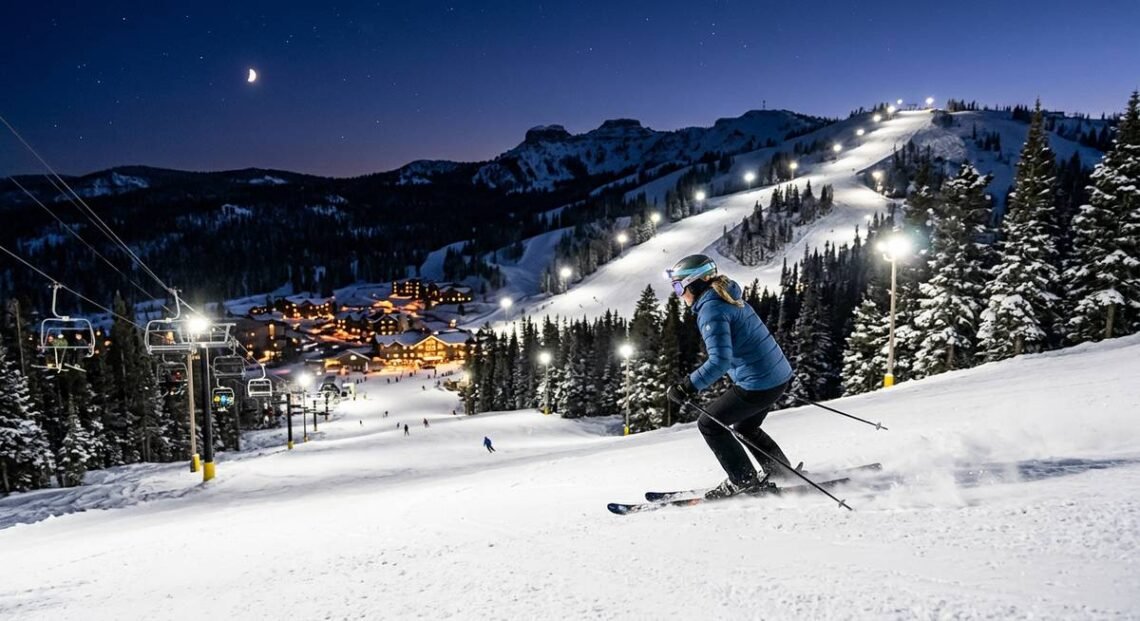
At 9,600 feet on southern Utah’s Markagunt Plateau, Brian Head Resort runs one of the Southwest’s only night skiing programs. The lifts spin Friday and Saturday evenings from roughly 4:00 PM to 9:00 PM, late December through early March, putting a five-hour session within easy reach of anyone in St. George (about 90 minutes) or Las Vegas (around three hours).
Brian Head night skiing draws a different crowd than the daytime mountain. Lines are short. The terrain is freshly groomed. Temperatures drop hard after sunset, but the trade-off is corduroy that hasn’t been chewed up by a full day of traffic. Below: the schedule, ticket pricing, which runs are lit, what gear to bring, and how to handle the drive up UT-143 after dark.
When Does Brian Head Offer Night Skiing?
Brian Head Resort typically opens night skiing in late December and runs it through late February or early March. Sessions operate Friday and Saturday evenings, 4:00 PM to 9:00 PM. Holiday weeks sometimes expand to additional weeknights, announced on the Brian Head hours of operation page with limited advance notice.
Night Skiing Season Dates
The window is tied directly to snowpack and conditions at elevation. A strong La Nina winter can push the closing date into mid-March. A lean year might shorten it to six or seven weekends. Brian Head doesn’t publish the full night schedule in advance the way larger resorts do, so checking the website a day or two before your planned trip is standard practice for regulars.
The resort sits between 9,600 and 11,307 feet, making it the highest ski area in the region and one of the most snow-reliable. Night operations start once the holiday traffic ramps up, usually the last weekend before Christmas.
Hours and Operating Nights
Standard nights: Friday and Saturday, 4:00 PM to 9:00 PM. That five-hour block is enough for 8-12 solid runs depending on the lift you’re riding and how long you spend warming up between sessions.
Holiday weeks are the exception. During Christmas-to-New Year’s and the Presidents’ Day stretch, Brian Head has historically added Tuesday, Wednesday, or Thursday night sessions to meet demand. These extra nights fill up faster than regulars expect.
| Period | Operating Nights | Hours |
|---|---|---|
| Regular Season (late Dec – early Mar) | Friday and Saturday | 4:00 PM – 9:00 PM |
| Holiday Weeks (Christmas, Presidents’ Day) | Friday, Saturday + select weeknights | 4:00 PM – 9:00 PM |
One detail worth noting for first-timers: arrive closer to 4:00 PM while there’s still some residual daylight warmth. By 6:00 PM at this elevation, temperatures can be 15-20 degrees colder than the afternoon high. Acclimating your layers early makes the last few runs far more comfortable.
Night Skiing Tickets: Prices, Passes, and Best Value
Night tickets at Brian Head run roughly half the price of a full-day lift ticket. Adult night sessions typically fall in the $35-$55 range, youth tickets lower, and children under a certain age often ski free. Exact pricing shifts each season, so confirm current rates on the Brian Head night tickets page before buying.
Night Ticket Pricing
Tickets are available online in advance and at the window. Buying online occasionally saves a few dollars and eliminates sellout risk on busy holiday weekends. Brian Head is a smaller independent resort, not an Epic or Ikon property, so pricing tends to be straightforward without dynamic surge mechanics.
| Ticket Type | Approximate Price | Notes |
|---|---|---|
| Adult (18+) | $35-$55 | Online purchase may save $3-$5 |
| Youth (approx. 7-17) | $25-$40 | Age brackets may vary by season |
| Child (approx. 6 and under) | Free or nominal fee | Confirm age cutoff with resort |
These ranges reflect Brian Head’s historical pricing. Treat them as planning estimates rather than guarantees.
Night Skiing vs. Full-Day Tickets: Cost Per Hour
A full-day lift ticket at Brian Head runs $70-$100+ for adults during peak season, covering roughly eight hours from first chair to last. Night sessions offer five hours at roughly half the cost. The math favors the evening: $7-$11 per hour for night skiing versus $9-$13 per hour for a full day.
For families driving up from St. George after school or Las Vegas after work, that efficiency matters. You’re not paying for morning hours you can’t use. And the snow conditions after 4:00 PM are often better than midday, when sun exposure and heavy traffic can turn runs slushy or scraped.
Power Pass and Season Pass Holders
Brian Head is a Power Pass partner resort. Power Pass holders receive Brian Head access as part of their pass benefits, but night skiing sessions sometimes operate under separate terms with potential blackout dates during the Christmas-to-New Year’s peak. Whether a specific night session is included or requires an add-on depends on your pass tier and the season’s blackout calendar.
Brian Head’s own season pass holders typically get night skiing bundled in. If you hold a Power Pass, confirm night access by logging into your account or calling the resort directly. A two-minute phone call saves a frustrating surprise at the ticket window after a long drive.
Terrain and Lifts Open During Night Skiing
Night skiing at Brian Head uses a focused subset of the mountain, roughly 20-30% of the full acreage. The resort runs one primary lift serving a corridor of beginner and intermediate terrain on the main face near the base of Brian Head Peak. Not everything is open, and that’s by design: the concentrated layout keeps the experience tight and well-maintained.
Which Lifts Operate at Night
The Navajo lift is the anchor of night operations, servicing the resort’s core intermediate and beginner terrain. Brian Head operates two separate peak areas (Brian Head Peak and Navajo Peak), but night sessions concentrate activity on one side rather than spreading thin across the mountain. Wind and staffing can occasionally shift which lifts spin, so the resort’s lift status page is worth a quick check before you leave home.
Best Runs for Night Skiing
The illuminated runs skew toward groomed blues and greens: consistent pitch, wide lanes, predictable surfaces. No steep chutes. No gladed tree skiing. What you do get is some of the cleanest corduroy of the entire ski day. By 4:00 PM, the grooming crews have often already made a pass, laying down fresh lines that daytime skiers never touch.
Intermediate skiers tend to find the evening conditions fast and smooth. Cold temperatures firm up the snow, and low traffic means the grooming holds for hours instead of getting worked over in the first 30 minutes.
| Terrain Type | Night Availability | Typical Condition |
|---|---|---|
| Beginner (green) | Yes – well lit | Groomed, gentle pitch |
| Intermediate (blue) | Yes – primary terrain | Fresh corduroy, firm snow |
| Advanced (black diamond) | Limited or closed | Verify with resort |
| Glades and off-piste | Closed | Not illuminated |
Is Brian Head Night Skiing Good for Beginners and Kids?
Yes, and arguably better than the full daytime mountain for first-timers. The smaller operational footprint means fewer runs to navigate, shorter distances between the lodge and the lifts, and no risk of accidentally ending up on terrain beyond your ability. The Navajo lift corridor includes dedicated beginner terrain, and the relaxed evening crowd makes the learning curve less intimidating.
Brian Head’s ski school has offered lessons during select night sessions in past seasons, though availability depends on staffing and demand. If lessons are important to your trip, call ahead. Even without formal instruction, the green runs under the lights are wide and gentle enough for a confident first run.
Gear Tips and Safety for Skiing After Dark
Night skiing demands a few specific gear swaps that most skiers skip. Temperature drops at 9,600 feet are aggressive after sunset, and artificial lighting creates visibility conditions your standard daytime setup isn’t designed for.
Goggle Lens Selection
Dark mirrored lenses are the wrong call after dark. Swap them for yellow, rose, amber, or clear lenses, which amplify low-light contrast instead of filtering it. Yellow lenses are particularly effective under resort lighting, boosting depth perception so you can read terrain changes and grooming ridges that look deceptively flat under sodium lights.
Look for a Visible Light Transmission (VLT) rating above 50%. Clear lenses sit around 90% VLT. Yellow and rose fall between 55-80%. Either works well for Brian Head’s lit runs.
| Lens Color | VLT Range | Night Performance |
|---|---|---|
| Clear | 85-95% | Maximum light transmission; neutral contrast |
| Yellow | 60-80% | Best depth perception under artificial light |
| Rose / Pink | 55-75% | Good contrast; slightly warmer tone |
| Dark mirrored | 10-25% | Too dark for night; avoid |
Layering for After-Dark Temperature Drops
Pack one more layer than you think you need. Radiative cooling on clear nights at this elevation is aggressive, and the temperature at 9:00 PM can be 20 degrees colder than when you started at 4:00 PM. A mid-layer fleece or packable insulated jacket stuffed in your pack adds almost no bulk and makes a genuine difference by hour three.
Hand and toe warmers belong in your pockets. Grip and foot feel degrade fast in the cold, and both matter more at night when you’re relying on reduced visual cues to read the terrain.
Visibility and Safety on Lit Runs
Artificial lighting creates hard shadows at the edges of each light tower’s reach. These transition zones, where bright and dark meet abruptly, can temporarily flatten your depth perception and make bumps or ice patches harder to spot. Slow down when entering shadowed sections, especially near run boundaries and tree lines that fall outside the lit corridor.
Helmet-goggle fit deserves a quick check before your first chair ride. Cold air channeling through a gap between your helmet brim and goggle frame is a minor annoyance during the day. At night, in steadily dropping temperatures, it becomes a real problem by run four or five.
Getting to Brian Head: Driving and Logistics
Brian Head Resort sits at the top of UT-143, a mountain highway that climbs from Parowan (I-15 Exit 75) through roughly 12 miles of switchbacks. During the day, it’s a scenic drive. After dark in winter, it requires attention.
Road Conditions on UT-143
The road is maintained by UDOT and regularly plowed, but fresh snowfall or blowing snow can create slick conditions quickly. Four-wheel drive or chains are strongly recommended during active storms. Even on clear nights, the road surface above 8,000 feet can develop black ice where melted afternoon runoff refreezes after sunset. Check UDOT road conditions before you head up.
Parking and Arrival
Parking at Brian Head is free and typically abundant for night sessions, which draw far fewer cars than peak daytime hours. The lots closest to the Navajo lift fill first. Arriving 15-20 minutes before the 4:00 PM start gives you time to gear up at the car and catch the first chair without rushing.
Rental equipment is available at the resort, though night session rental availability can be more limited than daytime hours. If you need rentals, confirm they’ll be open during your planned session by calling ahead.
Nearby Food and Lodging
Brian Head town has a small cluster of restaurants and lodges within a few minutes of the resort base. Options are limited compared to a destination like Park City, but there’s enough for a post-ski meal and a place to stay if you don’t want to drive back down the mountain at night. Cedar Breaks Lodge and the Brian Head Hotel are the closest overnight options. For dining, the lodge restaurants and a few standalone spots in the village serve burgers, pizza, and standard ski-town fare through the evening.
Visitors from St. George or Cedar City sometimes prefer to drive back after skiing, which is manageable if the roads are clear. From Las Vegas, an overnight stay makes the trip significantly more relaxed.
Frequently Asked Questions
What nights does Brian Head offer night skiing?
Friday and Saturday evenings during the core season (late December through early March), with occasional weeknight sessions added during Christmas and Presidents’ Day holiday weeks. Hours run from 4:00 PM to 9:00 PM.
How much do Brian Head night skiing tickets cost?
Adult night tickets typically range from $35-$55, youth tickets from $25-$40, and young children often ski free. Prices vary by season. Buy online for occasional discounts and to guarantee availability on busy weekends.
What runs and lifts are open for night skiing?
The Navajo lift serves the primary night terrain: a mix of groomed green and blue runs on the main face. Advanced and off-piste terrain is not illuminated and remains closed after dark.
Is Brian Head night skiing good for beginners?
Strongly suited for beginners and families. The lit terrain is predominantly gentle-to-moderate groomed runs, and the smaller operational area makes navigation straightforward for first-timers.
Does the Power Pass cover Brian Head night skiing?
Brian Head is a Power Pass partner resort, but night session access may have separate terms or blackout dates depending on your pass tier. Check your Power Pass account or contact the resort directly to confirm coverage for a specific date.
What should I wear for night skiing at Brian Head?
Add an extra insulation layer beyond your daytime setup. Temperatures at 9,600 feet drop significantly after sunset. Bring hand and toe warmers, and swap dark goggles for yellow, rose, or clear lenses with a VLT rating above 50%.
Is the drive to Brian Head safe at night?
UT-143 from Parowan to Brian Head is maintained and regularly plowed, but winter conditions can produce black ice and reduced visibility above 8,000 feet. Four-wheel drive is recommended during storms. Check UDOT road conditions before departing.
What time does night skiing end at Brian Head?
Lifts close at 9:00 PM. Plan your last run for 8:30-8:40 PM to avoid being on the mountain when the lights go down.
Pricing, schedules, and trail availability are based on Brian Head Resort’s historical operations and may change season to season. Always verify current details at brianhead.com before your visit.