A mere four-tenths of a second separated glory from heartbreak. As freshman Mons Melbye crossed the finish line in the men’s 20-kilometer freestyle race on March 14, the stopwatch read 46:14.6—just barely ahead of Dartmouth’s John Steel Hagenbuch. That razor-thin margin sealed something much bigger than an individual victory. It clinched the University of Utah’s 18th NCAA skiing championship.
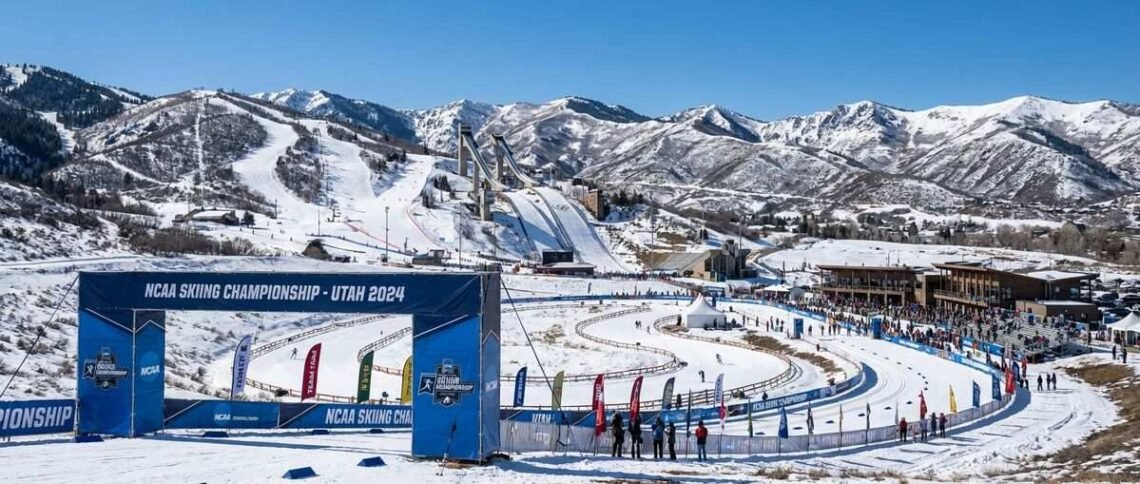
The 2026 NCAA skiing championships delivered high-altitude drama at two iconic Utah venues. From March 11-14, the nation’s best college skiers competed at Utah Olympic Park in Park City for alpine events and Soldier Hollow Nordic Center in Midway for cross-country races. Utah emerged as champions with 549.5 points, edging the University of Colorado (539 points) and Denver (527.5 points) in a thrilling four-day showdown. This comprehensive guide covers complete results, individual winners, team standings, and the strategic brilliance behind Utah’s victory.
Championship Overview
The 2026 edition marked the second time Utah hosted the national championships, and the home-field advantage proved decisive. Seventy-four men and seventy-four women from qualifying schools across the nation descended on Utah’s world-class skiing facilities. The competition format remained consistent: eight events spanning both alpine and Nordic disciplines, with every result contributing to the overall team score.
Event Details
Competition unfolded over four intense days, with alpine technical events at Utah Olympic Park and Nordic endurance races at Soldier Hollow Nordic Center. The University of Utah served as host school, managing logistics for one of the NCAA’s most geographically unique championships. March weather in the Wasatch Mountains cooperated beautifully, providing excellent racing conditions throughout.
The championship brought together the nation’s elite collegiate skiing programs. Teams earned qualification through regional championships and individual selections, ensuring that only the best athletes competed for national honors and All-American recognition.
Quick Results Summary
When the final points were tallied, Utah stood atop the podium with 549.5 points. Colorado finished second with 539 points, just 10.5 points behind—one of the closest margins in recent championship history. Denver claimed third place with 527.5 points, cementing their position among collegiate skiing’s elite programs.
Montana State finished fourth with 376.5 points, powered by Justine Lamontagne’s dominant alpine performances. Vermont rounded out the top five with 365 points, showcasing particularly strong Nordic results. The top-ten depth illustrated the competitive balance across college skiing, with established powerhouses and emerging programs all competing for podium positions.
Final Team Standings
The team battle evolved dramatically across the four-day competition, with lead changes and strategic calculations playing out until the final event. Here’s how the top ten teams finished in the 2026 NCAA skiing championships:
| Rank | Team | Points |
|---|---|---|
| 1 | Utah | 549.5 |
| 2 | Colorado | 539.0 |
| 3 | Denver | 527.5 |
| 4 | Montana State | 376.5 |
| 5 | Vermont | 365.0 |
| 6 | Alaska Fairbanks | 351.0 |
| 7 | Dartmouth | 347.5 |
| 8 | New Mexico | 312.0 |
| 9 | New Hampshire | 287.5 |
| 10 | Middlebury | 265.0 |
The final margin of victory—10.5 points—tells only part of the story. After day two, Colorado actually held the lead following strong performances in the Nordic classic events. Utah trailed heading into the final two days, setting up a dramatic conclusion that hinged on slalom races and the mass-start freestyle finale.
Utah’s championship marked their second consecutive title and sixth in seven years, establishing one of the most dominant dynasties in NCAA winter sports. Coach Fredrik Landstedt earned his sixth career championship, placing him among the most successful coaches in collegiate skiing history. The balanced scoring across both alpine and Nordic disciplines proved decisive, as Utah never relied on a single superstar but instead deployed consistent depth across all eight events.
How Utah Won: The Comeback Story
Championships aren’t won on paper or through individual brilliance alone. They’re secured through team depth, strategic racing, and clutch performances when pressure peaks. Utah’s path to the title embodied all three elements.
The Setup
Following the Nordic classic races on day two, Colorado had seized the lead in the team standings. Utah trailed by double digits in points—a significant deficit with only four events remaining. The Utes needed their alpine skiers to perform well in slalom and their Nordic squad to dominate the final day’s freestyle mass-start races. Neither could afford a breakdown.
Home venue familiarity offered Utah an advantage, particularly at Soldier Hollow where their Nordic team trains regularly. But Colorado boasted a well-rounded squad capable of scoring in every event. Denver lurked in third, ready to capitalize on any mistakes from the frontrunners. The stage was set for a tense finish.
The Decisive Final Day
March 14 dawned clear and cold—perfect conditions for the 20-kilometer freestyle mass-start races that would determine the national champion. These grueling endurance tests demand perfect pacing, tactical positioning, and the ability to surge when it matters most. Utah’s strategy was simple: outscore Colorado in both the men’s and women’s races.
In the men’s event, freshman sensation Mons Melbye executed that plan to perfection. The Norwegian-born skier stayed patient through the early kilometers, maintaining contact with the lead pack. As the race entered its final stages, Melbye made his move. So did Dartmouth’s Hagenbuch, the winner of the classic race two days earlier. The two broke away from the field, setting up a head-to-head duel over the final five kilometers.
They crossed the line nearly simultaneously. Melbye’s time: 46:14.6. Hagenbuch: 46:15.0. Four-tenths of a second—roughly two meters on snow—separated first from second. That photo finish delivered Utah 100 points for the win, with teammates Zachary Jayne finishing ninth and Max Kluck twenty-second, giving Utah 71 total points in the men’s race.
The women’s race unfolded more predictably at the front, with Alaska Fairbanks’ Rosie Fordham claiming her second victory of the championships with a dominant time of 51:54.6. But Utah didn’t need to win—they needed to outscore Colorado. Junior Erica Lavén crossed third (52:22.7), and sophomore Witta Walcher finished fifth. Those performances, combined with Sofia Pedersen’s twenty-fourth-place finish, gave Utah 70 points in the women’s race—enough to finish second as a team and clinch the overall title.
The Math
Utah’s final-day excellence made the difference. The Utes scored 141 combined points across both mass-start races, erasing Colorado’s lead and building a cushion that proved insurmountable. More importantly, Utah demonstrated championship-level depth. In the men’s race, three Utah skiers scored. In the women’s race, three more contributed. No single athlete won it for Utah—the team did.
Colorado fought valiantly but couldn’t match Utah’s balanced attack. Denver made a late push but ultimately fell short of the top two. When Melbye crossed that finish line ahead of Hagenbuch by less than half a second, the celebration erupted. Utah’s eighteenth national title was secure.
Individual Event Winners & Results
While team championships capture headlines, individual brilliance defined the 2026 NCAA skiing championships. Eight events across four days produced champions, record performances, and unforgettable moments.
Alpine Events
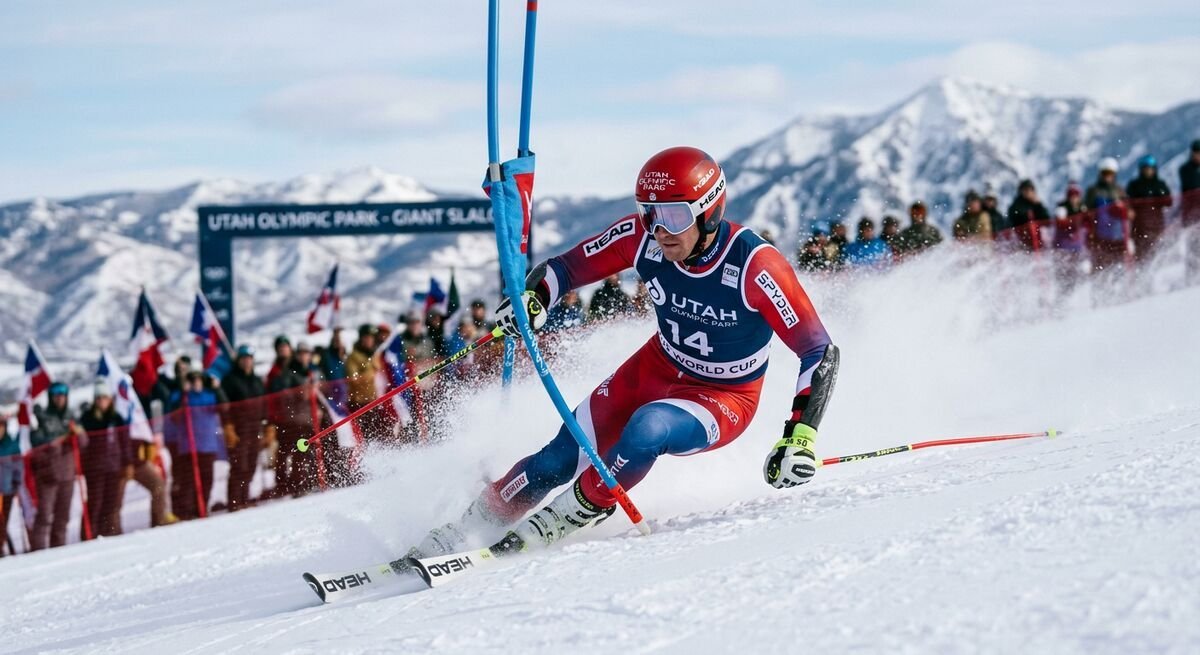
The giant slalom and slalom races at Utah Olympic Park tested technical precision on perfectly groomed courses. Gates set by experienced course setters demanded aggressive yet controlled skiing. Mistakes resulted in time lost that couldn’t be recovered.
Men’s Giant Slalom – March 11
Johs Braathen Herland of Utah successfully defended his giant slalom title, becoming a repeat national champion. His victory marked the third consecutive year a Utah skier won the men’s GS, establishing a remarkable streak for the program. Herland’s smooth, powerful turns and ability to maintain speed between gates proved unmatched.
Women’s Giant Slalom – March 11
Montana State’s Justine Lamontagne announced her presence with authority, winning the women’s GS in commanding fashion. Her aggressive line choices and technical mastery set the tone for what would become a spectacular championship performance.
Men’s Slalom – March 13
Oscar Zimmer of Dartmouth navigated the tighter, quicker slalom course to claim gold. His quick feet and ability to attack the fall line despite the technical difficulty earned him first place and All-American honors. Zimmer’s victory highlighted Dartmouth’s tradition of producing elite alpine skiers.
Women’s Slalom – March 13
Justine Lamontagne completed the alpine sweep, winning her second individual title of the championships. Her double-gold performance in both technical alpine events established her as one of the premier alpine racers in collegiate skiing. Montana State’s coaching staff deserved credit for developing such a complete technical skier.
Nordic Events
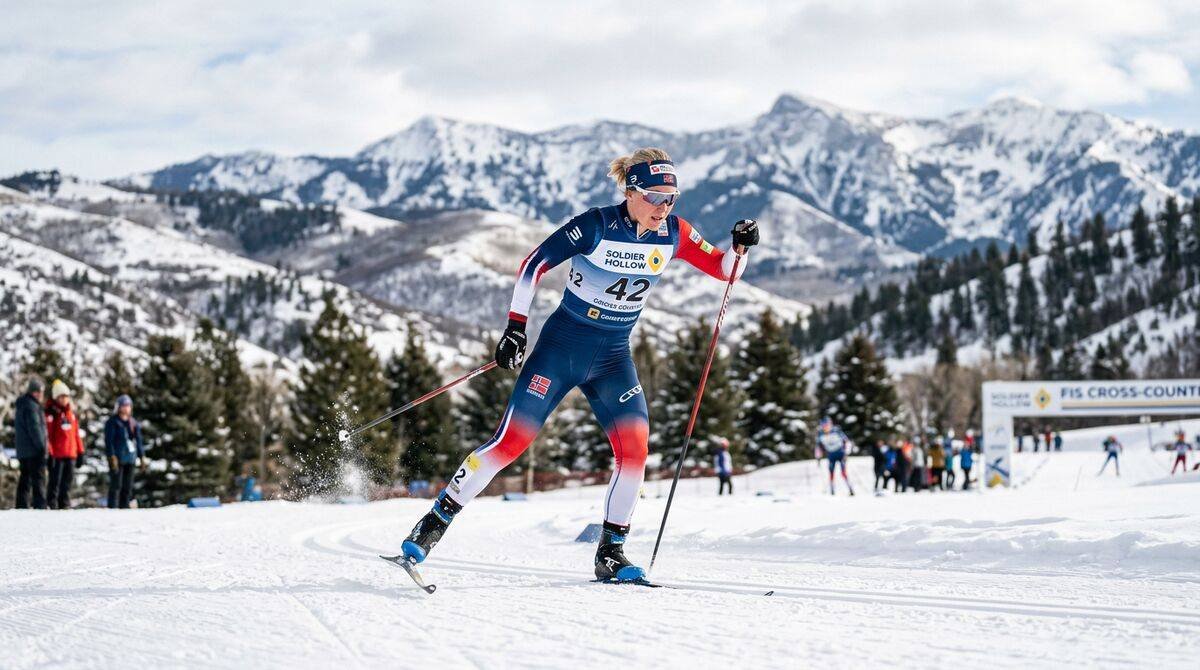
Soldier Hollow Nordic Center’s trails wound through picturesque mountain terrain, challenging skiers’ endurance, technique, and tactical racing sense. The classic races demanded traditional striding and double-poling technique, while freestyle allowed the faster skating motion.
Women’s 7.5km Classic – March 12
Rosie Fordham of Alaska Fairbanks kicked off her dominant championship with victory in the classic race. Her powerful stride and excellent glide set her apart from the deep field. Fordham’s win foreshadowed more success to come.
Men’s 7.5km Classic – March 12
John Steel Hagenbuch of Dartmouth claimed the men’s classic title, showcasing the versatility that would nearly earn him a second gold in the freestyle race. Hagenbuch’s ability to generate power through classic technique while maintaining efficient form impressed observers and competitors alike.
Women’s 20km Freestyle Mass Start – March 14
Fordham completed her Nordic double with another dominant performance, this time in freestyle. Her winning time of 51:54.6 gave her a comfortable margin over Vermont’s Haley Brewster (52:22.4), who earned her third career runner-up finish at nationals. Brewster’s consistency across multiple championships earned her First Team All-American honors for the third time. Alaska Fairbanks’ Lena Poduska, just a first-year skier, finished tenth in her NCAA debut, signaling a bright future.
Men’s 20km Freestyle Mass Start – March 14
The championship-defining race delivered the drama everyone hoped for. Melbye’s 46:14.6 held off Hagenbuch’s 46:15.0 in what race officials confirmed was the closest finish in NCAA skiing championship history. The two had battled for twenty kilometers, trading surges and testing each other’s limits. When the finish line appeared, neither had anything left to give—making Melbye’s minuscule advantage all the more impressive.
Understanding NCAA Skiing Format
For those new to collegiate skiing, the championship format might seem complex. It’s actually elegantly designed to reward programs that develop both alpine and Nordic talent.
Alpine vs Nordic: What’s the Difference?
Alpine skiing consists of downhill technical events—giant slalom and slalom. Skiers navigate gates on a groomed course, carving turns at high speed. It’s about precision, edge control, and line selection. Races last between 45 seconds and two minutes, demanding explosive power and technical perfection.
Nordic skiing refers to cross-country racing across flat and rolling terrain. Skiers use either classic technique (traditional striding) or freestyle technique (skating motion). These endurance events last from fifteen minutes to nearly an hour, testing cardiovascular fitness, pacing strategy, and mental toughness. Unlike alpine racing’s single-run format, Nordic races are mass starts or individual time trials.
Both disciplines count equally toward the team championship. A giant slalom victory earns the same points as a 20K freestyle win. This parity means successful programs must recruit and develop talent in both alpine and Nordic, creating balanced rosters.
How Team Scoring Works
Points are awarded based on finishing position in each event. The winner receives the maximum points, with decreasing amounts for subsequent places. All eight events contribute to the team total—there’s no dropping low scores or weighting certain events more heavily.
Team depth matters enormously. A school with one superstar alpine skier might win individual gold, but if their other athletes finish outside the top twenty, they won’t accumulate enough team points. Meanwhile, a program with four skiers finishing between fifth and fifteenth will likely score more total points. This system rewards program development over individual recruiting coups.
The team championship format explains why Utah, Colorado, and Denver consistently contend for titles. These programs build depth across both disciplines, ensuring they score in all eight events rather than dominating two or three while struggling in others.
The Championship Format
The four-day schedule follows a consistent pattern. Day one features giant slalom for both men and women—the first alpine test. Day two shifts to Nordic with classic technique races. Day three returns to alpine for slalom. Day four concludes with freestyle mass-start races that often determine the team champion.
This alternating format prevents any single discipline from carrying outsized weight in determining the early leader. It also maintains suspense, as teams strong in one area can overcome deficits when their specialty arrives.
Utah’s Skiing Dynasty Continues
Eighteen national titles. Six championships in seven years. Back-to-back titles in 2025 and 2026. The University of Utah has established itself as the most dominant program in NCAA skiing history.
This latest championship added another line to an already impressive resume. Head coach Fredrik Landstedt now boasts six career national titles, tying him among the sport’s coaching elite. But Landstedt’s success isn’t accidental—it’s built on a foundation of elite facilities, strategic recruiting, and a skiing culture embedded in Utah’s identity.
Utah’s proximity to world-class training venues provides an enormous advantage. The team trains regularly at Utah Olympic Park, site of alpine events during the 2002 Winter Olympics. Soldier Hollow, the Nordic venue, sits just forty minutes away. Access to these facilities year-round allows Utah skiers to refine technique and build familiarity that pays dividends in championship competition.
Recruiting combines international talent with domestic development. Several Utah skiers hail from traditional skiing nations like Norway and Sweden, bringing European racing experience. Others come from American skiing hotbeds in New England, Colorado, and Minnesota. This blend creates a team culture that values different approaches while maintaining common competitive standards.
The program’s balance across alpine and Nordic disciplines sets Utah apart. Some schools excel in one area but struggle in the other. Utah consistently fields strong squads in both, preventing opponents from exploiting weaknesses. That balanced approach proved crucial in 2026, as Utah scored heavily in both alpine and Nordic events during the critical final two days.
Looking forward, Utah’s dominance shows no signs of fading. Remarkably, the 2026 championship team featured zero seniors. Every athlete returns for the 2027 season, including breakthrough star Mons Melbye and alpine champion Johs Herland. This youth movement suggests Utah could challenge for several more consecutive titles, potentially building the most impressive dynasty in NCAA skiing history.
Notable Performances & Standouts
Beyond team results and individual champions, the 2026 championships featured breakthrough performances and milestone achievements worth celebrating.
Mons Melbye’s championship-clinching victory as a freshman announced the arrival of a potential multi-year star. Freshmen rarely handle the pressure of championship-deciding races, but Melbye’s composure under extreme stress showed maturity beyond his years. His photo-finish win will be remembered as one of the most dramatic moments in NCAA skiing history.
Rosie Fordham’s sweep of both Nordic events established her as the championships’ most dominant individual performer. Winning one national title is difficult; winning two in the same year against the nation’s best competition is exceptional. Fordham’s double-gold performance earned her two First Team All-American selections and cemented her status among Alaska Fairbanks’ all-time greats.
Justine Lamontagne matched Fordham’s accomplishment on the alpine side, sweeping giant slalom and slalom for Montana State. Her technical mastery in both disciplines made her nearly unbeatable over the four-day span. Montana State’s fourth-place team finish owed largely to Lamontagne’s individual brilliance and the points she accumulated.
Vermont’s Haley Brewster added to her impressive championship legacy with another runner-up finish in the women’s 20K freestyle. Her third career second-place finish at nationals might seem like near-misses, but consistent podium performances across multiple years demonstrate sustained excellence. Brewster earned First Team All-American honors for the third time in her collegiate career—a remarkable achievement.
Dartmouth showcased individual stars even as their team placement fell short of expectations. John Steel Hagenbuch won the classic race and came within half a second of victory in freestyle. Oscar Zimmer claimed slalom gold. These individual successes highlighted Dartmouth’s tradition of developing elite skiers, though they lacked the depth to challenge Utah and Colorado for the team title.
The All-American honorees—First Team for top-five finishes, Second Team for sixth-through-tenth—represented the breadth of talent across collegiate skiing. Athletes from programs large and small earned recognition, underscoring that championship competition brings out the best in everyone.
Frequently Asked Questions
When were the 2026 NCAA skiing championships held?
The championships took place from March 11-14, 2026, spanning four days of competition across both alpine and Nordic disciplines.
Where were the 2026 NCAA skiing championships held?
Alpine events (giant slalom and slalom) were held at Utah Olympic Park in Park City, Utah. Nordic events (classic and freestyle races) took place at Soldier Hollow Nordic Center in Midway, Utah. The University of Utah served as host school for the championships.
Who won the 2026 NCAA skiing championship?
The University of Utah won the team championship with 549.5 points, defeating Colorado (539 points) and Denver (527.5 points). This marked Utah’s 18th national title and second consecutive championship.
What events are included in the NCAA skiing championships?
Eight total events: four alpine (men’s and women’s giant slalom and slalom) and four Nordic (men’s and women’s 7.5km classic and 20km freestyle mass start). All events contribute equally to team scoring.
How many teams competed in the 2026 NCAA skiing championships?
Seventy-four men and seventy-four women from qualifying schools competed, representing approximately twenty universities across the nation. Athletes earned selection through conference championships and at-large committee selections.
What is the difference between Alpine and Nordic skiing?
Alpine skiing features technical downhill races (slalom, giant slalom) through gates on groomed slopes, lasting under two minutes. Nordic skiing is cross-country racing over rolling terrain using either classic or freestyle (skating) technique, with races lasting fifteen minutes to an hour. Both disciplines count equally in team scoring.
How is NCAA skiing scored?
Points are awarded based on finishing position in each event, with all eight events contributing to the team total. The team with the highest cumulative points across all events wins the championship. This system rewards depth across both alpine and Nordic disciplines.
Has Utah won the NCAA skiing championship before?
Yes, the 2026 title was Utah’s 18th national championship—the most in NCAA history. They’ve won six times in the past seven years, including back-to-back titles in 2025 and 2026. Head coach Fredrik Landstedt has led Utah to six championships overall.
Conclusion
The 2026 NCAA skiing championships delivered everything college skiing promises: individual excellence, team drama, and a finish that came down to the final race. Utah’s 18th national title, secured by Mons Melbye’s incredible 0.4-second victory margin in the men’s 20K freestyle, will be remembered as one of the most thrilling conclusions in championship history.
From Johs Herland’s alpine dominance to Rosie Fordham’s Nordic sweep, from Justine Lamontagne’s technical mastery to the collective effort of Utah’s balanced squad, the 2026 championships showcased collegiate skiing at its finest. Colorado and Denver pushed Utah to the limit, making every race meaningful and every point critical.
As Utah celebrates another title with their entire roster returning next season, one thing is clear: the dynasty shows no signs of slowing. The 2027 championships will bring new challenges, new contenders, and new stories. But the standard has been set. Utah proved once again why they’re the program everyone chases—and why catching them requires excellence across all eight events, sustained over four pressure-packed days.
Congratulations to all the athletes, coaches, and programs that competed in the 2026 NCAA skiing championships. Your dedication to excellence makes collegiate skiing one of the most exciting competitions in all of college sports.