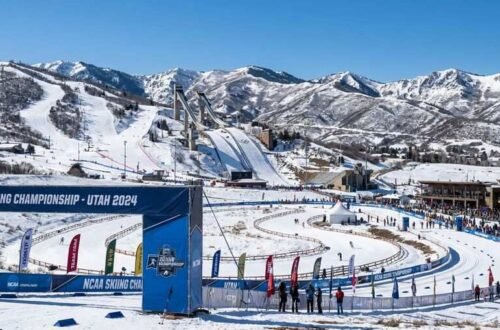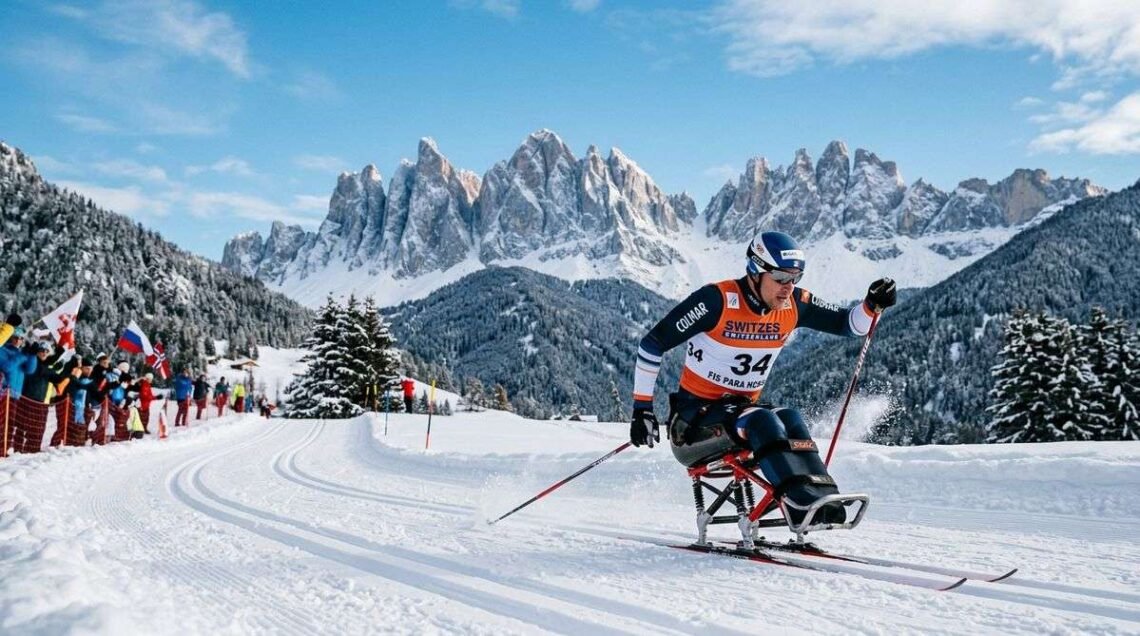
At the Milano Cortina 2026 Paralympic Winter Games, Oksana Masters claimed her fourth gold medal — pushing her career total to 24 Paralympic medals. Millions searched “paralympics cross country skiing” for the first time. Here’s everything you need to know.
Paralympics cross country skiing is an adaptation of cross-country skiing for athletes with physical and visual disabilities, part of the Winter Paralympics since the first Games in Örnskoldsvik, Sweden, in 1976. Athletes compete in three categories — standing, sitting, and vision impaired — over sprint races to 20-kilometer events.
This guide covers how the sport works, who dominated at Milano Cortina 2026, and why it’s one of the most compelling disciplines in winter adaptive sports.
How Paralympics Cross Country Skiing Works
Two techniques define the racing. Classic keeps skis parallel in pre-cut grooves with a diagonal stride. Freestyle — also called skate skiing — uses a lateral pushing motion like ice skating. It’s faster and more physically demanding.
Sprint events cover roughly 800 meters to 1.2 kilometers. Middle-distance races span 10 kilometers using an interval start, where athletes leave at staggered times and the fastest overall time wins. Long-distance events stretch to 20 kilometers. Relays include the mixed 4×2.5km (two men, two women) and open 4×2.5km (any gender/category combination).
The factored time system is what makes fair competition possible across vastly different ability levels. Each sport class has a percentage factor applied to finishing time. A sit-skier and a standing skier can compete in the same relay without inherent advantage. The raw time on the clock isn’t always the final result.
| Event | Distance | Technique | Format |
|---|---|---|---|
| Sprint | ~800m–1.2km | Classic | Head-to-head heats |
| 10km | 10 km | Classic | Interval start |
| 20km | 20 km | Freestyle | Interval start |
| Mixed Relay | 4 x 2.5km | Freestyle | Team (2M + 2W) |
| Open Relay | 4 x 2.5km | Freestyle | Team (any combo) |
Classification Categories Explained
Classification is the backbone of Paralympic sport. It determines who competes against whom, and it’s more nuanced than most people realize.
Standing (LW2–LW9): Athletes with limb impairments who ski upright. This includes amputees, athletes with limb deficiencies, and those with impaired muscle power in their legs or arms. Lower numbers indicate greater impairment.
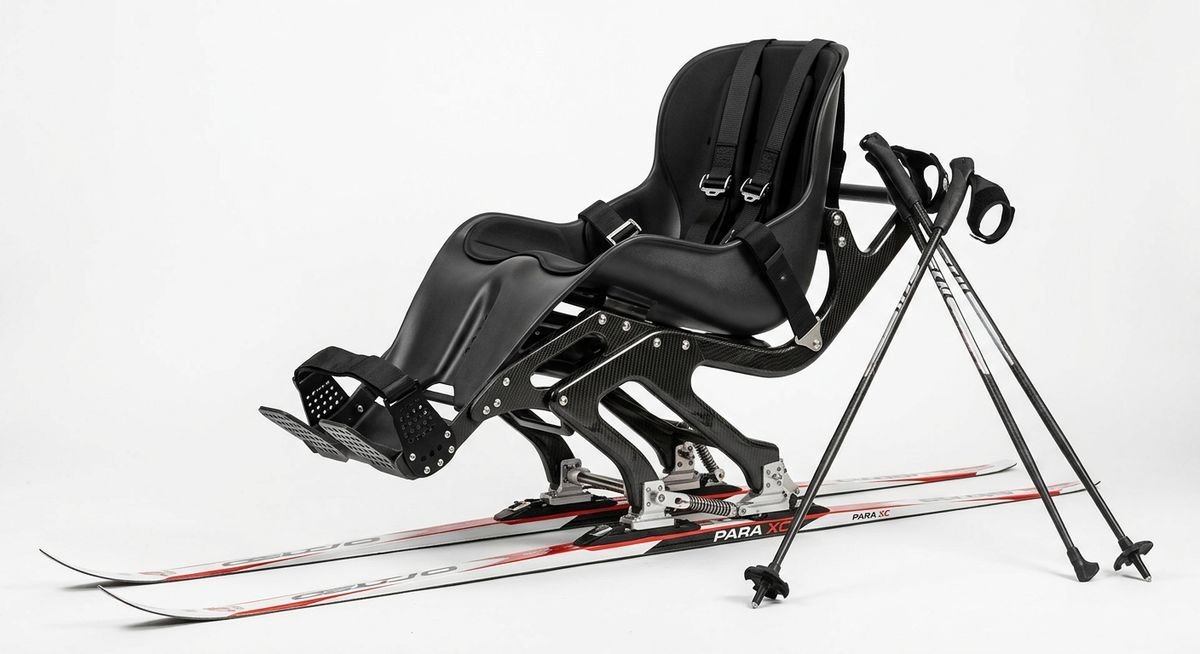
Sitting (LW10–LW12): Athletes with significant lower-limb or trunk impairments who race using a sit-ski — a molded seat mounted on a frame attached to two skis. LW10 athletes have the least trunk control; LW12 athletes have more core stability.
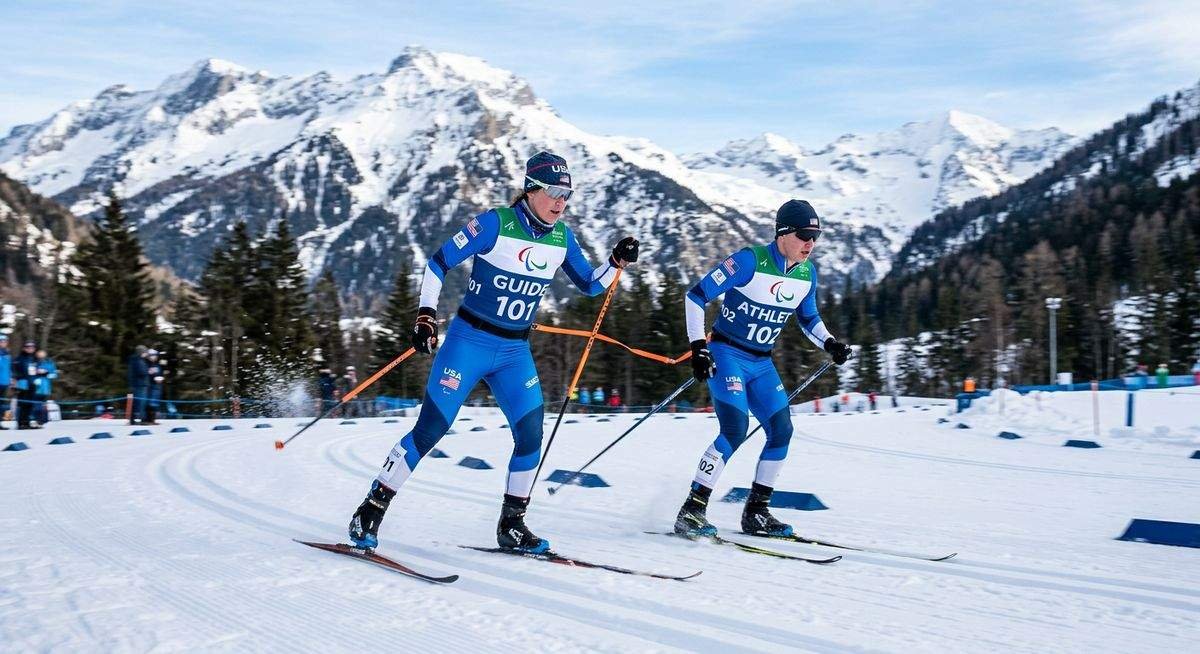
Vision Impaired (B1–B3): Athletes with visual impairments ranging from total blindness (B1) to partial sight (B3). These athletes compete with a sighted guide who skis ahead, providing verbal instructions through a Bluetooth headset integrated into their helmets.
| Category | Classes | Equipment | Guide Required? |
|---|---|---|---|
| Standing | LW2–LW9 | Standard skis, may use outriggers | No |
| Sitting | LW10–LW12 | Sit-ski (frame + seat on skis) | No |
| Vision Impaired | B1–B3 | Standard skis, tethered or headset | Yes |
Athletes undergo a three-step assessment: medical review, physical testing, and observed competition. Reclassification can happen as conditions change.
Milano Cortina 2026 — The Biggest Moments
The Tesero Cross-Country Skiing Stadium in Val di Fiemme, Italy, hosted 20 medal events from March 8 to 15, 2026. This was also a milestone year: the 50th anniversary of the Winter Paralympics. The racing delivered.
Oksana Masters (USA) was the undeniable star. The sitting athlete won gold in the women’s sprint, 10km classic, and mixed relay — then added a bronze in the 20km freestyle. Her 10km time of 26:31.6 gave her a third gold in four events. At 37, she now holds 24 career Paralympic medals, the most of any U.S. Winter Paralympian in history.
Jake Adicoff (USA) made history as the first American to win four para cross-country skiing golds at a single Games. Competing in the vision impaired category with his guide, he swept the sprint, 10km (28:03.6), and 20km events before anchoring the relay.
Sydney Peterson (USA) won the women’s 10km standing gold — her first individual Paralympic title — and followed it with gold in the 20km. The Minnesotan is also a PhD student in neuroscience at the University of Utah, studying movement disorders.
Ivan Golubkov (Russia) claimed two golds in men’s sitting (10km in 24:05.8, 20km in 51:55), marking Russia’s return under its national flag for the first time in over a decade. Kim Yunji (South Korea), just 19, won the women’s 20km sitting freestyle at her first Games. China dominated the open relay and sprint sitting (Liu Zixu, 2:28.9), plus swept the men’s 20km standing podium.
| Athlete | Country | Category | Gold Medals (2026) |
|---|---|---|---|
| Oksana Masters | USA | Sitting | 3 (+ 1 bronze) |
| Jake Adicoff | USA | Vision Impaired | 4 |
| Sydney Peterson | USA | Standing | 2 |
| Ivan Golubkov | Russia | Sitting | 2 |
| Vilde Nilsen | Norway | Standing | 1 (sprint) |
| Liu Zixu | China | Sitting | 1 (sprint) |
| Kim Yunji | South Korea | Sitting | 1 (20km) |
| Anastasiia Bagiian | Russia | Vision Impaired | 3 |
Equipment and Adaptive Technology
This is where engineering meets athletics. The equipment in paralympics cross country skiing has evolved dramatically, and it’s a story competitors rarely tell.
Sit-skis are the most striking piece of adaptive tech. A custom-molded seat sits atop an aluminum or carbon fiber frame, mounted on two narrow cross-country skis. Modern sit-skis are roughly 30% lighter than designs from a decade ago, thanks to carbon fiber construction and wind tunnel testing. Athletes propel themselves using shortened poles. A racing sit-ski costs between $3,000 and $5,000, and each one is custom-fitted to the athlete’s body dimensions and trunk control level.
Guide communication systems are essential for vision impaired racing. Guides and athletes use Bluetooth headsets built into their helmets, delivering real-time verbal cues: turn direction, upcoming inclines, pace adjustments, and competitor positions. The trust between guide and athlete is absolute. A wrong call at 25 km/h on a downhill can mean a crash.
Standing adaptations include outriggers (poles with small ski tips for balance) and prosthetic limbs optimized for skiing biomechanics. The International Ski and Snowboard Federation (FIS) governs all equipment regulations.
Paralympic vs Olympic Cross Country Skiing
How different is the Paralympic version? More than most people expect.
| Aspect | Olympic | Paralympic |
|---|---|---|
| Participants | Non-disabled athletes | Athletes with physical/visual disabilities |
| Categories | Men’s and women’s | Standing, sitting, vision impaired |
| Distances | Up to 50km | Up to 20km |
| Equipment | Standard skis and poles | Sit-skis, outriggers, guide systems |
| Classification | None | LW2–LW12, B1–B3 |
| Factored Time | No | Yes (percentage adjustments) |
| Guide Athletes | No | Yes (vision impaired category) |
| Relay Format | 4 x 7.5km (same gender) | 4 x 2.5km (mixed/open) |
Shorter distances don’t mean easier. Sit-skiers rely on upper body muscles exclusively for propulsion over 20 kilometers. The physiological demand is immense.
All-Time Records and Dominant Nations
Norway is the undisputed powerhouse with 78 gold medals across all Winter Paralympics — no other nation comes close.
Brian McKeever (Canada) holds the men’s record: 16 golds and 20 total medals. The vision impaired skier was also named to Canada’s 2010 Olympic team — one of the rare dual-squad athletes. Ragnhild Myklebust (Norway) matched with 16 golds and 27 total medals across five Games. Oksana Masters (USA) is the active leader with 24 career medals spanning cross-country and cycling.
| Nation | Gold | Silver | Bronze | Total |
|---|---|---|---|---|
| Norway | 78 | 49 | 36 | 163 |
| Russia | 42 | 38 | 32 | 112 |
| Finland | 33 | 23 | 22 | 78 |
| Germany | 30 | 28 | 26 | 84 |
| Canada | 27 | 16 | 14 | 57 |
Frequently Asked Questions
What disabilities qualify for paralympics cross country skiing?
Athletes with physical impairments (limb deficiency, impaired muscle power, hypertonia, ataxia, athetosis) and visual impairments (partial sight to total blindness) are eligible. Each athlete undergoes classification to determine their sport class.
How do visually impaired athletes navigate the course?
A sighted guide skis ahead, providing verbal direction through a Bluetooth headset — calling out turns, elevation changes, and pace targets. Both athlete and guide must cross the finish line, and the guide cannot physically assist.
What is the difference between para alpine and para cross-country skiing?
Alpine skiing uses steep slopes with gates (slalom, downhill), while cross-country covers long distances on rolling terrain. Equipment differs entirely — cross-country sit-skis are built for forward propulsion, while alpine mono-skis are built for turning and speed control.
How fast do paralympic cross country skiers go?
Standing athletes reach 20–25 km/h on flat sections. Sit-skiers travel 15–20 km/h on flats. On downhill stretches, speeds can exceed 30 km/h across all categories.
Can anyone try adaptive cross country skiing?
Yes. Programs exist through organizations like U.S. Paralympics Nordic Skiing, Move United, and national disability sport bodies. Many ski resorts offer adaptive lessons and equipment rentals.
How many events are in paralympics cross country skiing?
At Milano Cortina 2026, there were 20 gold medal events across standing, sitting, and vision impaired categories for men and women, plus mixed and open relay events.
Is para Nordic skiing the same as para cross-country skiing?
Not exactly. Para Nordic skiing includes both para cross-country skiing and para biathlon (cross-country skiing plus rifle shooting). The terms are often used interchangeably but biathlon is a separate discipline.
Who governs paralympics cross country skiing?
The International Ski and Snowboard Federation (FIS) sets technical rules. The International Paralympic Committee (IPC) oversees classification and the Games program.
The Road Ahead
From a handful of athletes in Sweden in 1976 to 20 gold medal events at Milano Cortina 2026, paralympics cross country skiing continues to grow in scope and global attention.
Athletes like Oksana Masters, Jake Adicoff, and Kim Yunji are expanding what this sport means — and who it reaches. For official information, visit the International Paralympic Committee and the Milano Cortina 2026 results page.
Whether you’re watching replays, planning for the French Alps 2030 Winter Paralympics, or considering trying adaptive skiing yourself — this sport rewards your attention.