What do you do when the person you love most in the world is dying at 22,000 feet? For Russian mountaineer Natasha Nagovitsina, the answer was simple. You stay. In 2021, while scaling Khan Tengri, her husband Sergei suffered a fatal stroke. Rescue teams urged her to descend. She refused. That single, defiant choice cemented her as a legend in the mountaineering world.
Four years later, fate dealt another cruel hand. This time, it was Natasha who was in peril. Stranded and alone with a broken leg near the summit of Victory Peak, one of the world’s most treacherous mountains. The world watched, holding its breath, as a desperate rescue mission unfolded against impossible odds. Her story became a gripping saga of survival, sacrifice, and the indomitable human spirit.
This article delves into the extraordinary life and tragic death of Natasha Nagovitsina. We will explore the two defining moments that shaped her legacy, the incredible courage she displayed in the face of unimaginable adversity, and the profound questions her story raises about love, loss, and the risks we take for the passions that drive us.
The Woman Behind the Legend
Natasha Nagovitsina was more than just a climber; she was a force of nature. A 47-year-old Russian mountaineer, she possessed a quiet determination that set her apart in a world dominated by bravado. While many climbers chase records and glory, Natasha sought something deeper in the mountains. For her, it was a spiritual journey, a place to test the limits of her body and soul.
Her climbing resume was nothing short of extraordinary. She had stood atop some of the world’s most formidable peaks, including Mount Everest and K2. But it was the sheer volume of her ascents that was truly staggering. With over 400 successful climbs to her name, she had spent more time in the death zone than most people spend in their own backyards. This vast experience gave her an intimate understanding of the mountains, their beauty, and their brutality.
But what truly defined Natasha was her unwavering loyalty and compassion. She was a mother to her son, Mikhail, and a devoted wife. Her friends described her as someone who loved fiercely and lived without reservation. This deep capacity for love would be tested in the most extreme circumstances, revealing a strength that transcended physical endurance.
When Love Became the Strongest Force on Khan Tengri
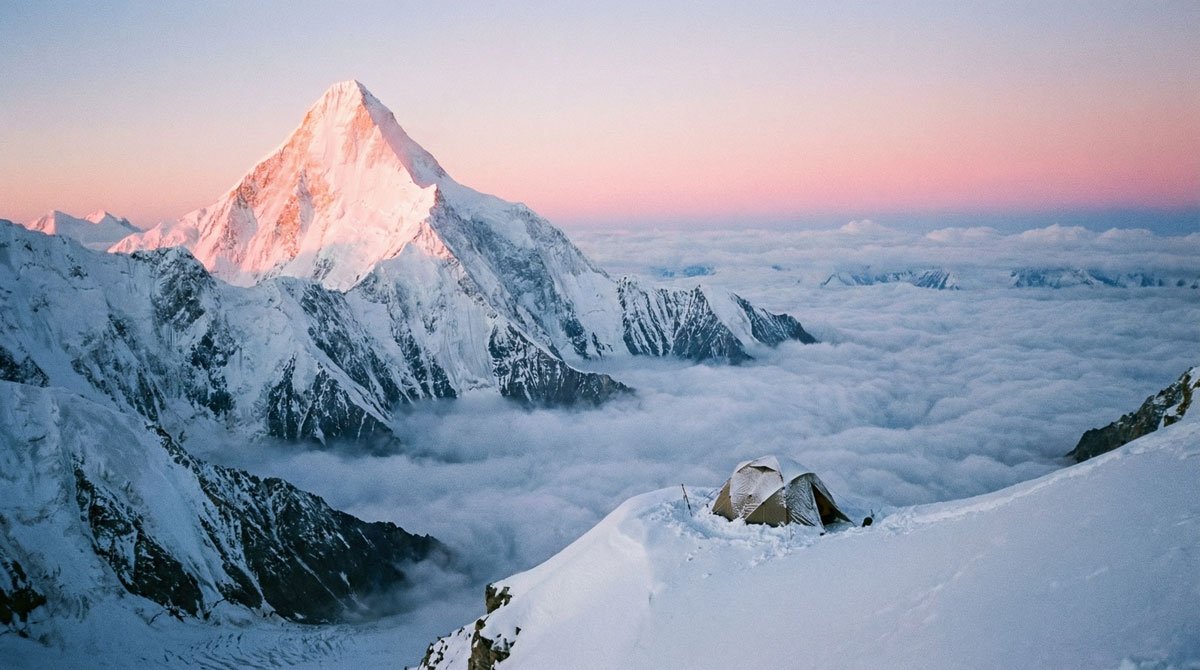
In 2021, on the icy slopes of Khan Tengri, Natasha Nagovitsina faced a choice that would come to define her. She and her husband, Sergei, were at an altitude of 6,900 meters when he suffered a sudden, catastrophic stroke. As his life slipped away, the mountain’s unforgiving logic demanded a swift descent. Survival at that altitude is a race against time, and every moment spent lingering is a gamble with one’s own life.
Rescue coordinators, understanding the brutal calculus of the death zone, urged her to save herself. To leave him. It was the standard, albeit heartbreaking, protocol. But Natasha refused. In an act of profound love and defiance, she chose to stay by her husband’s side, cradling him in his final moments. She would not let him die alone.
This decision was not born of ignorance or naivety. Natasha, with her hundreds of climbs, understood the risks better than anyone. She knew that staying with Sergei likely meant her own death. Yet, she chose compassion over self-preservation. It was a testament to the depth of her love and the strength of her character. She survived, but the experience left an indelible mark on her soul, a quiet sorrow that she would carry with her to her final climb.
| Mountaineer’s Dilemma | Typical Response | Natasha’s Choice |
|---|---|---|
| Partner incapacitated in death zone | Descend immediately to save oneself | Stay with her husband until the end |
| Rescue advice | Follow expert guidance for survival | Defy advice to honor her love |
| Personal risk assessment | Prioritize self-preservation | Accept the risk of death for compassion |
Stranded at 22,965 Feet: When Nature’s Cruelty Strikes Again
Four years after the tragedy on Khan Tengri, Natasha Nagovitsina returned to the high peaks, her spirit unbowed. But the mountains are indifferent to human resilience. On August 12, 2025, while descending from the summit of Pobeda Peak—a notoriously difficult and deadly mountain—disaster struck. A fall. A broken leg. At 22,965 feet, a death sentence for most.
Her climbing partner, Roman Mokrinsky, provided immediate first aid before making the agonizing decision to descend for help. Soon after, a wave of heroism swept across the mountain. Italian climber Luca Sinigaglia and German Gunther Sigmund fought their way up to her, delivering a tent, food, and a sleeping bag. They gave her a fighting chance. But the mountain demanded a price for their compassion. During his descent, Luca Sinigaglia succumbed to the extreme conditions, dying of suspected cerebral edema. A rescuer had become a victim.
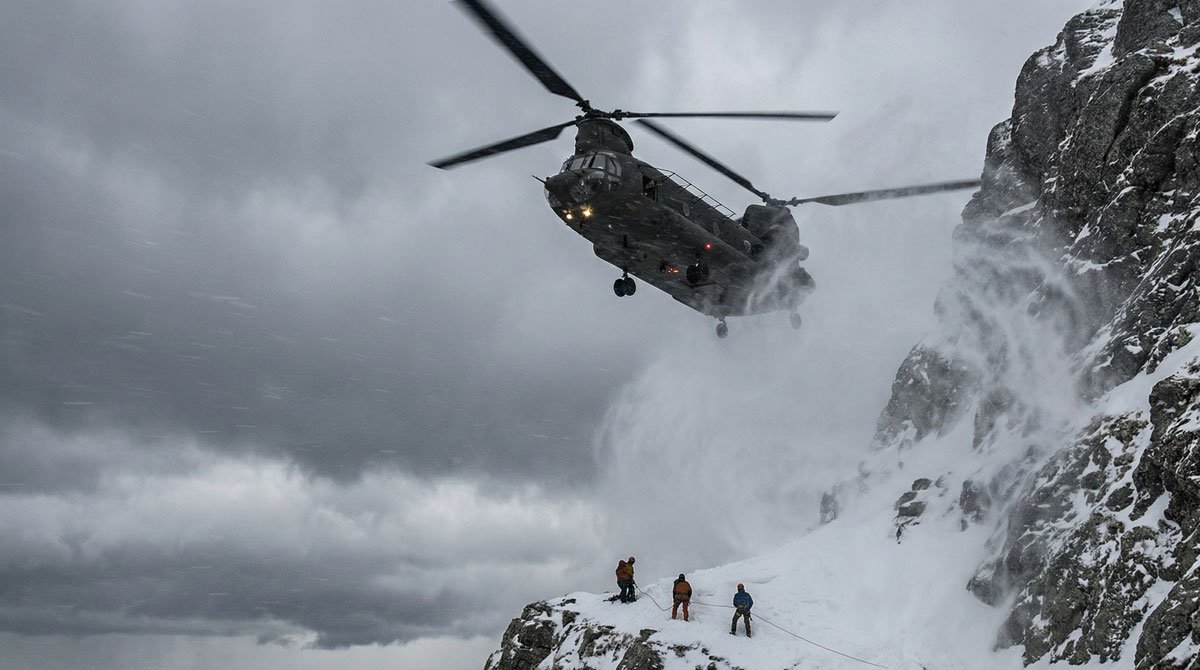
The official rescue operation that followed was a frantic race against time, thwarted at every turn by the mountain’s fury. Helicopters were beaten back by ferocious winds, with one crashing and injuring its crew. Drones pierced the clouds, capturing fleeting images of Natasha, alive and waving, a ghost in a world of white. But as days turned into weeks, hope began to fade. The final drone flight, on August 27, revealed a still tent. No signs of life. The rescue was officially abandoned. Natasha Nagovitsina was alone with the silence of the summit.
| Date (August 2025) | Event |
|---|---|
| August 12 | Natasha Nagovitsina breaks her leg while descending from Pobeda Peak. Roman Mokrinsky provides first aid and descends for help. |
| August 13 | Luca Sinigaglia and Gunther Sigmund reach Natasha, providing her with a tent, sleeping bag, and supplies. |
| August 15 | Luca Sinigaglia dies during his descent from suspected hypothermia and cerebral edema. |
| August 17 | A military helicopter rescue attempt fails due to bad weather, crashing and injuring two rescuers and the pilot. |
| August 19 | A drone captures footage of Natasha alive and waving inside her tent, renewing hope for a rescue. |
| August 23 | The Kyrgyz Ministry of Emergency Situations officially suspends the ground rescue operation due to extreme weather and high risk. |
| August 27 | A final aerial reconnaissance mission with a thermal imaging drone finds no signs of life. The rescue is declared impossible. |
Why Rescue at 7,200 Meters is Nearly Impossible
To understand why Natasha Nagovitsina couldn’t be saved, one must understand the brutal science of extreme altitude. Above 8,000 meters (26,247 feet) lies the “death zone,” a region where the human body can no longer acclimatize. Oxygen is so scarce that the body begins to die, cell by cell. Pobeda Peak, at 7,439 meters, pushes the very edge of this limit, and Natasha was stranded at a crippling 7,200 meters (23,600 feet) [1].
At this altitude, the air holds roughly one-third of the oxygen available at sea level. The body, starved of its most essential fuel, rapidly deteriorates. Hypoxia, or oxygen deprivation, triggers a cascade of life-threatening conditions. The brain swells, leading to High Altitude Cerebral Edema (HACE), which causes confusion, hallucinations, and eventually, coma and death [2]. The lungs fill with fluid, a condition known as High Altitude Pulmonary Edema (HAPE). Add to this the relentless, biting cold, which leads to hypothermia and severe frostbite. It’s a battle on multiple fronts, and the body is losing.
Helicopter rescue, a common solution at lower elevations, becomes a near-impossible feat. The thin air provides little lift for the rotor blades, making it incredibly difficult to hover or land. The unpredictable and violent winds that whip around these massive peaks can swat a helicopter from the sky in an instant, as tragically demonstrated by the crash during the rescue attempt. In the entire history of mountaineering on Pobeda Peak, there has never been a successful rescue from an altitude of 7,200 meters. It is a place where humans are not meant to survive, and where even the most heroic efforts are often swallowed by the indifference of the mountain.
When Rescuers Become Victims: The Cost of Compassion
Gunther Sigmund, the German climber who reached Natasha with Luca Sinigaglia, painted a heartbreaking picture of her state. “When Natalia saw us, she started crying—she hoped she could come down,” he recounted. They left her with enough food and gas for four or five days, a small window of hope in a desperate situation. They believed she could hold on. But the mountain had other plans.
The story of the rescue is one of both incredible bravery and devastating loss. Luca Sinigaglia, an Italian climber who had met Natasha the previous year, became the ultimate symbol of this duality. He knew the risks, yet he did not hesitate. He gave his own supplies, his own chance at survival, to a fellow climber in need. His death was a stark reminder that on these peaks, compassion can carry the highest cost.
The official rescue efforts were no less fraught with peril. A military helicopter, attempting a daring high-altitude extraction, was slammed by violent winds and crashed, injuring its crew. Technology offered a fleeting glimpse of hope when a drone captured footage of Natasha, still alive, waving from her tent seven days after the accident. Her son, Mikhail, clung to this image, pleading for the rescue to continue. “I am sure that she is alive and wants the search to be resumed,” he insisted. But the weather window slammed shut. The final decision to abandon the search was agonizing. Rescue leader Dmitry Grekov stated the grim reality: “It is unrealistic to survive at such an altitude.” Before communication was lost, Natasha had managed to send a final message to her son, a simple, heartbreaking request: tell him she was just “delayed in the mountains.”
Beyond the Tragedy: The Lessons of Resilience
Natasha Nagovitsina’s story is more than just a tale of tragedy; it is a profound exploration of human resilience, love, and the unyielding spirit of a true mountaineer. Her legacy is not defined by her death, but by the choices she made in the face of it. In a sport often characterized by individual achievement and a ruthless focus on the summit, Natasha’s actions on Khan Tengri in 2021 were a radical act of humanity. She reminded the world that some things are more important than reaching the top.
Her story has ignited a fierce debate within the mountaineering community about the ethics of high-altitude rescue. Where is the line between heroic compassion and reckless endangerment? Luca Sinigaglia’s death forced a painful reckoning with the true cost of attempting to save those stranded in the death zone. There are no easy answers, only the grim reality that the mountain is the ultimate arbiter.
Yet, Natasha’s legacy endures. She challenged the unwritten rules of mountaineering, proving that strength is not just about physical endurance, but about the courage to love in the face of death. She has become a symbol of defiance, a woman who refused to let the mountains dictate her heart. Her story will be told and retold, a haunting and inspiring reminder of the passions that drive us to the world’s highest places, and the humanity that defines us when we get there.
Your Questions About Natasha Nagovitsina Answered
- 1. Who was Natasha Nagovitsina and why is her story important?
- Natasha Nagovitsina was a 47-year-old Russian mountaineer with over 400 climbs, including Everest and K2. Her story is significant for two reasons: her 2021 decision to stay with her dying husband on Khan Tengri, and her own tragic death on Victory Peak in 2025 after a two-week survival ordeal. Her life highlights the themes of love, sacrifice, and the brutal realities of high-altitude climbing.
- 2. What exactly happened on Victory Peak on August 12, 2025?
- While descending from the summit of Victory Peak, Natasha fell and suffered a severe leg fracture. This injury left her stranded at an altitude of 7,200 meters (22,965 feet), unable to move, in a region where survival is measured in hours, not days.
- 3. Why couldn’t rescuers save Natasha Nagovitsina?
- A combination of factors made her rescue impossible. The extreme altitude (7,200 meters) was beyond the operational limits for a successful helicopter extraction. Severe weather, including high winds and temperatures as low as -23°C, thwarted multiple attempts. The thin air and treacherous conditions made a ground rescue too dangerous, as evidenced by the death of one rescuer and a helicopter crash.
- 4. What is the death zone and why is it so dangerous?
- The “death zone” in mountaineering refers to altitudes above 8,000 meters (about 26,000 feet), but the life-threatening effects begin at lower altitudes. The oxygen level is too low to sustain human life for an extended period. Climbers face severe risks including hypoxia, High Altitude Cerebral Edema (HACE), High Altitude Pulmonary Edema (HAPE), hypothermia, and frostbite.
- 5. Who was Luca Sinigaglia and why did he die trying to help her?
- Luca Sinigaglia was an Italian climber who knew Natasha. In a heroic act, he and another climber, Gunther Sigmund, ascended to her location to provide a tent, sleeping bag, and other supplies. Tragically, during his descent, Luca died from what is believed to be a combination of hypothermia and cerebral edema, a direct consequence of the extreme physical exertion at that altitude.
- 6. Did Natasha Nagovitsina have any previous mountaineering tragedies?
- Yes. In 2021, four years before her own death, her husband Sergei suffered a fatal stroke while they were climbing Khan Tengri at 6,900 meters. Despite rescue advice to descend and save herself, Natasha chose to remain by his side until he passed away.
- 7. How many people have died on Pobeda Peak?
- Over 80 climbers have perished on Pobeda Peak, making it one of the deadliest mountains in the world. Its combination of extreme altitude, unpredictable weather, and technical difficulty contributes to its high fatality rate. None of the bodies of the deceased have ever been recovered from the mountain.
- 8. What are the risks of climbing at extreme altitudes?
- The primary risk is the lack of oxygen, which can lead to a host of physiological problems. Other major risks include extreme cold, high winds, avalanches, falls, and the logistical difficulty of rescue. The physical and mental toll is immense, and the margin for error is virtually nonexistent.
The Mountaineer Who Refused to Surrender
Natasha Nagovitsina’s story is a paradox, a haunting blend of breathtaking courage and devastating tragedy. She was a woman who faced the ultimate test not once, but twice. On Khan Tengri, she chose love over survival. On Victory Peak, she fought for survival with a tenacity that inspired awe. She did not conquer the mountain, but she conquered something far greater: fear.
Her legacy is etched not in the record books, but in the hearts of those who heard her story. She reminds us that the human spirit is the most formidable force on earth, capable of extraordinary love and resilience even in the face of certain death. Natasha Nagovitsina did not surrender. She simply became one with the mountains she so loved.