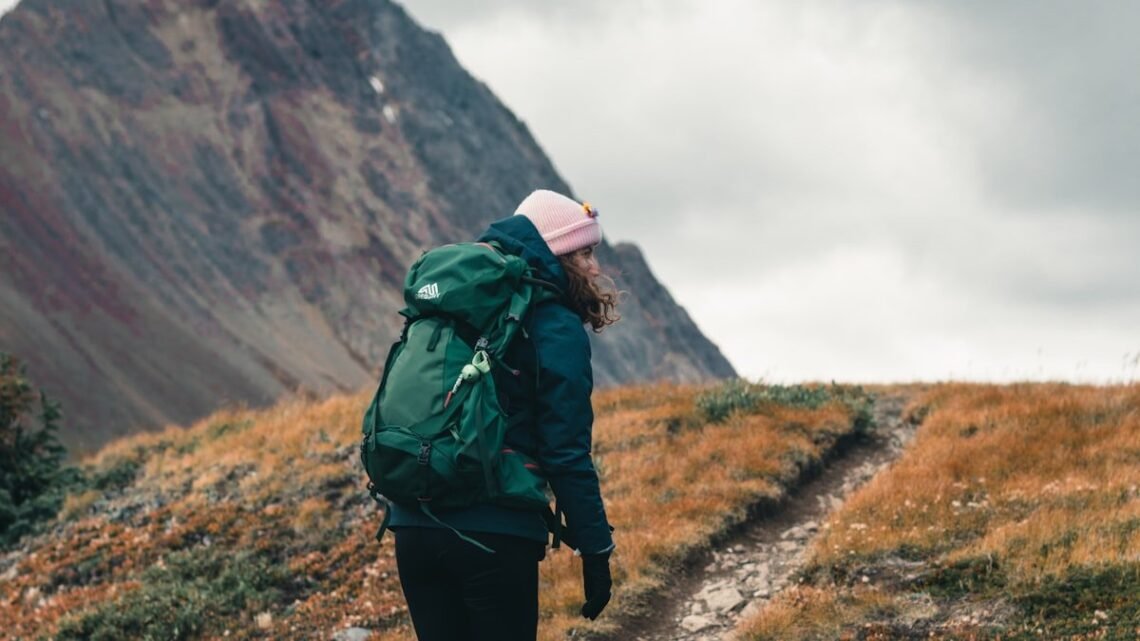
Wear moisture-wicking layers, sturdy shoes, and no cotton. That single sentence covers about 90 percent of what to wear when hiking, whether you are walking a flat two-mile loop or climbing above the treeline.
The outdoor industry would prefer you believe otherwise. You do not need a $400 shell or trail-specific everything to start; you need clothes that handle sweat, a forecast you actually checked, and one more layer than you think.
The rest is detail, and the details below are the ones that matter.
Start With the Three-Layer System
Layering beats any single jacket. A light base layer that moves sweat, a warm middle layer, and a weather shell cover nearly every trail condition, and you adjust by adding or removing one piece.
The logic is simple: your body heat changes constantly on a hike, but a single heavy garment cannot change with it. Ten minutes up the first climb you are sweating; twenty minutes later, stopped at a windy overlook, you are cold.
Hikers have refined layered clothing into a system with three jobs, and each piece does exactly one of them.
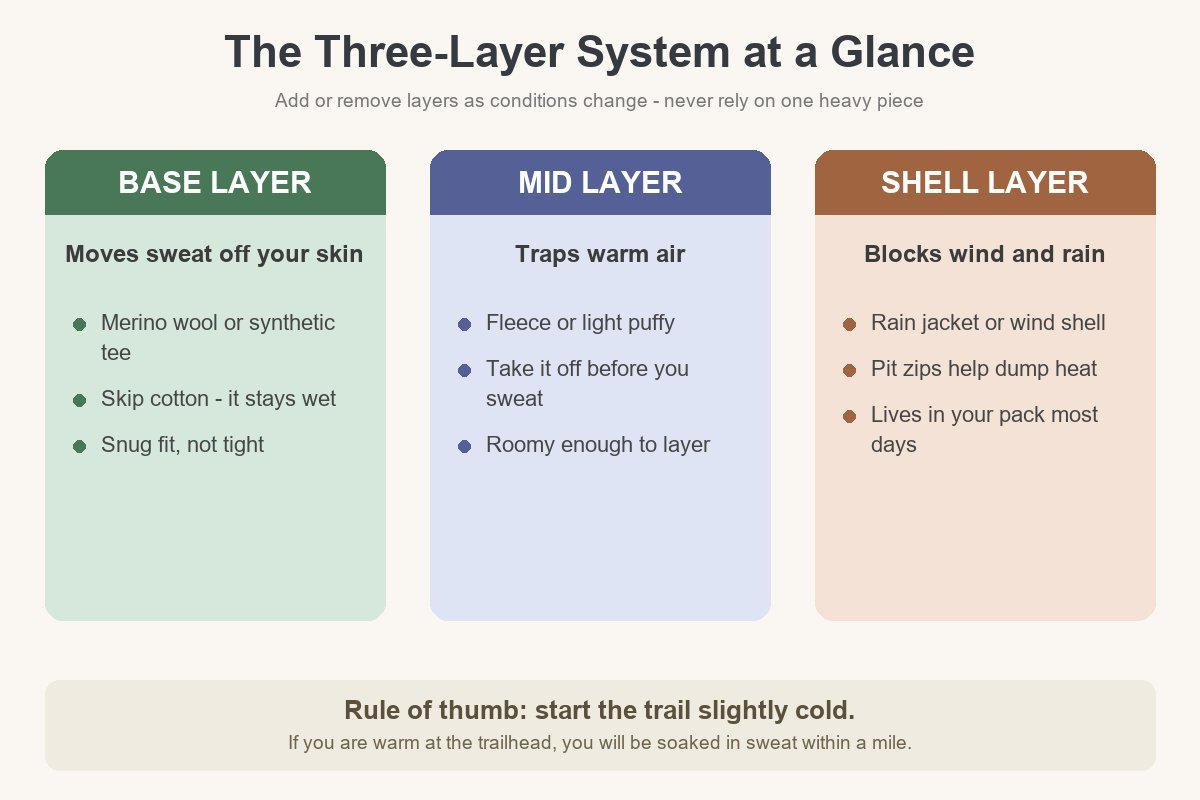
Base layer: manage sweat
This is the shirt against your skin, and its only job is to move sweat away from you. Polyester, nylon, and merino wool all do this well; a long-sleeve version adds sun protection for roughly the same weight.
Cotton does the opposite. It soaks up sweat, holds it against your body, and keeps you clammy on the climb and cold at every stop.
Mid layer: hold warmth
A fleece, a wool hoodie, or a light synthetic puffy traps the heat your body makes. On warm days this piece rides in your pack the whole time, and that is fine; its job is the summit stop, not the climb.
Thickness depends on season. A 100-weight fleece handles three-season hiking for most people, while winter calls for a real insulated jacket.
Outer layer: block weather
The shell keeps wind and rain off the two layers underneath. A packable rain jacket is the default choice because it handles both jobs and weighs a few ounces.
You will not wear it most days. You will be very glad to own it on the day the forecast was wrong.
“Wool or synthetic base layers. Fleece or wool mid layer; like a hoodie or sweater. Wind shell or wind jacket. Rain jacket or rain poncho. Down or synthetic puffy jacket. Size up on the outerwear so there’s room to layer underneath.”
– r/hikinggear, October 2025 (8 upvotes)
That sizing tip at the end is the kind of thing you only learn by getting it wrong once. A shell that fits perfectly over a t-shirt will not zip over a puffy.
What to Wear When Hiking in Any Weather
Check the forecast for the trail, not your city, then dress for the coldest hour you will be out. The table below matches temperature ranges to outfits that hold up on real hikes.
Mountain trailheads routinely run 10 to 20 degrees colder than the nearest town, and summits colder still. Wind and elevation change the math faster than most beginners expect.
| Temperature | Top | Bottom | In the pack |
|---|---|---|---|
| Above 75°F | Light synthetic tee or sun shirt | Shorts or thin pants | Rain shell if any storm chance, extra water |
| 60 to 75°F | Synthetic tee or long sleeve | Shorts, pants, or leggings | Light fleece, rain shell |
| 40 to 60°F | Long-sleeve base plus fleece | Pants or leggings | Rain shell, warm hat, light gloves |
| Below 40°F | Base, fleece, and insulated jacket | Pants over thermal tights | Shell, spare gloves, warm hat, extra socks |
Heat brings its own problem: rain gear that cooks you. In hot, humid climates, many experienced hikers stop fighting the water entirely.
“Hi, Florida here. Hot and raining are two things that go hand in hand there. I think you need to prioritize hot over wet. Cause you’re gonna get wet. So I stick with some quick dry clothing and just accept that rain exists. Does it rain? Yep, water is wet. Did it stop raining? Oh cool, here’s the humidity, you’re wet again. Just go for comfort and quick dry. If you’re out for prolonged periods of time though, make sure you find time and space to fully dry out. Don’t want to become a gangrenous….”
– r/hikinggear, March 2026 (35 upvotes)
The reverse rule applies in cold weather: start the hike slightly cold. If you are warm standing in the parking lot, you will be soaked in sweat within a mile, and wet clothing in cold air is how hypothermia starts.
Shoulder seasons are the hardest to dress for because mornings and afternoons feel like different months. That is when the layering system pays for itself, since you can strip to a tee at noon and rebuild the whole stack for the descent.
Hiking Footwear: Shoes, Boots, and Socks
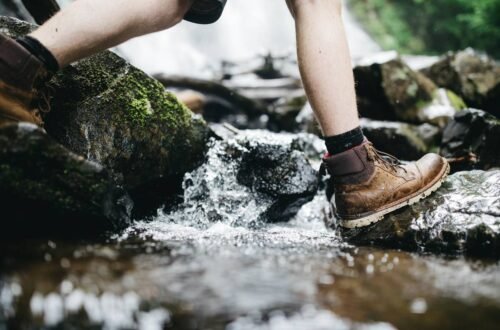
Trail runners handle most day hikes better than heavy boots. Save stiff waterproof boots for rocky terrain, snow, or heavy packs, and spend the money you save on good synthetic or wool socks.
The old advice that every hiker needs leather boots died years ago. Most thru-hikers now finish 2,000-mile trails in trail runners, which are lighter, dry faster, and need no break-in period.
Boots still win in specific conditions: ankle-deep mud, talus fields, snow, or any trip where you carry more than about 30 pounds. If your local trails are rooty, wet, and steep, a mid-height boot is a reasonable default.
Waterproof linings are a genuine tradeoff, not an upgrade. They keep shallow puddles out, but they also trap sweat, and once water gets in over the top, a waterproof shoe becomes a bucket that never drains.
Whatever you choose, the fit rule is the same: a thumb’s width of space in front of your longest toe, tested late in the day when your feet have swollen. Downhill miles find every short toebox.
Socks matter more than most shoe decisions. Merino wool or synthetic hiking socks cushion impact, move sweat, and keep their shape wet; cotton athletic socks bunch, rub, and hand you blisters by mile three.
Pants, Shorts, and Leggings
Any pants that stretch, dry fast, and survive a rock scrape will do. Hiking pants, running shorts, and leggings all work; denim is the only common choice that actively works against you.
Jeans are heavy, stiff, slow to dry, and cold when wet, which is the full list of things trail clothing should not be. Athletic clothes you already own are a better starting point than anything cotton.
Shorts trade coverage for airflow. They are the comfortable pick in summer heat, and the wrong one on overgrown trails, where brush, sun, and ticks all vote for pants.
Leggings have earned their place on trail: they stretch, breathe, and layer cleanly under rain pants or over thermal tights. Their weakness is abrasion, so a pair with reinforced panels lasts longer if you scramble.
Convertible pants solve the choice by refusing to make it. They look like what they are, but on trips where mornings start at 45°F and afternoons hit 80, the zip-off legs stop being a joke.
Accessories Worth Carrying
A hat, sunglasses, and one warm extra earn their pack space on almost every hike. Most other clothing accessories are situational, so match them to the season instead of carrying everything.
A brimmed hat works harder than sunscreen you forgot to reapply, and above the treeline there is no shade to borrow. Sunglasses go from comfort to requirement anywhere near snow or water.
For three-season hiking, a light beanie and thin gloves weigh almost nothing and live at the bottom of the pack. Cold hands at a windy lunch spot end more hikes early than tired legs do.
Gaiters, sun gloves, neck buffs, and trekking-pole straps all have their fans. Add them when a specific trail teaches you why, not before.
Clothing Mistakes That Ruin Hikes
Most miserable hikes trace back to clothing decisions made at home. Cotton next to skin, brand-new boots, and dressing for the parking lot instead of the summit cause more bad days than weather does.
Cotton against your skin. The phrase “cotton kills” is dramatic, but the mechanism is real: wet cotton pulls heat from your body roughly 25 times faster than air. A sweaty cotton tee at a breezy overlook turns a rest stop into shivering.
Breaking in boots on a long hike. New footwear gets a few short walks before it gets a mountain. Blisters at mile two make for a long negotiation with the remaining six.
Dressing for the trailhead. If you are comfortable standing still at the car, you are overdressed for the first climb. Start a touch cold and let the hill warm you.
Skipping the rain layer on a sunny forecast. Mountain weather is a local rumor, not a promise. The National Park Service’s hiking safety guidance puts extra clothing on its ten-item list for a reason.
Forgetting sun protection above the treeline. Alpine sun burns through cool air, and snow reflects it back up at angles sunscreen routines never planned for. Long sleeves, a brim, and sunglasses are the lazy, reliable answer.
The 30-Second Trailhead Check
Run through this list at the trailhead before you lock the car. It takes about thirty seconds and catches the mistakes that are cheap to fix now and expensive to fix two miles in.
- Nothing cotton touching skin, socks included
- Rain shell in the pack, regardless of the sky
- One warm layer more than the forecast says you need
- Feet: hiking socks on, laces snug at the heel, toes free
- Hat and sunglasses where you can reach them
- Slightly cool standing still? Good, start walking
None of this requires new gear. It requires checking, which is free.
FAQ
What shoes should you wear for hiking?
Lightweight trail runners or low hiking shoes are the best choice for most day hikes; save stiff waterproof boots for rough terrain, snow, or trips with a heavy pack.
Fit beats category every time. Buy for a thumb’s width of toe room, wear real hiking socks to the fitting, and never take new footwear on a long hike first.
Can you hike in leggings or jeans?
Leggings are fine for hiking and jeans are not. Leggings stretch, breathe, and dry quickly, while denim is heavy, restricts your stride, and stays cold and wet for hours after rain or sweat.
If leggings are what you own, hike in them today and worry about reinforced hiking pairs later.
What to wear when hiking in summer?
Light colors, a loose synthetic shirt, shorts or thin pants, a brimmed hat, and sunglasses handle summer trails; long sleeves in thin fabric often beat bare arms in strong sun.
Carry more water than feels necessary and keep a light rain shell in the pack if there is any storm chance. Afternoon thunderstorms build fast in the mountains.
Do you need special clothes to start hiking?
No. For short trails in mild weather, the athletic clothes you already own work fine, as long as nothing against your skin is cotton.
Upgrade one piece at a time as real trails expose real gaps: usually socks first, then a rain shell, then footwear.
The Only Rule That Matters
Dress for the weather you might meet, not the weather you hope for. Skip cotton, pack one layer more than the forecast suggests, and nearly everything else about hiking clothes is personal preference.
Your closet already holds a workable hiking outfit. The trail will tell you, one slightly uncomfortable afternoon at a time, exactly what to buy next.