For 2026-27, the Epic Pass costs $1,119 for adults against $1,449 for the full Ikon Pass, and Epic gives unlimited access to 42 resorts against Ikon’s 18. Read those numbers alone and Epic wins in a walk. The reason the debate refuses to die is that the numbers are not the decision.
The decision is geographic. A season pass is mostly a subscription to the two or three mountains you can reach on a normal weekend, with everything else as a bonus, so the epic vs ikon pass question is almost always settled by which network owns your home hill. This comparison lays out the 2026-27 prices and access first, then works through the situations where the obvious answer flips.
Epic vs Ikon Pass Prices for 2026-27
All prices below are the early-season rates listed on Ski.com’s Epic vs Ikon comparison; both passes are at their cheapest right now and climb through fall until sales cut off.
| Epic Pass | Ikon Pass | |
|---|---|---|
| Adult, full pass | $1,119 | $1,449 |
| Young adult | $889 (18–30, teens same) | $1,049 |
| Child | $569 (5–12) | $449 (5–12), $199 under 5 |
| Cheaper tier | Epic Local: $829 adult, $659 young adult, $435 child | Ikon Base: $1,019 adult (23+), $729 ages 13–22, $349 child |
| Unlimited resorts | 42 (U.S., Canada, Australia, Switzerland) | 18 (U.S., Canada) |
| Total network | 90+ resorts | 70+ resorts, most partners capped at 7 days |
| Protection | Epic Coverage included with every pass | Refundable-pass option; unscanned passes can claim 100% back until a mid-January deadline, one scan drops it to 50% |
The structural difference matters more than any single row. Epic is built as an unlimited-access product: most of its network, from Vail and Breckenridge to Stowe and Whistler Blackcomb, comes with no day caps on the full pass. Ikon is built as a home-mountain-plus-trips product: 18 unlimited resorts, then seven days each at destination partners like Jackson Hole, Aspen Snowmass, Big Sky, Alta-Snowbird, and Killington. Neither design is better in the abstract. One of them matches how you actually ski.
Your Home Mountain Decides
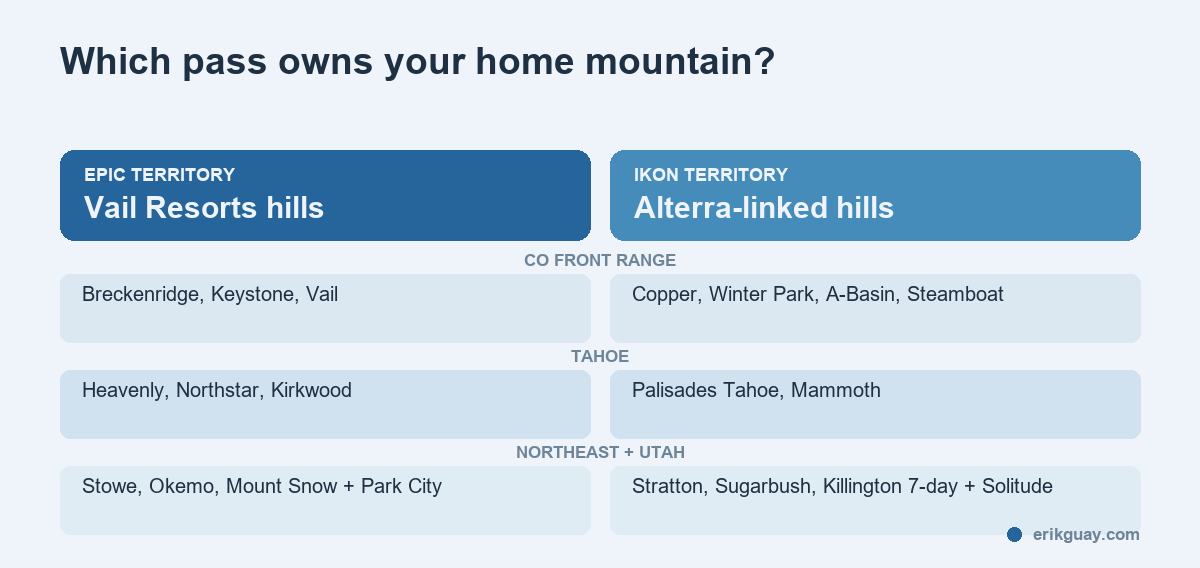
Skip the brochures and answer one question: which mountain will you stand on the most Saturdays? In Colorado’s Front Range, Epic means unlimited Breckenridge, Keystone, and Vail, while Ikon means unlimited Copper, Winter Park, Arapahoe Basin, and Steamboat. In Tahoe, Epic owns Heavenly, Northstar, and Kirkwood; Ikon owns Palisades Tahoe and Mammoth. In the Northeast, Epic runs Stowe, Okemo, and Mount Snow; Ikon runs Stratton, Sugarbush, and Tremblant, with Killington as a seven-day partner. In Utah, Epic has Park City, and Ikon has Solitude unlimited plus days at Alta, Snowbird, and Deer Valley.
Whatever tribal loyalty the internet performs about the two networks, people who ski both mostly report the same on-mountain reality:
“Breck local here and I’ve actually seen the crowds decrease over the last 5 seasons. I find it interesting that your experience is the opposite. Like, I don’t think I stood in a lift line more than 10 minutes all last season and that was maybe like \~5 times? If you’re looking for empty, wide-open skiing at the local Ikon mountains, I think you’re going to be disappointed. Neither Epic nor Ikon are really much different. I will say…..the one thing that Ikon has going for it is ABasin. I love….”
– r/skiing, July 2026 (23 upvotes)
Switching networks to escape crowds usually trades one busy parking lot for another. Switching to gain a specific mountain you love is a better reason, and plenty of Colorado skiers alternate passes every season for exactly that variety.
How Many Days Until a Pass Pays Off?
A full Epic Pass at $1,119 equals about seven of Epic’s own peak-window day passes, which run $167 for a holiday adult ticket valid at every resort. Ski eight days or more and the full pass is simply cheaper; at five or six days the math gets close enough that flexibility should decide.
Epic also sells multi-day passes, from one to seven days, in a 32-resort and a cheaper 22-resort version. A seven-day holiday version costs $812, so a skier planning a single week-long trip has no business buying a $1,119 season product. Ikon’s answer to the short-trip skier is the Session Pass, sold in small day bundles, but its structure changes often enough that checking the current terms beats memorizing them. For families the two networks split: Ikon’s child pricing undercuts Epic at $449 against $569, and kids four and under ride Ikon for $199, so a household of four can land hundreds of dollars apart from a solo buyer choosing between the same two networks.
Discounts Flip the Table
Identity discounts beat brand analysis, and this is the part most comparison pages skip. Epic runs deep military, veteran, and dependent pricing; both networks court college students and healthcare workers in various seasons. When one side offers you a hundreds-off price, the epic vs ikon pass debate is usually over. Here is the exact situation, from a first-season skier weighing renewal:
“This was my first year skiing and I’m I’ve had a blast. I took a lesson at winter Park the first week of December and was hard core hooked so I bought an Ikon pass a couple of days before they stopped selling them. Since then I’ve gone 14 days and have advanced a ton plus taking a couple of additional lessons. Ikon passes go on sale in a couple of days. I can get the base for $950, but I found out I can get a veterans discount on the Epic pass that would make it $620. My knee jerk reaction is t…”
– r/COsnow, March 2026 (39 upvotes)
A $330 gap buys a lot of gas, lessons, and parking. Unless the cheaper pass locks you out of the one mountain you actually love, take the discount and spend the difference on skiing.
Fine Print Worth Reading
Three details separate the passes off the snow. Epic Coverage comes free with every pass and refunds for injury, job loss, and similar disruptions. Ikon handles protection differently: buy the refundable option, and an unscanned pass can be fully refunded until a mid-January deadline, while a single scan cuts the refund to half. Both cheaper tiers, Epic Local and Ikon Base, carry holiday blackouts and trim the resort list, which is exactly where a December-only skier gets burned.
The two companies also live under a legal cloud worth knowing about: a federal antitrust class action filed against Vail Resorts and Alterra alleges their pass practices inflate prices and squeeze independent ski areas, as reported by Ski Area Management. Nothing about the suit changes what to buy this fall. It is simply the honest backdrop to a market where two products set the price of American skiing.
FAQ
Is Epic or Ikon cheaper?
Epic is cheaper at every adult tier for 2026-27: $1,119 against $1,449 for full passes, $829 against $1,019 for the Local and Base tiers. Ikon is cheaper for children, at $449 against Epic’s $569, which can flip the total for families.
Are Epic and Ikon merging?
No. Vail Resorts and Alterra remain separate, competing companies, and the “merger announcement” that circulates online began as a joke post. The real corporate news runs the opposite direction, an antitrust lawsuit accusing the two of suppressing competition.
Is Killington on Epic or Ikon?
Killington and Pico are Ikon partner resorts, with seven days on the full Ikon Pass for 2026-27. Epic’s Vermont presence is different: Stowe, Okemo, and Mount Snow, all unlimited on the full pass.
When should I buy a 2026-27 pass?
Now, or whenever you are certain about the season, because both passes sell at their lowest price in spring and early fall, then rise until sales close before the season starts. Waiting only helps if you genuinely might not ski at all.
If a verdict has to fit one line: buy the pass that owns your closest mountain, let a real discount override that, and only study the resort lists once those two questions fail to settle it. And if neither network owns a hill within weekend range, the answer may be a third pass entirely, the Indy Pass and its network of independent mountains.