At 3,020 metres, the Titlis glacier holds snow long after the rest of Switzerland has given up. That single fact explains why Engelberg Switzerland skiing keeps drawing visitors in March when other resorts are posting slushy apology photos — and why experienced mountain travellers rank it among the most reliable destinations in the Alps.
The mountain spans 82 kilometres of marked piste across three distinct ski areas, dropping nearly 2,000 vertical metres from glacier summit to valley floor. Zurich is less than two hours away by direct train. The whole setup is almost unreasonably convenient for a resort of this calibre.
From first-timer logistics to expert couloir terrain, from lift pass pricing to the best spot for après-ski glühwein — the sections below cover the details that most resort write-ups skip entirely.
Why Engelberg Stands Apart: Resort Overview and Key Stats
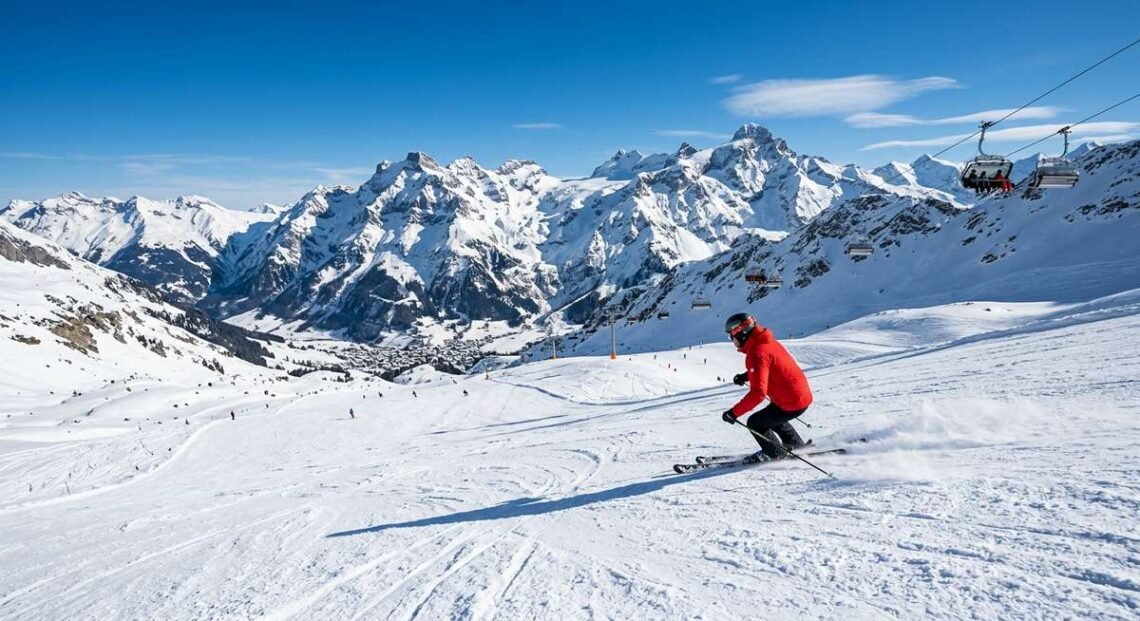
Engelberg sits in a natural bowl in the Swiss canton of Obwalden, surrounded by steep peaks that funnel snowfall reliably across the ski area. Engelberg Switzerland skiing draws its competitive edge over neighbours like Andermatt or Grindelwald from one clear advantage: glacier skiing from late October through early May, combined with a base village directly accessible by rail from Zurich, Lucerne, and Basel.
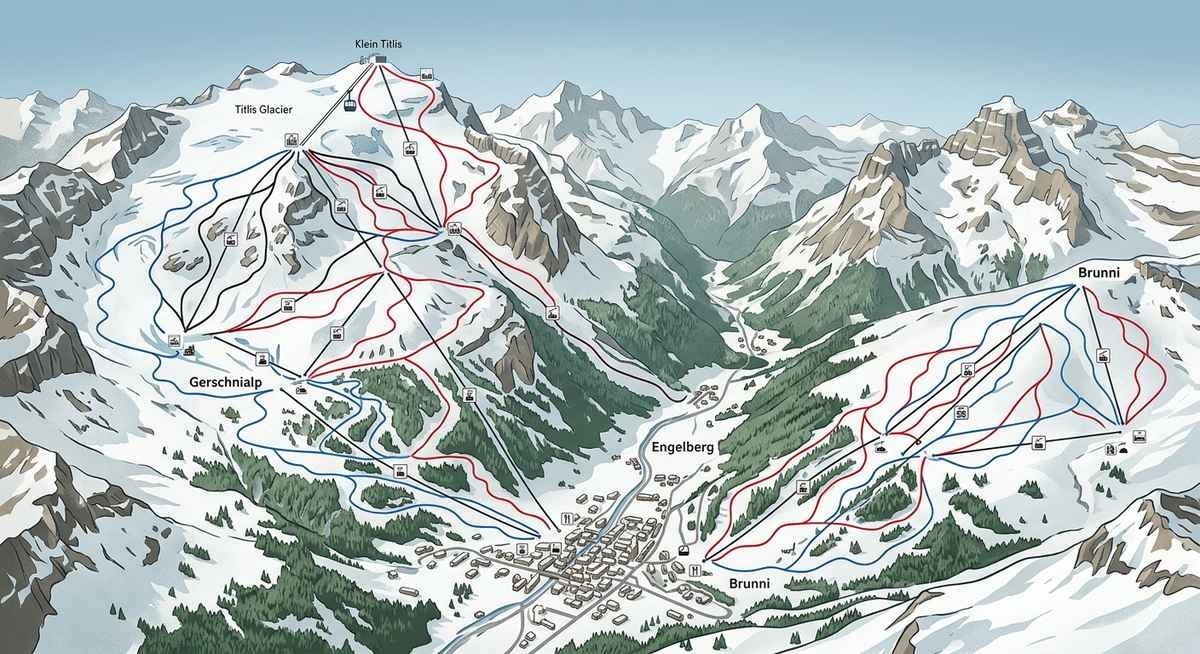
Mountain Stats at a Glance
| Stat | Detail |
|---|---|
| Total piste distance | 82 km |
| Summit altitude | 3,020 m (Titlis glacier) |
| Base altitude | 1,050 m (Engelberg village) |
| Vertical drop | ~1,970 m |
| Number of lifts | 25, including the ROTAIR rotating cable car |
| Glacier skiing | Year-round on Titlis |
| Ski season | Late October – early May |
| Terrain split | 17% blue / 57% red / 26% black |
| Nearest city | Zurich (~1 hr 45 min by train) |
The terrain split tells you immediately who this mountain is built for. Over half the runs are red, meaning confident intermediates get the most mileage — but the 26% black allocation is serious and goes well beyond token steep pitches. The ROTAIR cable car, which rotates a full 360 degrees during the ascent to Titlis, has become something of a calling card: it’s the world’s first revolving cable car, and it frames the glacier arrival in a way that even experienced skiers find dramatic. According to Titlis Bergbahnen, the ski area operates across all ability levels with dedicated learning zones separated from main traffic routes.
Skiing by Ability Level: Where to Go and What to Expect
Engelberg Switzerland skiing unfolds across three distinct areas — Titlis/Kleintitlis, Brunni, and Jochpass/Trübsee — each functioning almost as an independent mountain with its own character. That geography means ability groups rarely get crowded into the same zones, which keeps the skiing experience cleaner at every level.
Beginners: Brunni and Gerschnialp
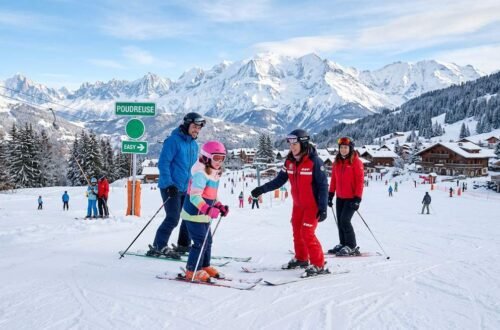
The Brunni area, reached by cable car from the eastern edge of the village, is where first-timers and returning beginners find their rhythm. Wide, gentle slopes and a quieter atmosphere make it far less intimidating than the main Titlis gondola queue. Swiss Ski School Engelberg runs its beginner group lessons from this base, with a dedicated magic carpet and short drag lifts keeping absolute beginners away from faster-moving traffic.
The Gerschnialp mid-station on the Titlis side offers a second gentler zone for those ready to graduate from Brunni. Village altitude at 1,050 m means even the lowest runs hold snow reliably through February and March.
Intermediates: The Long Game
Intermediates get the best deal in Engelberg. The descent from Stand at 2,428 m through Untertrübsee to the valley floor covers roughly 12 kilometres of varied red terrain — one of the longest continuous piste runs in central Switzerland — and the vertical drop keeps legs engaged the whole way down.
The Jochpass sector adds genuine variety. A network of blues and reds connects across to Trübsee lake, rewarding explorers willing to link lifts and follow the terrain where it leads. On a quiet weekday, a confident intermediate can cover the full ski area without repeating a run.
Advanced and Expert: Couloirs, Blacks, and Freeride Terrain
The steep blacks above Laub and Hahnenboden are where Engelberg earns its international reputation among advanced skiers. The Laub couloirs carry gradient sections that demand real technical ability. Off-piste terrain in the Galtiberg bowl is extensive and, on a powder day, operates at a quality level that justifies the trip from anywhere in Europe.
Engelberg also hosts the DareToRace course — a marked race-training piste that lets recreational skiers measure their speed in a timed environment. Most resort guides skip this entirely, but it’s a genuine draw for ex-racers and speed enthusiasts. The resort has produced a notable number of professional freeskiers; that culture runs through the mountain rather than sitting on top of it as branding.
| Ability Level | Key Area | Highlight Feature | Piste Share |
|---|---|---|---|
| Beginner | Brunni / Gerschnialp | Magic carpet zone, gentle blues, ski school base | 17% |
| Intermediate | Titlis / Stand / Jochpass | 12 km valley run, Trübsee network | 57% |
| Advanced / Expert | Laub / Hahnenboden / Galtiberg | Laub couloirs, DareToRace, off-piste bowl | 26% |
Best Time to Visit: Snow Conditions by Month
Timing matters for Engelberg Switzerland skiing. The glacier summit guarantees snow at altitude year-round, but the lower runs below Trübsee depend on natural snowfall and cold temperatures. January and February are the safest months for full mountain access: snowpack is deepest, all lifts run, and the lower valley pistes are reliably open. The trade-off is peak crowds and peak prices on weekends when Zurich day-trippers flood the gondola queue.
For Engelberg Switzerland skiing, March is many regulars’ preferred month. Snow quality at altitude remains excellent, spring sun makes on-mountain lunch genuinely pleasant, and weekday crowds thin out noticeably. April skiing concentrates on the glacier zone, with lower runs softening quickly by mid-morning. Early November and late October offer novelty glacier skiing on Titlis itself, though the full mountain doesn’t open until December.
| Month | Snow Conditions | Crowds | Best For |
|---|---|---|---|
| Nov–Dec | Good at glacier; variable lower | Low–medium | Early-season, glacier runs |
| Jan–Feb | Best overall snowpack | High on weekends | Full-mountain access, powder |
| March | Excellent at altitude, spring lower | Medium | Best value, sun + snow |
| April | Glacier only reliable | Low | Spring skiing, quieter resort |
Getting to Engelberg: Transport and Logistics
Engelberg Switzerland skiing benefits from infrastructure that most comparable Alpine resorts lack: a direct rail connection, no mountain pass crossing, and a gondola base that sits minutes from the train platform. No mountain pass crossing, no transfer bus, no shuttle from a distant town centre — the train station sits a short walk from the main gondola base, and the journey from Zurich runs under two hours door to snow.
By Train from Zurich and Lucerne
The route from Zürich Hauptbahnhof connects to Lucerne, then onto the Zentralbahn narrow-gauge line directly into Engelberg — approximately 1 hour 45 minutes total. Trains run roughly every hour throughout the ski day. The Swiss Federal Railways Swiss Travel Pass covers the entire journey, including the Zentralbahn segment. From Lucerne alone, the trip takes around 45 minutes on a direct service.
On peak Saturdays, taking the train rather than driving is the practical choice rather than just the eco-friendly one. Parking in Engelberg village fills fast, and sitting in traffic on the valley road wastes time that could be spent on the mountain.
By Car
Drivers from Zurich follow the A2 motorway south toward Lucerne, exit toward Stans, then continue up the valley road — roughly 75 km and 75 minutes in normal conditions. From Basel, allow approximately 90 minutes via A2; from Bern, roughly 80 minutes via the A8 junction toward Lucerne and north then south into the Engelberg valley.
| Origin | Mode | Approx. Time | Key Route |
|---|---|---|---|
| Zurich | Train | ~1 hr 45 min | ZRH HB → Lucerne → Zentralbahn → Engelberg |
| Zurich | Car | ~75 min | A2 south → Stans → valley road |
| Lucerne | Train | ~45 min | Lucerne → Engelberg (Zentralbahn direct) |
| Basel | Car | ~90 min | A2 south → Lucerne → Stans → Engelberg |
| Bern | Car | ~80 min | A8 → Lucerne junction → Stans → Engelberg |
Lift Passes, Ski Hire, and Lesson Costs
Swiss skiing is expensive by European standards, and Engelberg Switzerland skiing doesn’t break that pattern. Planning the budget in advance — and booking online where discounts apply — makes a meaningful difference on a multi-day trip.
Lift Pass Options and Prices
Titlis Bergbahnen publishes official tariffs at titlis.ch. The table below reflects approximate 2024/25 pricing — verify current rates directly before booking, as seasonal adjustments apply.
| Pass Type | Adult (approx. CHF) | Youth 16–19 (approx. CHF) | Child 6–15 (approx. CHF) |
|---|---|---|---|
| 1-Day | 72–82 | 58–66 | 36–41 |
| 3-Day | 195–215 | 156–172 | 98–108 |
| 6-Day | 340–370 | 272–296 | 170–185 |
| Season Pass | From 1,090 | From 872 | From 545 |
Booking online through titlis.ch typically saves 5–10% compared to the ticket office window. Children under nine ski free when accompanied by a paying adult — a detail that shifts the family cost calculation considerably on a longer stay.
Ski Hire and Lessons
Basic ski or snowboard rental packages start around CHF 40–55 per day for adults from village shops including Intersport Engelberg. Booking equipment online in advance locks in discounts of roughly 10–15% versus walk-in pricing. Swiss Ski School Engelberg offers group lessons from approximately CHF 59 for a half-day, with private instruction running CHF 90–120 per hour. The Snowli Kids Club, for ages four and up, combines instruction, supervision, and lunch into full-day packages typically priced around CHF 130–160 per day.
Where to Stay in Engelberg
Engelberg’s accommodation sits almost entirely within walking distance of the main gondola base, which simplifies the stay-to-ski calculation. The village is small and walkable; there is no real “wrong” side of town in the way that larger resorts create inconvenient zones.
The upper end is anchored by the Bellevue-Terminus, a historic hotel directly adjacent to the train station, and the Hotel Terrace, which offers modern amenities alongside glacier views. Mid-range options cluster along the main street: the Hotel Edelweiss and Hotel Europe both offer solid ski-in-ski-adjacent convenience at more moderate rates. Budget travellers and younger groups tend toward the hostel options and apartment rentals that sit a short walk from the gondola base.
Booking accommodation for peak January and February weekends requires lead time — Zurich proximity means the resort fills fast on Saturdays. Midweek stays in the same months offer noticeably better rates and quieter slopes.
Après-Ski and Non-Skiing Activities
Engelberg’s après-ski scene is compact but has genuine character. The Yucatan Bar, directly at the Titlis base station, is the first stop for most skiers coming off the mountain — cold beers, loud music, and boots still clipped into bindings. The Spindle bar in the village runs later into the evening with live music several nights a week through peak season.
For non-skiers, the ROTAIR cable car to Titlis operates independently of the ski pass and gives access to the glacier cave and viewing platform at 3,020 m — a legitimately spectacular experience regardless of skiing ability. The Brunni area has sledging runs that operate separately from the ski terrain. Ice skating is available at the Eisfeld Engelberg, and the Monastery of Engelberg, a Benedictine abbey founded in 1120, sits in the village itself and is open to visitors year-round. The combination of mountain access and genuine historic architecture in a single village location is relatively unusual in Swiss skiing.
Frequently Asked Questions
Is Engelberg good for beginners?
Yes. The Brunni area provides dedicated beginner terrain well separated from main mountain traffic, and Swiss Ski School Engelberg operates a structured progression programme from the Brunni and Gerschnialp zones. The resort is considered one of the more beginner-accessible glacier destinations in Switzerland.
How do I get from Zurich to Engelberg for skiing?
Take a direct train from Zürich Hauptbahnhof to Lucerne, then board the Zentralbahn narrow-gauge service to Engelberg — total travel time is approximately 1 hour 45 minutes. Trains run roughly hourly during ski season. The Swiss Travel Pass covers the full journey. Engelberg’s train station is a short walk from the main gondola lift base.
How much does a ski pass cost for Engelberg Switzerland skiing?
Adult day passes run approximately CHF 72–82, with 3-day passes around CHF 195–215 and 6-day passes around CHF 340–370 (2024/25 approximate rates). Booking online through titlis.ch typically saves 5–10%. Children under nine ski free with a paying adult. Current official pricing is published at titlis.ch.
What is the ski season in Engelberg?
The main ski season runs from late October through early May, with the Titlis glacier providing reliable skiing across most of that window. The lower pistes below Trübsee depend on natural snowfall and typically operate fully from December through April. January, February, and March offer the most consistent full-mountain conditions.
Is Engelberg Switzerland skiing good for advanced skiers and freeriders?
Engelberg has a strong reputation in freeride skiing circles. The Laub couloirs and Galtiberg bowl provide serious off-piste terrain, and the resort has historically produced and attracted professional freeskiers. The DareToRace timed course caters to speed-focused intermediates and ex-racers. Around 26% of marked piste is classified black.
Can you ski in Engelberg without a car?
Easily. The Zentralbahn train connects directly to Engelberg from Lucerne and Zurich, terminating a short walk from the gondola base. A free village shuttle links accommodation zones to lift stations during ski hours. A car is not necessary and, on peak Saturdays, adds parking stress that the train entirely avoids.
How does Engelberg compare to Verbier or Zermatt?
Engelberg is smaller than Verbier and Zermatt in total piste kilometres but competes directly on glacier reliability, freeride terrain quality, and — most significantly — ease of access from a major Swiss city. Verbier and Zermatt both require longer travel times from Zurich; Engelberg’s under-two-hour train journey makes it viable as a day trip, which the bigger resorts are not.
What non-skiing activities are available in Engelberg?
The ROTAIR cable car to the Titlis glacier and ice cave operates independently of ski passes and is a standout experience for non-skiers. Sledging runs on Brunni, ice skating at the village Eisfeld, and the Benedictine Monastery of Engelberg (founded 1120) provide genuine variety beyond the ski terrain. The village also has several spa hotels with indoor pool and wellness facilities.
Planning Your Trip
Engelberg Switzerland skiing rewards visitors who come with a plan. Book accommodation early for January and February weekends, purchase lift passes online for the standard discount, and take the train from Zurich rather than driving on Saturdays — those three decisions alone make the trip meaningfully smoother. March offers the best combination of conditions, crowd level, and value for most visitors.
The mountain deserves more credit than it often gets in comparative resort rankings. Glacier reliability, that 1,970 m vertical drop, serious freeride terrain, and a direct rail connection from Switzerland’s largest city form a combination that larger and more famous resorts rarely match on all four counts simultaneously. For skiers planning a first trip to Switzerland, or regulars looking to move beyond Verbier and Zermatt, Engelberg Switzerland skiing is a serious candidate worth the investigation.