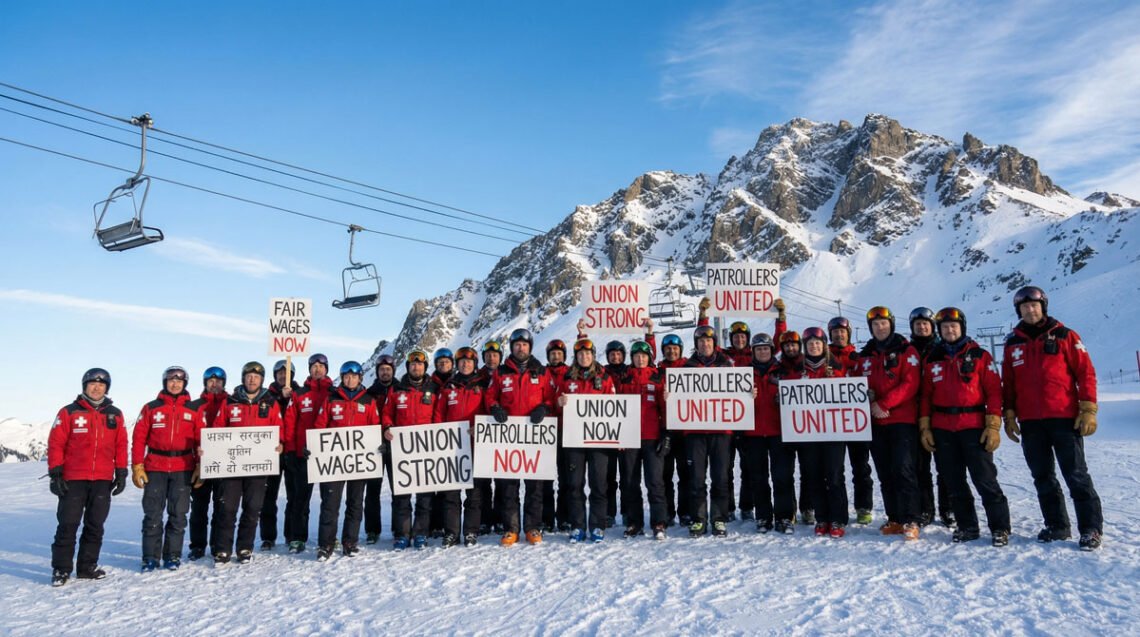
On December 27, 2024, something unprecedented happened at North America’s largest ski resort. Two hundred ski patrollers and mountain safety staff at Park City Mountain Resort hung up their jackets and walked out. This wasn’t just another labor dispute. It was the first modern ski patrol strike at a major resort, a bold move that would captivate the ski world and send ripples across the industry.
For thirteen days, the strike crippled operations during the busiest holiday week. It exposed the growing chasm between corporate profits and the livelihoods of the workers who make the mountain experience possible. This article goes beyond the headlines to explore the deep-seated issues that led to the strike, the financial realities of being a mountain worker, and the historic victory that has set a new precedent for labor rights in the ski industry.
The Park City ski patrol strike is more than a story about wages. It’s a watershed moment for mountain worker rights, fueled by decades of organizing and a growing unionization movement. It’s a story of solidarity, perseverance, and the fight for a sustainable future in the mountains we love.
What Triggered the Strike?
Ten Months of Negotiation Led to Unfair Labor Practice Accusations
The strike didn’t happen overnight. It was the culmination of ten months of frustrating negotiations between the Park City Professional Ski Patrol Association (PCPSPA) and Vail Resorts. The previous contract had expired in April 2024, and the union had been working without one ever since. The PCPSPA, representing over 200 ski patrollers and mountain safety personnel, had filed multiple unfair labor practice complaints against Vail Resorts, citing a lack of good-faith bargaining.
A major point of contention was the company’s slow response time. The union presented its wage and benefits proposal in September 2024, but it took Vail Resorts 55 days to return with a counteroffer. Even then, three of the union’s key proposals were not met. The final straw came during a mediated session on December 26, when Vail’s negotiators attempted to reopen a previously settled issue regarding management rights. This move, perceived as a stalling tactic, led the union to declare a strike the following morning.
“We felt like we were put into a tough spot,” said Cole Valentino, a member of the bargaining team. “It kind of feels like we spent ten months trying to avoid getting to this point.” The union’s demands were clear: a starting wage increase from $21 to $23 per hour, wage parity with other Vail-owned resorts, and expanded benefits. But Vail’s unwillingness to engage in meaningful dialogue left the patrollers with no other option but to walk out.
The Financial Reality Behind the Strike
Why $21 an Hour Isn’t Enough in a Mountain Town
To understand the strike, you have to understand the economics of living in a place like Park City. A starting wage of $21 an hour is simply not a living wage in a town where the average home price hovers around $1 million. “No one can live on that in a mountain town,” said Quinn Graves, a fourth-year ski patroller and union business manager. The union argued that the starting wage needed to be at least $23 just to keep up with inflation.
This wasn’t just about feelings; it was about facts. Nearby resorts were already paying more. Deer Valley, just a few miles away, offered a starting wage of $23.50 per hour, while Powder Mountain paid $26. This disparity made it difficult for Park City to retain experienced patrollers, leading to a phenomenon known as wage compression. A fourth-year patroller could be making the same as someone with 15 to 20 years of life-saving experience, devaluing the knowledge and risk that come with a long career on the mountain.
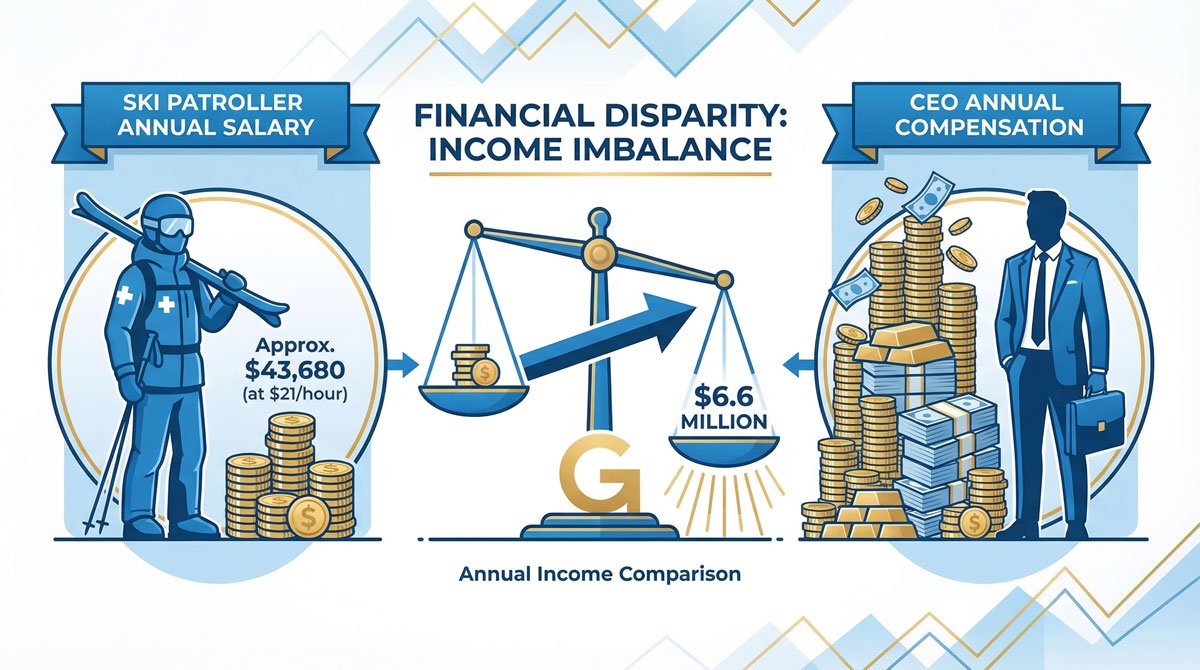
Meanwhile, Vail Resorts was thriving financially. The company had spent $1.59 billion on stock buybacks and cash dividends over the previous three years. Its CEO, Kirsten Lynch, earned approximately $6.6 million annually. The union calculated that their full demands would cost Vail Resorts only an additional $900,000 a year—a mere 0.4% of the company’s $230.4 million net income for the fiscal year. The contrast was stark and became a powerful rallying cry for the striking workers.
Comparative Starting Wages: Park City vs. Competitors
| Resort | Starting Wage (per hour) |
|---|---|
| Powder Mountain | $26.00 |
| Deer Valley | $23.50 |
| Park City (Pre-Strike) | $21.00 |
| Park City (Post-Strike) | $23.00 |
The Strike’s Impact on Operations and Guests
How Vail Resorts’ Largest Ski Area Came to a Standstill
The strike’s impact was immediate and severe. With 200 patrollers off the job, Park City Mountain Resort, the largest ski area in North America, was forced to operate at a fraction of its normal capacity. During the peak holiday season, only 18-20% of the resort’s vast terrain was open. Of the 41 lifts, only 24 were running. The result was chaos. Skiers and snowboarders, many of whom had paid thousands for their vacations, were crammed into the few open areas, leading to unprecedented, hours-long lift lines.
Vail Resorts scrambled to fill the void, bringing in managers and non-union patrollers from other resorts. But these replacement workers lacked the local knowledge and experience to safely open and manage Park City’s challenging terrain. With insufficient staff to perform avalanche mitigation, much of the fresh snow that fell during the strike remained untouched and unsafe for skiing. The company suspended daily lift ticket sales, limiting access to those who had already purchased passes, but the damage was done.
The frustration was palpable. One family from Minnesota, the Nystroms, had spent over $20,000 on a “once-in-a-lifetime” ski trip, only to be met with three-hour lift lines and a closed mountain. “The really frustrating part was just the lack of transparency,” Peter Nystrom told NBC News. Their story became a symbol of the guest experience during the strike, and it resonated with many others who felt let down by the resort. The strike didn’t just hurt the workers; it hurt the very customers Vail Resorts claimed to serve.
Operational Capacity During the Strike
| Date | Lifts Operating | Trails Open | Terrain Open (%) |
|---|---|---|---|
| Dec 27, 2024 | 24 / 41 | 80 / 350 | 23% |
| Dec 29, 2024 | 20 / 41 | 65 / 350 | 19% |
| Jan 2, 2025 | 18 / 41 | 50 / 350 | 14% |
| Jan 4, 2025 | 26 / 41 | 99 / 350 | 28% |
| Jan 8, 2025 | 28 / 41 | 110 / 350 | 31% |
The Historic Contract Victory
What Ski Patrollers Actually Won
After 13 days on the picket line, the Park City ski patrollers achieved a historic victory. On January 8, 2025, the union ratified a new contract with Vail Resorts that addressed their key demands and set a new standard for the industry. The agreement was a testament to the power of collective action and the unwavering solidarity of the workers.
The most significant gain was in wages. The starting wage for new patrollers increased from $21 to $23 per hour, bringing them closer to the pay at neighboring resorts. More importantly, the contract addressed the issue of wage compression. Experienced patrollers received an average raise of $4 per hour, with the most tenured members seeing their pay increase by an average of $7.75 per hour. This was a crucial step in recognizing the value of experience and retaining skilled professionals.
Beyond wages, the contract included several other important provisions. The agreement will remain in effect through 2027, providing stability for the next three years—a significant improvement over the previous two-year deals. It also included a wage parity guarantee, ensuring that if Vail raises wages at its non-unionized resorts, the Park City patrollers will receive a corresponding increase. The contract also expanded parental leave and other benefits, making a career in ski patrol more sustainable for the long term.
The Broader Labor Movement Context
From Aspen 1971 to Park City 2025: Decades of Organizing
The Park City strike didn’t happen in a vacuum. It was part of a much larger story of labor organizing in the ski industry that stretches back more than 50 years. The first known ski patrol strike occurred in Aspen in 1971, when patrollers represented by the Teamsters walked off the job. That strike ultimately failed, but it planted the seeds for future organizing efforts.
Over the decades, the union movement in the ski industry has had its ups and downs. Crested Butte patrollers unionized in 1978, followed by Aspen in 1986 and Steamboat in 1999. The post-pandemic era has seen a significant surge in union activity, with the number of unionized ski resorts growing from four to sixteen in just five years. Today, the United Professional Ski Patrols of America (UPSPA) and the Communications Workers of America (CWA) represent nearly 1,100 mountain workers across the country.
The Park City strike is a powerful example of this new wave of unionization. It has inspired workers at other resorts to organize and demand better pay and working conditions. The ski patrollers at Keystone, Eldora, and Arapahoe Basin are all in various stages of organizing and negotiating their own contracts. The victory in Park City has shown them what is possible when workers stand together.
What This Means for the Ski Industry
Setting a Precedent for Mountain Worker Rights Everywhere
The shockwaves from the Park City strike are being felt across the entire ski industry. The successful outcome has not only emboldened other unions but has also forced resort operators, particularly Vail Resorts, to change their tune. There has been a noticeable “tone shift” in negotiations at other mountains, with Vail showing a new urgency to reach agreements and avoid a repeat of the public relations disaster in Park City.
This strike has set a powerful precedent. It has demonstrated that collective action can be effective, even against a corporate giant like Vail Resorts. The solidarity shown by union patrollers at other Colorado resorts, who refused to act as replacement workers, was a critical factor in the strike’s success. This cross-resort solidarity is a new and powerful force in the industry.
The victory in Park City is likely to accelerate the unionization movement across the country. With negotiations already underway at Keystone and organizing efforts at Eldora and Arapahoe Basin, the pressure is mounting on other resorts to improve wages and working conditions. The Park City strike has provided a roadmap for other unions to follow, and it has sent a clear message to the industry: the days of low pay and poor working conditions are numbered.
The Ski Patroller’s Role Explained
Why These Workers Are Worth Fighting For
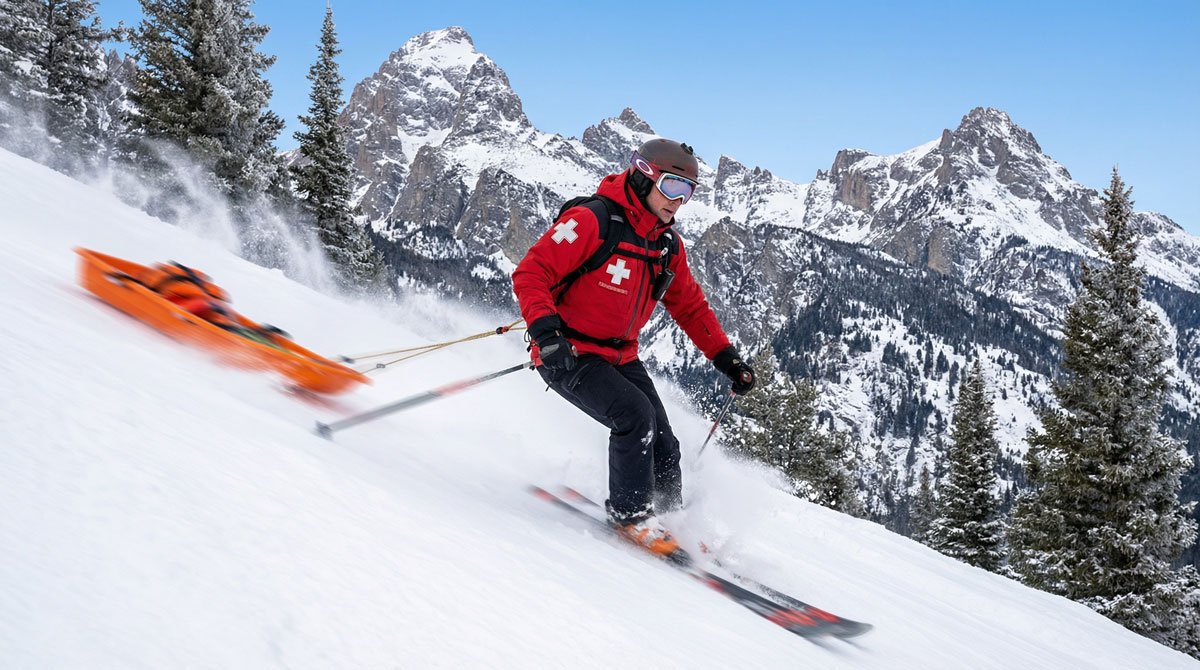
What does it take to be a ski patroller? It’s far more than just being a good skier. It’s a highly skilled profession that requires a unique combination of medical expertise, mountain sense, and physical prowess. Patrollers are the first responders of the mountain, responsible for everything from treating injuries and performing complex rescues to mitigating avalanche danger and ensuring the safety of thousands of guests each day.
Becoming a proficient ski patroller takes years of training and experience. The learning curve is steep. New patrollers must master not only advanced skiing and toboggan handling skills but also a wide range of medical protocols. Most patrollers are certified as Outdoor Emergency Care (OEC) technicians, and many are also EMTs, paramedics, or nurses. They are trained to handle everything from minor cuts and bruises to life-threatening emergencies in a remote and often hostile environment.
But the most valuable asset a ski patrol has is experience. Veteran patrollers possess an intimate knowledge of the mountain’s terrain, weather patterns, and snowpack. This institutional knowledge is critical for making life-or-death decisions, especially when it comes to avalanche control. When experienced patrollers leave the profession because they can’t afford to make a career of it, that knowledge is lost, and the entire safety net of the resort is weakened. The fight for better wages is a fight to retain these essential professionals.
How to Support Mountain Workers
What Skiers Can Do to Advocate for Fair Labor Practices
As skiers and snowboarders, we have a role to play in supporting the workers who make our mountain adventures possible. The Park City strike has shown that public pressure can make a difference. Here are a few ways you can be an advocate for fair labor practices in the ski industry:
- Choose Unionized Resorts: Whenever possible, spend your ski vacation dollars at resorts that have unionized workforces. This sends a clear message to the industry that you value workers’ rights.
- Ask Questions: Don’t be afraid to ask resort management about their labor practices. Inquire about wages, benefits, and whether they have a union. The more customers who speak up, the more pressure resorts will feel to do the right thing.
- Support Union Campaigns: Follow the social media accounts of ski patrol unions and amplify their messages. If a union is on strike or in negotiations, consider donating to their strike fund or participating in solidarity events.
- Be a Conscious Consumer: Think about where your money is going. Are you supporting a company that values its employees, or one that prioritizes profits above all else? Your spending choices have power.
- Spread the Word: Talk to your friends and family about these issues. The more people who are aware of the challenges facing mountain workers, the more likely it is that things will change.
The CEO Compensation vs. Worker Wages Debate
Why Vail’s Financial Structure Matters
The debate over fair wages becomes even more stark when you look at the numbers at the top. While ski patrollers were fighting for a $2-an-hour raise, Vail Resorts CEO Kirsten Lynch was earning approximately $6.6 million annually. This includes a base salary of $1.1 million, with the rest coming from stock awards and performance-based bonuses. To put that in perspective, a starting ski patroller would have to work for more than a decade to earn what the CEO makes in a single week.
This disparity is not just about one executive’s salary. It’s about corporate priorities. Over the past three years, Vail Resorts has spent $1.59 billion on stock buybacks and cash dividends for its shareholders. The union argued that the $900,000 annual cost of their full demands was a rounding error for a company with a net income of $230.4 million. It represented less than half a percent of their yearly profit.
The optics were not lost on the public or even some investors. The strike drew attention to a business model that seemed to prioritize shareholder returns over the well-being of its frontline employees. The financial structure of Vail Resorts, with its focus on maximizing shareholder value, was at the heart of the conflict. The strike forced a conversation about whether this model is sustainable in an industry that relies on the passion and dedication of its workers.
Frequently Asked Questions (FAQ)
- 1. Why did the Park City ski patrol strike?
- The strike was a result of stalled contract negotiations with Vail Resorts. The union cited unfair labor practices, including a 55-day delay in receiving a counteroffer and the company’s attempt to reopen previously settled issues. The core demands were for higher wages, better benefits, and recognition of experience.
- 2. How much did ski patrollers get paid after the strike?
- The new contract increased the starting wage from $21 to $23 per hour. Experienced patrollers received an average raise of $4 per hour, with the most tenured members seeing their pay increase by an average of $7.75 per hour.
- 3. How long did the strike last?
- The strike lasted for 13 days, from December 27, 2024, to January 8, 2025.
- 4. Was this the first ski patrol strike?
- This was the first modern ski patrol strike at a major U.S. resort. The first known ski patrol strike occurred in Aspen in 1971, but it was unsuccessful.
- 5. How did the strike affect the resort?
- The strike severely impacted operations. Only 18-20% of the resort’s terrain was open, and only 24 of 41 lifts were running during the busiest holiday week. This led to extremely long lift lines and a frustrating experience for many guests.
- 6. What does the new contract include?
- The new three-year contract includes a starting wage of $23/hour, an average raise of $4/hour for experienced patrollers, a wage parity guarantee with other Vail resorts, and expanded parental leave and other benefits.
- 7. Will other ski resorts have strikes?
- It’s possible. The success of the Park City strike has inspired other unions. Patrollers at Keystone, Eldora, and Arapahoe Basin are currently in various stages of organizing and negotiating their own contracts.
- 8. How much do ski patrollers make at other resorts?
- Comparable resorts in the area have higher starting wages. For example, Deer Valley starts at $23.50 per hour, and Powder Mountain starts at $26 per hour.
- 9. What is a ski patroller’s job?
- A ski patroller’s job is multifaceted and highly skilled. They are responsible for emergency medical care, complex rescues, avalanche mitigation, and overall mountain safety.
- 10. How can I support mountain workers?
- You can support mountain workers by choosing to ski at unionized resorts, asking resorts about their labor practices, amplifying union campaigns on social media, and donating to worker support funds.
Conclusion
The Park City ski patrol strike was more than just a headline; it was a turning point. It demonstrated that even in an industry dominated by corporate giants, workers have the power to demand and win a fair share. The victory in Park City has ignited a fire in the ski industry, inspiring a new wave of organizing and setting a precedent for what is possible when workers stand together in solidarity.
As the cost of skiing continues to rise, the question of how the industry values its employees has never been more critical. The men and women who keep our mountains safe deserve to be able to build a sustainable career in the communities they serve. The Park City strike has shown that this is not just a dream, but an achievable goal. The future of the ski industry may well be decided on the picket lines, and for now, the workers are winning.