Picture this: you’re standing at the base of a mountain, rental boots pinching your feet, poles in hand, watching confident skiers carve effortlessly down slopes that look absolutely terrifying from where you’re standing. Every beginner has been there. The good news? The resort you choose matters far more than most people realize — and picking the wrong one can turn a dream trip into a frustrating, expensive disaster.
The best skiing resorts for beginners share a specific set of qualities that have nothing to do with prestige or Instagram appeal: generous green terrain, properly separated learning zones, quality ski schools, and lift systems that don’t require a PhD to navigate. These details rarely show up in glossy resort brochures.
Covered ahead: every major U.S. region, a side-by-side resort comparison with real metrics, a honest cost breakdown so nothing blindsides your wallet, and a clear-eyed look at what your first day on snow actually looks like. Whether you’re booking solo or wrangling a family of four into ski boots for the first time, the right mountain is out there — and it’s closer than you think.
What Makes a Ski Resort Truly Beginner-Friendly?
The best skiing resorts for beginners share four measurable qualities: at least 30% dedicated green terrain, a separated learning zone away from intermediate traffic, beginner-specific lifts at the base, and a certified ski school offering structured lesson packages. Resorts that check all four boxes consistently produce faster learner progress and fewer first-day disasters.
Green Run Percentage
Terrain distribution is the single most objective metric for evaluating a beginner resort. A mountain where 40% of runs are designated green gives a new skier room to build confidence, repeat laps, and experiment with technique — without constantly funneling into steeper intermediate terrain.
Below 25% green coverage, beginners often find themselves boxed into one or two repetitive runs, which kills motivation fast. Higher ratios mean more variety at low consequence, which is exactly what early-stage learning requires.
Dedicated Learning Zones and Ski Schools
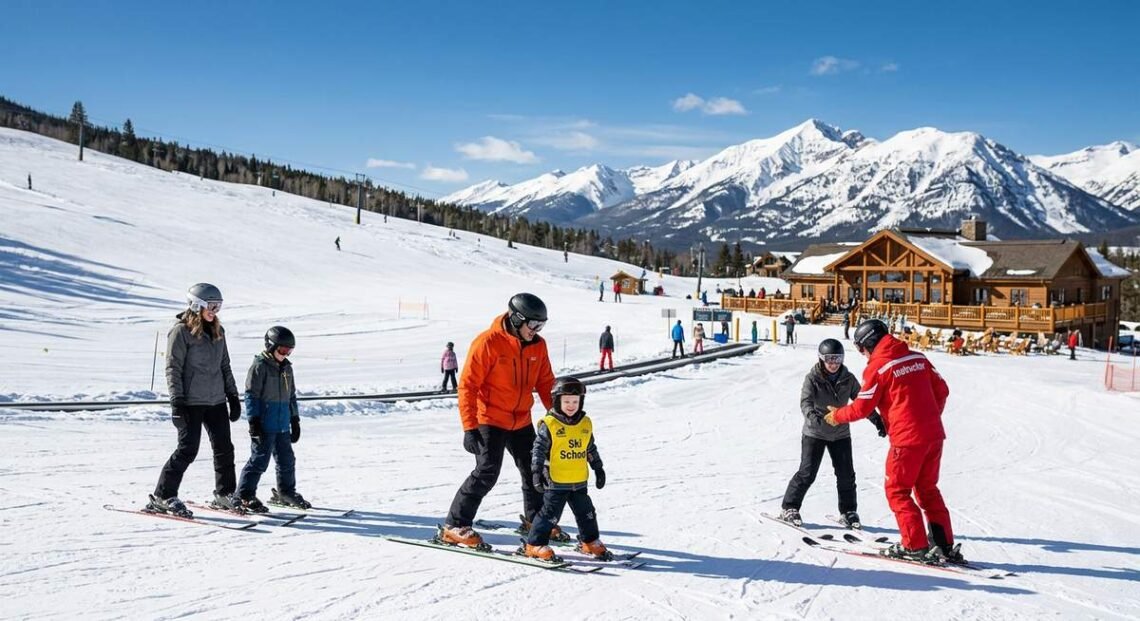
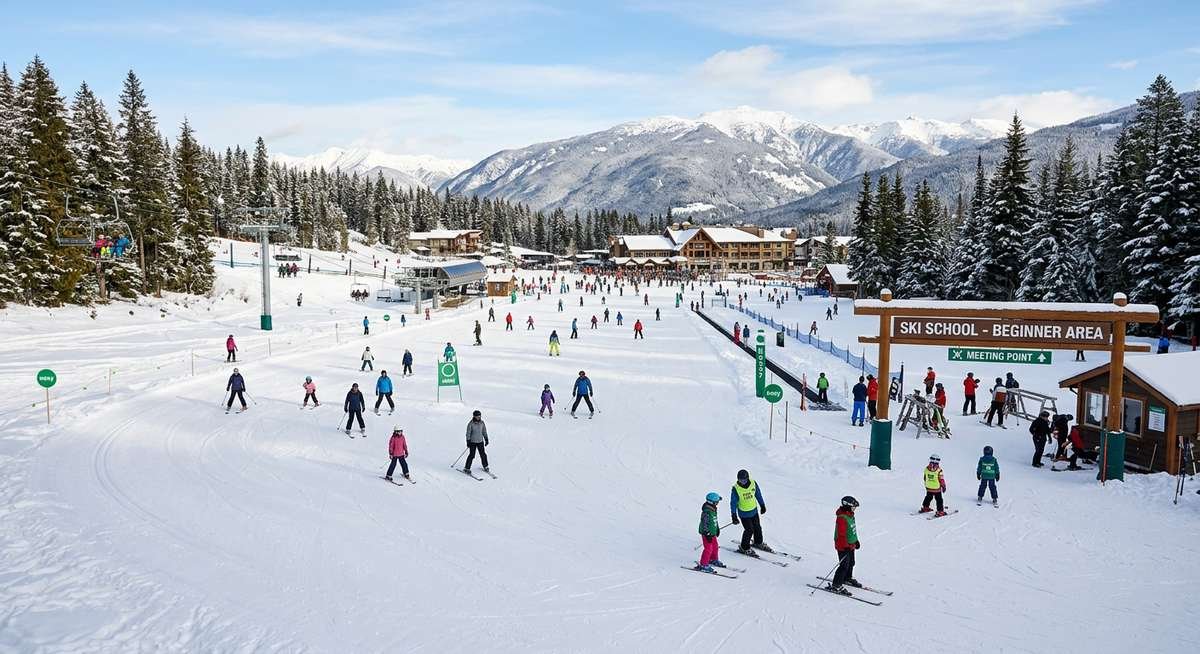
A separated beginner area — physically distinct from the main mountain flow — removes one of the biggest anxiety triggers for new skiers: faster, more experienced riders cutting through your practice space. The best resorts cordon off these zones entirely, with their own lifts and controlled entry points.
Ski school quality matters just as much as terrain. Look for resorts with Professional Ski Instructors of America (PSIA)-certified instructors, clearly tiered beginner programs, and options for both group and private lessons. Group lessons typically run $80–$130 for a half-day; private instruction can reach $200–$400, but accelerates progress significantly for adults learning later in life.
Lift Accessibility and Terrain Layout
Magic carpets and surface tows eliminate the chairlift entirely during the earliest learning phase — a genuine game-changer. Chairlifts require coordination that beginners simply haven’t developed yet, and a bad dismount can rattle confidence before a single real run.
Compact resort layouts also favor beginners over sprawling destination mountains. A smaller footprint means less traversing, less getting lost, and easier access back to the base when fatigue sets in — which, on day one, happens sooner than anyone expects.
| Criteria | Minimum Threshold | Why It Matters |
|---|---|---|
| Green run percentage | 30%+ | More practice terrain, less intimidation |
| Dedicated learning zone | Physically separated | Removes intermediate traffic hazards |
| Beginner lift access | Magic carpet or surface tow | Eliminates chairlift barrier early on |
| Ski school certification | PSIA-certified instructors | Ensures structured, proven teaching methods |
Best Beginner Ski Resorts by U.S. Region
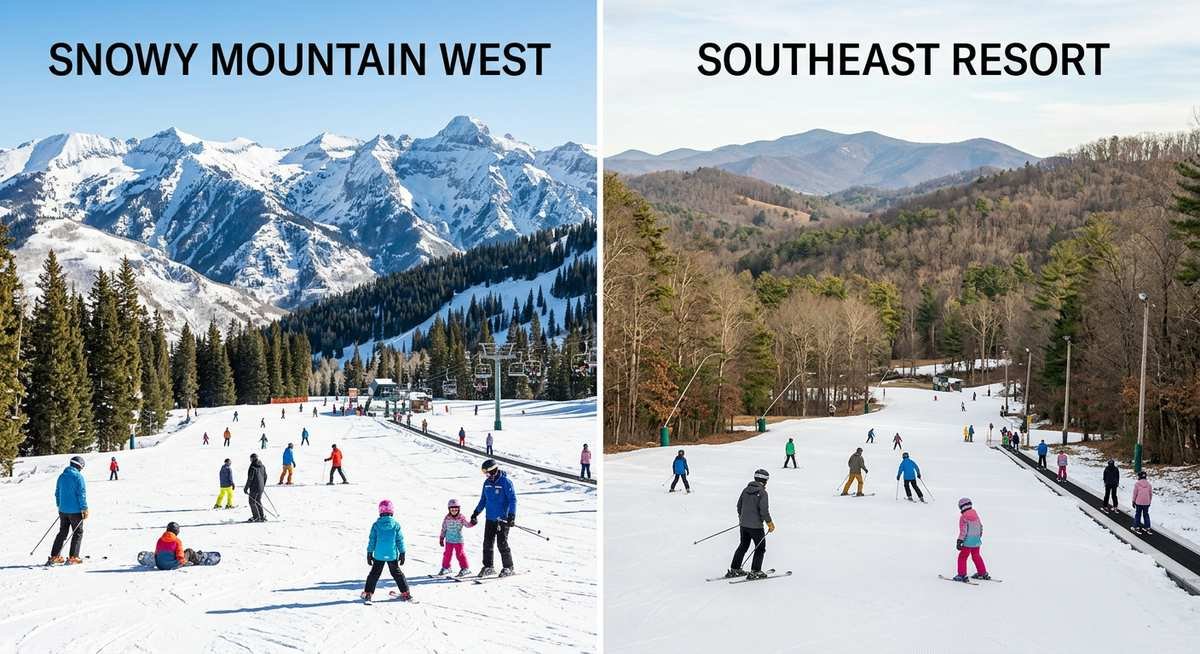
The best beginner ski resorts in the U.S. span five distinct regions — Northeast, Southeast, Midwest, Mountain West, and Pacific Northwest — each offering gentle terrain, quality ski schools, and accessible lift infrastructure. Top regional picks include Okemo Mountain Resort (VT), Snowshoe Mountain Resort (WV), Boyne Mountain Resort (MI), Keystone Resort (CO), and Mt. Bachelor (OR).
Northeast
The Northeast punches above its weight for beginner skiing, largely because the resorts here have spent decades refining their learn-to-ski programs to compete for a massive urban feeder market. Okemo Mountain Resort in Ludlow, Vermont consistently ranks among the most beginner-friendly mountains in the country, with roughly 33% green terrain, a dedicated learning zone at the base called the Okemo Learning Center, and a ski school that offers structured multi-day progression packages. It’s roughly four hours from Boston and five from New York City — close enough for a weekend trip without a flight.
Jiminy Peak Mountain Resort in Hancock, Massachusetts is another strong pick, particularly for families driving out of the greater Boston area. The resort’s compact layout means beginners never feel lost, and the Snowsports School offers beginner-specific “First Timer” packages that bundle a lesson, rentals, and a limited lift ticket into a single affordable price. Smaller vertical drops — Jiminy tops out around 1,150 feet — actually work in a beginner’s favor here, keeping runs manageable in length.
Stratton Mountain Resort in Vermont rounds out the Northeast shortlist. Stratton’s ski school, operated under the PSIA-certified instruction framework, is one of the more polished programs in New England, and the resort’s grooming standards are reliably high even mid-week.
Southeast
Southeast resorts don’t get the same press as their western counterparts, but for a first-timer who doesn’t want to fly across the country, they offer a surprisingly practical entry point. Beech Mountain Resort in North Carolina sits at one of the higher base elevations among eastern ski resorts — around 5,506 feet above sea level — which helps sustain snowmaking operations longer through the season. Lesson packages here are notably affordable, often running 20–30% below comparable Northeast pricing.
Snowshoe Mountain Resort in Pocahontas County, West Virginia is the Southeast’s most complete beginner destination. With over 1,500 acres and a vertical drop of 1,500 feet, Snowshoe is large by regional standards, yet the beginner terrain at the base area is well-separated from intermediate traffic. The resort’s Snowshoe Ski & Ride School offers group lessons starting as low as $60–$80 per session, making it one of the better-value options for adult first-timers on the East Coast.
Midwest
Flat geography doesn’t mean flat options. The Midwest’s ski resorts lean hard into accessibility, affordability, and family programming — three things that matter enormously to beginner skiers who are still deciding whether the sport is worth a long-term investment. Boyne Mountain Resort in Boyne Falls, Michigan offers 60 trails spread across a modest but well-organized mountain, with a dedicated learning area and one of the most active junior ski programs in the region. Season passes here are priced well below national resort averages, making repeat visits financially realistic.
Lutsen Mountains in Minnesota is the largest ski area in the Midwest by acreage, which sounds counterintuitive for a beginner recommendation — but the sheer size means multiple separated beginner zones and a well-funded ski school. The Superior Skiing lesson programs run seven days a week throughout the season, and the resort’s location along Lake Superior creates reliable early-season snow cover. A “First Timer” package bundling rentals, a group lesson, and a beginner lift ticket runs around $80–$115 depending on the booking window.
Pacific Northwest
Mt. Bachelor in Bend, Oregon is the Pacific Northwest pick that keeps showing up on beginner shortlists — and for good reason. The mountain has 37% green terrain and a dedicated Discovery Zone at the base with its own lift system, giving new skiers a complete learning circuit that never intersects with intermediate traffic. Bend itself is a genuinely appealing mountain town, which makes the whole trip feel worthwhile even if you spend three days on the same four runs.
Crystal Mountain in Washington is the other standout, about 76 miles east of Seattle. Green terrain sits around 32% of the total skiable area, and the resort’s instructional programs are organized into clear skill tiers — no ambiguity about which lesson level matches your actual ability. The Pacific Northwest weather pattern produces heavier, wetter snow than the Colorado Rockies, so expect different conditions: grippy and forgiving on the right days, heavy and tiring on the wrong ones. Either way, terrain-wise, both resorts are genuinely suited to first-timers.
Beginner Resort Comparison Table
The five metrics below — green run percentage, vertical drop, ski school availability, beginner package cost range, and an overall beginner rating — give you a data-driven way to compare resorts side by side. No competitor publishes this kind of structured breakdown, which means most first-timers end up making a $1,000+ decision based on vibes and vague descriptions.
How to Read This Table
% Green Runs shows what share of a resort’s total terrain is rated beginner-level — higher is better for first-timers. Vertical Drop (ft) reflects the total elevation change from summit to base; smaller numbers generally mean gentler, less intimidating descents. Ski School confirms whether the resort operates a dedicated, on-site instructional program with certified instructors. Beginner Package Cost bundles a group lesson, equipment rental, and a restricted beginner lift ticket — the most common entry point for first-time skiers. Beginner Rating is an overall 1–5 score weighted toward terrain accessibility, learning infrastructure, and value. All costs are approximate and vary by season, booking window, and group size.
Top Beginner Resorts at a Glance
Cost Breakdown: What to Budget for Your First Ski TripA realistic first ski trip budget runs between $150 and $400 per person per day, depending on the resort, rental quality, and whether you book lessons in advance. That range surprises most first-timers — and the sticker shock is worse when costs hit unexpectedly at the mountain. Breaking it down by category makes the whole thing manageable.Lift TicketsWalk-up lift ticket prices at major Mountain West resorts can exceed $200 per day. Book online at least a week ahead and that same ticket often drops 20–40%. Many beginner-focused resorts — Keystone, Okemo, Boyne Mountain — sell dedicated beginner lift tickets that restrict access to green terrain only, typically priced between $40 and $75. That’s not a downgrade. For a first-timer who’ll spend the entire day on one or two runs, paying for full-mountain access is just money left on the table.Multi-day packages almost always offer better per-day value. A three-day beginner bundle combining a lift ticket, rentals, and a group lesson can run $300–$450 total — sometimes less than two single-day walk-up tickets alone.
[IMAGE: Cost breakdown chart showing average per-day expenses for a beginner skier across lift tickets, rentals, lessons, and food at U.S. ski resorts]
Rentals deserve special attention. Ski shops located a mile or two from the resort base typically charge 20–30% less than on-mountain rental centers for identical equipment. The tradeoff is a short drive with boots on — entirely worth it for a multi-day trip.Lessons are the one place not to cut corners. A two-hour group lesson from a Professional Ski Instructors of America (PSIA)-certified instructor accelerates the learning curve dramatically and, practically speaking, reduces the risk of injury. Resorts like Park City Mountain and Keystone both offer beginner packages that bundle a lesson, rentals, and a limited lift ticket — often the single best value a first-timer can find.What Your First Day on Snow Actually Looks LikeMost first-timers drastically overestimate how much terrain they’ll cover. Day one is almost entirely spent on the magic carpet, the bunny slope, and possibly one easy green run near the base. That’s not a disappointment — that’s exactly how it’s supposed to go. The goal on day one is stopping reliably and making controlled turns. Everything else is secondary.Morning lessons typically start around 9:30 a.m. and run two to three hours. By midday, most beginners can link a few turns, which feels like a genuine breakthrough. Afternoon sessions get harder, not easier — fatigue is real, and cold muscles make technique sloppy. Smart first-timers call it a day by 2 p.m. rather than grinding through a brutal final hour that builds bad habits and zero confidence.One practical note: ski boots will hurt. Not badly, but your feet won’t be happy. Check the fit with a qualified rental tech who will adjust the flex and buckle tension — a five-minute process that most people skip and then regret for two days.Frequently Asked QuestionsWhat is the best ski resort for absolute beginners in the U.S.?Keystone Resort in Colorado and Okemo Mountain Resort in Vermont consistently rank as two of the best options for true beginners. Both have dedicated learning zones physically separated from intermediate traffic, certified ski schools, and beginner-only lift ticket options that reduce day-one costs significantly.How much should a beginner expect to spend on a ski trip?Budget $150–$400 per person per day, depending on the resort and whether you pre-book. That figure covers a beginner lift ticket, equipment rental, and a group lesson. Off-mountain equipment rentals and advance online booking can pull total daily costs down to the $120–$180 range at mid-tier resorts like Boyne Mountain or Jiminy Peak.Do I need lessons at a beginner ski resort, even if I’ve watched tutorials online?Yes. Video tutorials teach body position but can’t correct movement patterns in real time. A two-hour group lesson pays for itself in injury prevention alone. Instructors also teach fall technique — something no YouTube video covers adequately — and can identify equipment fit issues that lead to ankle and knee strain.What is the difference between green runs and a dedicated beginner zone?Green-rated runs are beginner terrain, but they often share lift access and run-out areas with intermediate skiers. A dedicated beginner zone is physically separated from the main mountain — with its own lifts, controlled entry, and traffic limited to learners. The separation matters enormously on day one, when the last thing you need is a confident skier cutting through your practice space at speed.Which region offers the most affordable beginner skiing in the U.S.?The Midwest and Southeast consistently offer lower lesson, lift, and accommodation costs than Mountain West or Northeast resorts. Boyne Mountain in Michigan and Snowshoe Mountain in West Virginia both offer beginner packages in the $79–$149 range — well below the $169–$249 typical at Colorado destinations. The tradeoff is smaller vertical drops and sometimes variable snow conditions, but for a true first-timer on a budget, those factors are largely irrelevant.What should I pack for a first ski trip?Moisture-wicking thermal base layers, a mid-layer fleece, and a waterproof ski jacket and pants are non-negotiable. Helmets can be rented but are worth owning if you plan to ski more than once. Goggles, neck gaiter, and thin liner gloves under waterproof ski mitts round out the essentials. Avoid jeans — they absorb moisture and become dangerously cold within an hour.Which Resort Is Right for You?Regional location is usually the most practical filter. If you’re on the East Coast, Okemo and Snowshoe are strong, accessible choices without a cross-country flight. West Coast beginners will find Mt. Bachelor hard to beat for terrain quality and resort atmosphere. Mountain West first-timers who want the full destination ski experience — high altitude, reliable snow, top-tier ski school — should look at Keystone before anywhere else in Colorado.One resort doesn’t suit every beginner. Budget, travel distance, group size, and whether you’re bringing kids all shift the calculus. What doesn’t change: the metrics that matter. Seek out separated learning zones, strong ski schools, and terrain where green runs make up at least 30% of the mountain. The rest — lodge ambiance, nightlife, resort amenities — is a pleasant bonus for a first trip. Get the fundamentals right, and the sport will take care of itself.
| Resort | Region | % Green Runs | Vertical Drop (ft) | Ski School | Beginner Package Cost (USD) | Beginner Rating |
|---|---|---|---|---|---|---|
| Keystone, CO | Mountain West | ~19% (dedicated beginner zone) | 2,340 | Yes | $169–$229 | ⭐⭐⭐⭐⭐ |
| Park City Mountain, UT | Mountain West | ~17% (+ dedicated beginner zones) | 3,226 | Yes | $189–$249 | ⭐⭐⭐⭐ |
| Okemo Mountain Resort, VT | Northeast | ~33% | 2,200 | Yes | $149–$199 | ⭐⭐⭐⭐⭐ |
| Jiminy Peak, MA | Northeast | ~28% | 1,150 | Yes | $119–$159 | ⭐⭐⭐⭐ |
| Snowshoe Mountain, WV | Southeast | ~34% | 1,500 | Yes | $109–$149 | ⭐⭐⭐⭐½ |
| Beech Mountain, NC | Southeast | ~30% | 830 | Yes | $89–$129 | ⭐⭐⭐⭐ |
| Boyne Mountain, MI | Midwest | ~38% | 500 | Yes | $79–$119 | ⭐⭐⭐⭐ |
| Mt. Bachelor, OR | Pacific Northwest | ~37% | 3,365 | Yes | $129–$179 | ⭐⭐⭐⭐⭐ |
| Cost Category | Budget Range (Per Day) | Money-Saving Tip | ||||
| Lift Ticket (full mountain) | $80–$200+ | Book online 7+ days in advance | ||||
| Beginner-Only Lift Ticket | $40–$75 | Ask specifically — not always advertised | ||||
| Equipment Rentals | $35–$75 | Rent off-mountain at ski shops for 20–30% less | ||||
| Group Ski Lesson (2–3 hrs) | $60–$120 | Bundle with lift ticket for package discount | ||||
| Private Ski Lesson (1 hr) | $100–$250 | Split cost with one other beginner | ||||
| Food and Drinks On-Mountain | $25–$60 | Pack lunch; on-mountain dining is notoriously marked up |