Picking the wrong resort for your first ski trip can turn an exciting adventure into an expensive, demoralizing slog down an icy slope you had no business being on. Too many beginners book somewhere impressive-sounding, show up underprepared, and spend two days clinging to a pole while intermediate skiers carve past them at speed.
It doesn’t have to go that way.
The best skiing destinations for beginners share a specific set of qualities — generous beginner terrain, quality instruction, and a layout that doesn’t throw novices into the deep end. Knowing what those qualities are, and which resorts actually deliver them, changes everything about how your first trip unfolds.
Ahead: a practical breakdown of what separates a genuinely beginner-friendly mountain from a marketing-friendly one, the top resorts across North America and Europe worth your money in 2025, a realistic cost breakdown with tips for cutting expenses without sacrificing the experience, and an honest look at what your first day on snow will actually feel like.
What Makes a Ski Resort Great for Beginners?
The best beginner ski resorts share three non-negotiable qualities: abundant easy terrain, structured professional instruction, and dedicated learning areas that keep novices away from faster traffic. Resorts that check all three boxes dramatically reduce first-day anxiety — and dramatically increase the odds you’ll want to come back for a second day.
Green Run Percentage
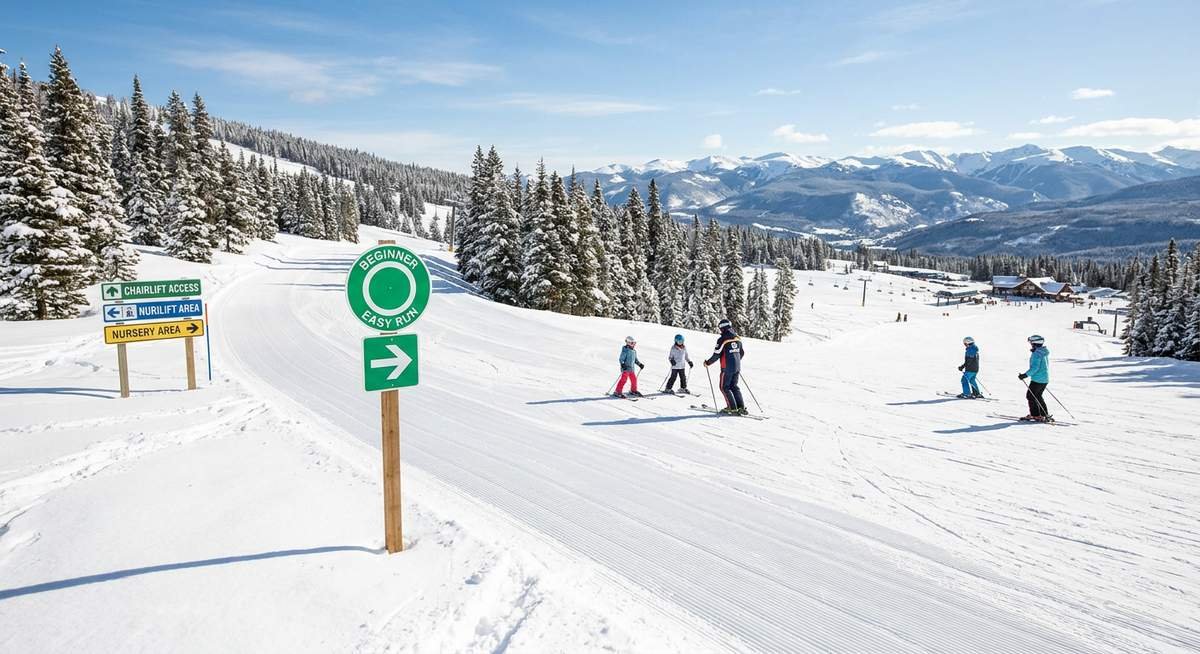
A green run is a ski trail rated for beginners — low gradient, wide, and groomed regularly so the surface stays predictable underfoot. Most trail maps use a green circle symbol to mark them.
Resorts where green runs account for 30% or more of total terrain give first-timers enough variety to build confidence without repeating the same fifty-meter slope all day.
Percentage alone isn’t the whole picture, though. A resort can technically hit 30% beginner terrain while clustering all those runs in one congested corner of the mountain. Spread matters as much as quantity.
Ski School Quality
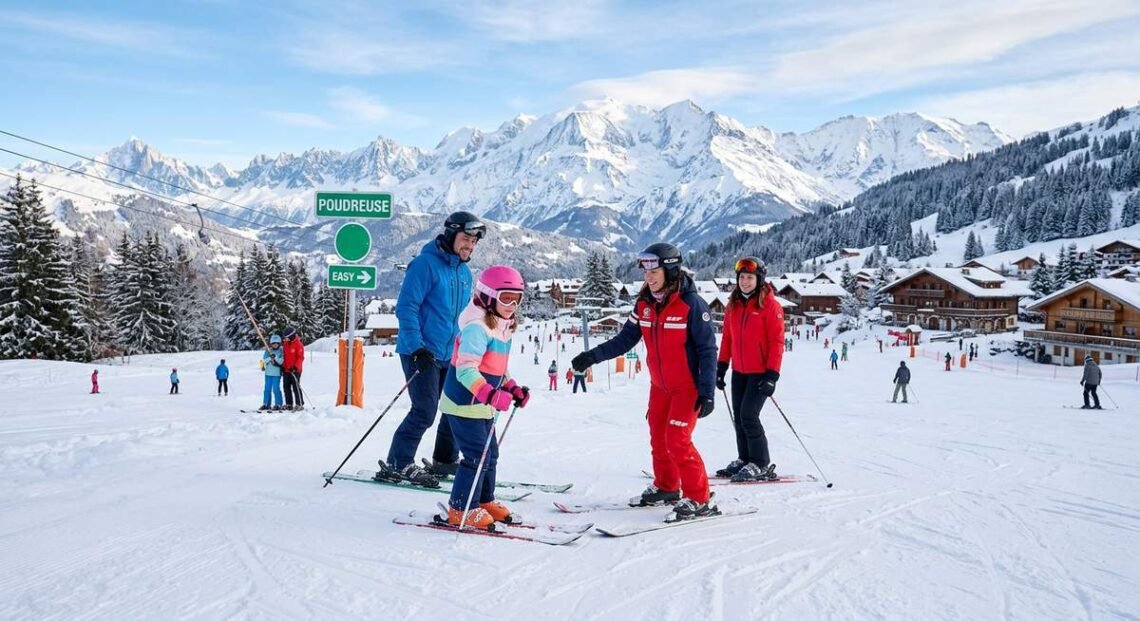
A strong ski school is arguably more important than the terrain itself. Look for resorts whose instructors hold certifications from the Professional Ski Instructors of America (PSIA) or the equivalent national body in the country you’re visiting. Small group sizes — ideally six students or fewer — mean more individual feedback and faster progression.
First-timer packages that bundle a lift ticket, equipment rental, and a lesson into one price are worth seeking out. They’re typically cheaper than buying each component separately, and they remove the logistical guesswork from an already overwhelming first day.
Terrain Separation and Crowd Levels
Dedicated learning zones — physically separated from the main mountain flow — are a feature that separates genuinely beginner-friendly resorts from ones that merely tolerate beginners. When novices share runouts with confident intermediates carving at speed, the result is anxiety at best and collisions at worst.
Timing amplifies this. Mid-week visits and shoulder-season windows (typically early January after the holiday rush, or late March) mean lighter crowds on every run, shorter lift lines, and instructors with more bandwidth to focus on you.
| Criteria | What to Look For | Red Flag |
|---|---|---|
| Green run percentage | 30% or more of total trails | Under 20%, all clustered in one area |
| Ski school certification | PSIA-certified or national equivalent | No listed instructor credentials |
| Class size | Six students or fewer per instructor | Large group lessons with no size cap |
| Learning area separation | Dedicated beginner zone, separate lift | Beginner terrain shares runouts with advanced trails |
| Best visit timing | Mid-week, early January or late March | Holiday weekends, peak February school breaks |
Top Beginner Ski Resorts in North America
North America’s best beginner ski resorts share three traits: dedicated learning terrain that’s physically separated from faster traffic, structured ski school programs with certified instructors, and lift ticket packages that don’t punish you for only skiing green runs. The four resorts below consistently deliver on all three — across a range of budgets and geographies.
Breckenridge, Colorado
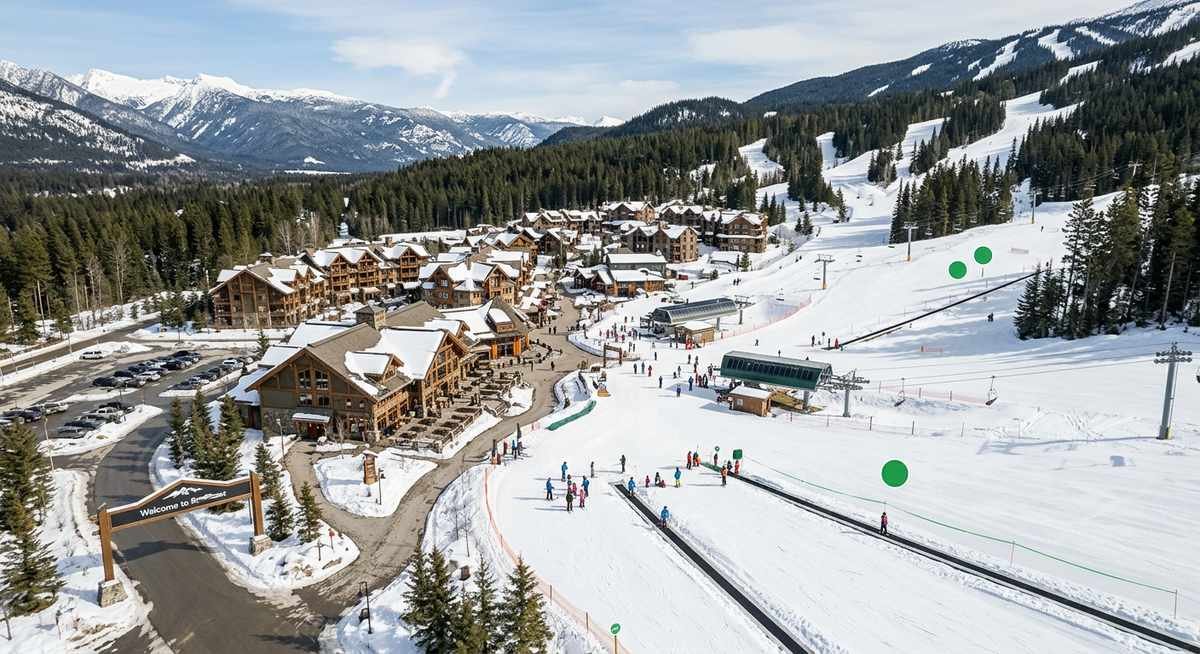
Breckenridge Ski Resort runs one of the most structured first-timer programs in the country through its Ski & Ride School, which offers dedicated beginner zones at the base of Peak 8 — well away from intermediate and advanced traffic.
The Four O’Clock run and the Maggie area give new skiers room to make mistakes without feeling like an obstacle on a busy highway.
One practical caveat: Breckenridge sits at roughly 9,600 feet base elevation, and altitude sickness is real. Arrive a day early, hydrate aggressively, and avoid alcohol on night one.
Tremblant, Quebec, Canada
Mont-Tremblant is the kind of place that makes learning feel like a vacation rather than a chore. The pedestrian village at the base — modeled loosely on a European ski town — is genuinely charming, and the French-Canadian cultural atmosphere adds something most American resorts simply can’t replicate.
For budget-conscious beginners, Tremblant is roughly a 90-minute drive from Montréal, which means you can fly into a major international hub, rent a car, and skip the inflated costs of ski-in/ski-out lodging entirely. The resort’s beginner programming bundles lift access, rentals, and instruction at a meaningful discount over buying each separately.
Snowshoe Mountain, West Virginia
Snowshoe Mountain is the most underrated budget option for East Coast beginners, full stop. It sits within a five-hour drive of Washington D.C., Charlotte, and Columbus — no flights required — and its lift-and-lesson packages regularly undercut comparable offerings at Vermont resorts by a significant margin.
The terrain isn’t dramatic, but that’s exactly the point: manageable vertical, wide groomed runs, and a low-pressure atmosphere make it ideal for someone who just wants to find their footing without an audience of experts flying past.
Park City, Utah
Park City Mountain Resort is the largest ski resort in the United States by acreage, but its scale works in a beginner’s favor rather than against it. The resort’s ski school has a strong reputation for structured progression, and the wide, consistently groomed beginner runs at the base give new skiers plenty of space to build confidence.
Salt Lake City International Airport is roughly 45 minutes away — one of the most convenient resort access points in North America — which keeps travel costs competitive and eliminates the need for a long mountain transfer after a cross-country flight.
| Resort | Location | Best For | Approx. Lift Ticket (Day) | Nearest Major Airport |
|---|---|---|---|---|
| Breckenridge | Colorado, USA | Structured ski school, dedicated beginner zones | $80–$150 | Denver (DEN) ~2 hrs |
| Tremblant | Quebec, Canada | Charming village, affordable bundles, cultural experience | CAD $80–$130 | Montréal (YUL) ~1.5 hrs |
| Snowshoe Mountain | West Virginia, USA | Budget-friendly, short East Coast drive, low-pressure | $60–$90 | Drive-in (~5 hrs from D.C.) |
| Park City | Utah, USA | Largest US resort, top ski school, easy airport access | $90–$160 | Salt Lake City (SLC) ~45 min |
Top Beginner Ski Resorts in Europe
Europe’s three strongest beginner resorts for 2025 are Les Gets in France, Söll in Austria, and Grandvalira in Andorra. Each offers dedicated nursery slopes, structured ski school programs, and a lower price-to-quality ratio than the continent’s most famous mega-resorts — making them genuinely smarter choices for first-timers than Chamonix or Verbier.
Les Gets, France (Portes du Soleil)
Les Gets sits at the quieter end of the Portes du Soleil ski area — one of the largest interconnected ski domains in the world — but beginners don’t need to touch most of it.
The village-side nursery slopes are wide, sun-facing, and almost entirely free of through-traffic from faster skiers. That removes the single biggest anxiety trigger for first-timers: getting mowed down.
The local ski school, École du Ski Français (ESF) Les Gets, runs structured group lessons from around €35–€50 per half-day session, significantly cheaper than equivalent instruction at Méribel or Courchevel. The village itself is compact and walkable, with a genuine French-Alpine character that larger purpose-built resorts like Les Arcs simply can’t replicate.
For beginners who worry about “graduating” too quickly and running out of terrain, the gentle blues connecting Les Gets to Morzine offer a natural next step — same lift pass, no extra cost, no pressure.
Söll, Austria (SkiWelt)
Söll is the gateway to SkiWelt Wilder Kaiser-Brixental, the largest interconnected ski area in Austria with over 270 kilometers of marked runs. Beginners won’t ski most of that, but the sheer scale means the mountain never feels crowded on any single slope — a meaningful advantage when you’re still learning to stop reliably.
Austria’s ski instruction culture is methodical and unhurried, and Söll’s ski schools reflect that. Prices run noticeably lower than comparable Swiss resorts across the border; a week’s group lessons typically costs 30–40% less than in Zermatt or Verbier. Söll is also roughly 90 minutes from Munich Airport, making it one of the most flight-accessible beginner resorts in the Alps.
The après-ski scene is lively, but the learning slopes are kept separate from the main village flow. That separation matters more than most beginners realize until they’re actually on the hill.
Andorra (Grandvalira)
Grandvalira is the largest ski area in the Pyrenees, covering over 210 kilometers of runs across six sectors — but its real draw for beginners is financial. Andorra’s duty-free status means ski equipment purchases run 15–25% cheaper than in France or Spain, and lift passes are consistently priced below comparable Pyrenean resorts.
The resort layout is genuinely compact by Alpine standards, with beginner zones clustered near the main access points at Pas de la Casa and Soldeu. First-timers don’t have to navigate complex lift systems or worry about accidentally ending up on an off-piste traverse. Snow reliability is solid through March, with the resort sitting between 1,710 and 2,640 meters elevation.
Grandvalira’s ski school has English-speaking instructors across all sectors — a practical detail that matters enormously when you’re trying to understand edge control for the first time.
| Resort | Country | Best For | Approx. Day Lesson (Group) | Nearest Major Airport |
|---|---|---|---|---|
| Les Gets | France | Charming village, gentle nursery slopes, gateway to Portes du Soleil | €35–€50 | Geneva (GVA) ~1 hr |
| Söll | Austria | Vast terrain, low-pressure vibe, 30–40% cheaper than Swiss resorts | €40–€55 | Munich (MUC) ~1.5 hrs |
| Grandvalira | Andorra | Duty-free gear savings, compact layout, reliable snow | €35–€50 | Barcelona (BCN) ~3 hrs / Toulouse (TLS) ~2.5 hrs |
Beginner Ski Trip Cost Breakdown (and How to Save)
A realistic three-day beginner ski trip typically runs $400–$900 per person, depending on resort tier, lodging choice, and how far in advance you book. The sticker shock is real — but most of it is avoidable with a few deliberate decisions made before you leave home.
What to Budget For
Four costs drive the majority of your spend. Lift tickets are the biggest variable, ranging from $50 per day at smaller regional mountains to $150+ at premium Colorado resorts during peak season. Ski and boot rentals run $30–$60 per day on-mountain, slightly less in town shops.
Lessons are non-negotiable for beginners — and group half-day sessions typically cost $80–$150. Lodging splits into two tiers: ski-in/ski-out convenience (often $250–$500/night) versus a town or valley stay ($80–$180/night), with a short shuttle or drive to the base.
| Cost Category | Budget Option | Mid-Range | Premium |
|---|---|---|---|
| Lift Ticket (per day) | $50–$70 | $90–$110 | $130–$150+ |
| Gear Rental (per day) | $25–$35 (town shop) | $40–$50 | $55–$70 (on-mountain) |
| Group Lesson (half-day) | $80–$100 | $110–$130 | $140–$180 |
| Lodging (per night) | $80–$150 (town stay) | $160–$250 | $280–$500+ (ski-in/ski-out) |
How to Cut Costs Without Cutting Corners
The single highest-leverage move is booking a learn-to-ski bundle directly through the resort’s own website. Most major resorts — including Park City Mountain and Breckenridge — package a lift ticket, rental, and group lesson together at a meaningful discount over buying each separately.
Rent gear from a town shop rather than the on-mountain rental counter. Shops in resort towns typically charge 20–35% less for identical equipment. January — specifically the two to three weeks after New Year’s — is the sweet spot for beginners: crowds thin out, prices drop, and grooming crews have had weeks to build a solid base.
Midweek visits (Tuesday through Thursday) can cut lift ticket prices by 15–25% at many resorts compared to weekend rates. For European trips, Andorra’s duty-free status means gear purchases — helmets, gloves, base layers — run noticeably cheaper than anywhere else on the continent, which offsets travel costs for those flying into Barcelona.
What Your First Day on Snow Actually Looks Like
Most first-timers expect skiing to feel like an adrenaline sport from the first run. The reality is slower, clumsier, and more physically demanding in ways nobody warns you about. Knowing what to expect removes most of the anxiety.
Morning: Gear and Orientation
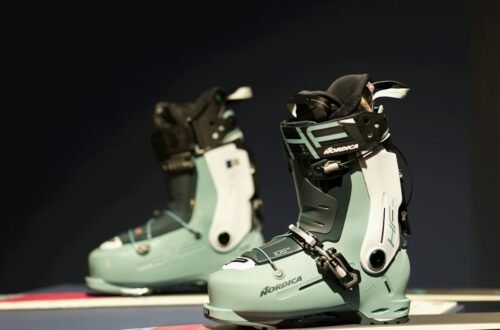
You’ll spend the first 30–45 minutes getting fitted for boots, skis, and poles at the rental shop. Ski boots feel stiff and awkward walking on flat ground — that’s normal. They’re designed to flex forward, not sideways, which only makes sense once you’re actually on a slope.
Most rental shops adjust buckle tension for you, but speak up if your toes are going numb or your heel lifts when you press forward.
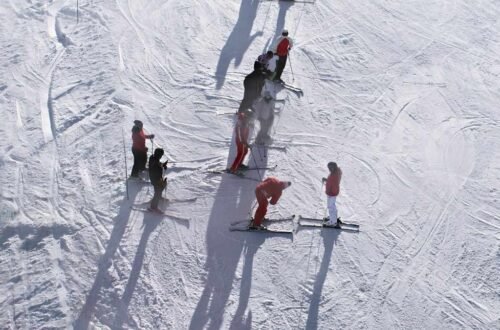
After gear pickup, your ski school group assembles at a designated meeting point near the base. Instructors typically start with a flat-ground exercise: shuffling, side-stepping, and learning to clip in and out of bindings. None of it feels graceful. Everyone in the group is equally awkward.
Afternoon: First Real Runs
By late morning, most groups progress to a gentle nursery slope — a short, low-angle section serviced by a “magic carpet” conveyor belt rather than a chairlift. The focus here is the snowplow (also called a “pizza wedge”): angling both ski tips inward to control speed.
It feels counterintuitive at first — your instinct says lean back, but the correct move is to press your shins into the front of the boots and keep weight slightly forward.
Expect to fall. Repeatedly. Falling on a gentle groomed slope with several inches of packed snow underneath is less dramatic than it sounds — more of a slow-motion sit-down than a crash. Getting back up is the tiring part, and it’s where your quads start to burn.
By the end of a half-day lesson, most beginners can descend a nursery slope with some degree of speed control. A full-day lesson typically gets you onto a proper green run with a chairlift.
Three Things Nobody Tells You
- Your feet will hurt. Ski boots compress pressure points that normal shoes don’t touch. This fades after the first day as the liner molds slightly to your foot shape. Thin, moisture-wicking ski socks (not thick cotton) make a meaningful difference.
- You’ll be exhausted by 2 PM. Skiing uses stabilizer muscles in your legs and core that normal exercise doesn’t prepare you for. Half-day lessons exist for good reason — pushing past fatigue is when injuries happen.
- Chairlifts are the scariest part. The skiing itself is manageable; the first chairlift ride — swinging 20 feet above the ground with skis dangling — catches most beginners off guard. Your instructor will ride with you the first time and talk you through the dismount.
Frequently Asked Questions
What is the best age to start skiing?
Children as young as three can take introductory ski lessons, though most ski schools recommend age four or five for structured group instruction — that’s when coordination and the ability to follow multi-step instructions are reliable enough for real progression.
Adults can start at any age. Ski schools regularly teach first-timers in their 40s, 50s, and 60s. Physical fitness matters more than age; if you can walk up a flight of stairs without getting winded, you can learn to ski.
How many days does it take to learn to ski?
Most adults can snowplow down a green run with basic speed control after two to three days of half-day lessons. Linking parallel turns — the technique that makes skiing feel smooth rather than effortful — typically takes five to seven days of on-snow practice.
Progression varies significantly by athletic background. People with experience in ice skating, surfing, or skateboarding tend to pick up edge control faster.
Is skiing or snowboarding easier for beginners?
Skiing has a gentler learning curve on day one because having two independent edges (one per foot) is more intuitive for balance than standing sideways on a single board. Most beginners can ride a chairlift and descend a green run by the end of their first day on skis.
Snowboarding’s initial learning curve is steeper — expect more falling in the first two days — but many riders feel it becomes more natural once the basics click. For a first trip, skiing is the safer bet if your priority is having fun quickly rather than committing to a longer learning arc.
Do I need to buy my own ski gear as a beginner?
No. Renting is the right call for your first one to three trips. Rental gear at most resorts is well-maintained and sized by professionals who adjust bindings to your weight and ability level — a safety-critical detail that matters more than most beginners realize.
The only items worth buying before your first trip are ski socks (thin, moisture-wicking, not cotton), a helmet (roughly $60–$120, which many rental shops also offer), and layered clothing that handles sweat and cold without bulk.
What is the cheapest way to go skiing for the first time?
Book a learn-to-ski package directly through the resort’s website — these bundles (lift ticket + rental + group lesson) typically save $40–$80 compared to buying each component separately.
Choose a smaller regional mountain over a marquee destination. Snowshoe Mountain in West Virginia or Beech Mountain in North Carolina costs a fraction of what Vail or Aspen charges for the same introductory experience.
Visit midweek in early January, rent gear from a town shop rather than the on-mountain counter, and bring your own lunch instead of eating at the lodge. A two-day beginner trip can realistically come in under $350 per person with these adjustments.
Are ski lessons worth it for beginners?
Unequivocally, yes. Self-teaching skiing leads to two predictable outcomes: either you develop bad habits (leaning back, relying on the inside edge) that are harder to correct later, or you get frustrated and quit before day two.
A certified instructor compresses what would take you a week of trial-and-error into a single structured session. Group lessons are the sweet spot for value — you get professional instruction at a fraction of the private lesson cost, and learning alongside other beginners normalizes the inevitable wobbling and falling.
Choosing the Right Mountain
The gap between a great first ski experience and a miserable one almost always comes down to resort choice — not athletic ability, not gear, not weather. A mountain with dedicated beginner terrain, competent instruction, and reasonable prices removes most of the friction that makes first-timers quit.
For North American beginners, Breckenridge and Park City deliver the strongest all-around packages, while Snowshoe Mountain is the budget play that doesn’t compromise on learning infrastructure. In Europe, Les Gets and Söll offer genuine Alpine experiences at prices that won’t require a second mortgage.
Book the lesson. Rent the gear. Pick a Tuesday in January. The mountain will do the rest.