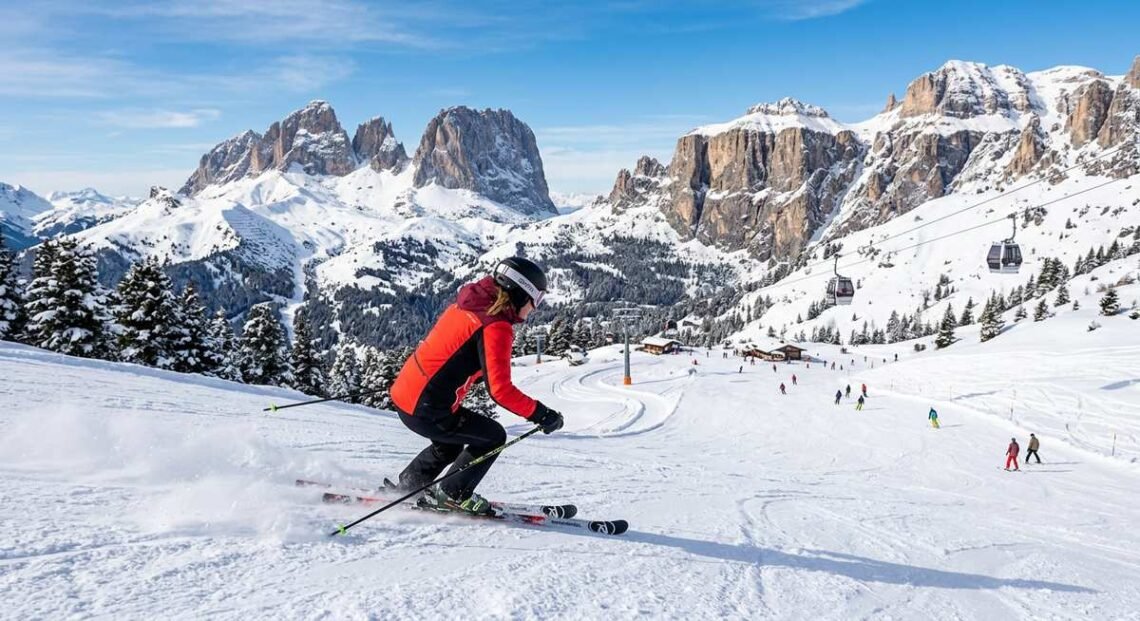
Standing at the top of the Saslong in Val Gardena, you look across a 1,200-kilometre network of pistes carved between pale limestone towers so dramatic that UNESCO declared them a World Heritage Site. That single panorama captures why dolomites skiing draws over two million visitors every winter — and why most of them come back.
The backbone of this entire ski region is Dolomiti Superski, one of the largest interconnected ski networks on Earth. One pass, 12 valleys, more than 450 lifts, and terrain that ranges from gentle nursery slopes to genuinely steep couloirs. Whether you are a first-timer or a lifelong expert, the infrastructure here is built for your level.
This guide covers four essential planning layers: a resort-by-resort breakdown matched to skill level, a plain-English explanation of Dolomiti Superski pass tiers and pricing, step-by-step logistics for getting here from major European airports, and a season-timing breakdown so you hit the right week for your priorities. Every section is written for the traveler who wants answers, not filler.
The Best Ski Resorts in the Dolomites (By Skill Level)
The Dolomites’ major resort areas — Val Gardena, Cortina d’Ampezzo, Alta Badia, and Arabba — suit different skier profiles, but all connect under the Dolomiti Superski network. Beginners and luxury seekers gravitate toward Cortina. Intermediates thrive in Val Gardena. Advanced skiers split time between Alta Badia’s rolling reds and Arabba’s steep black faces.
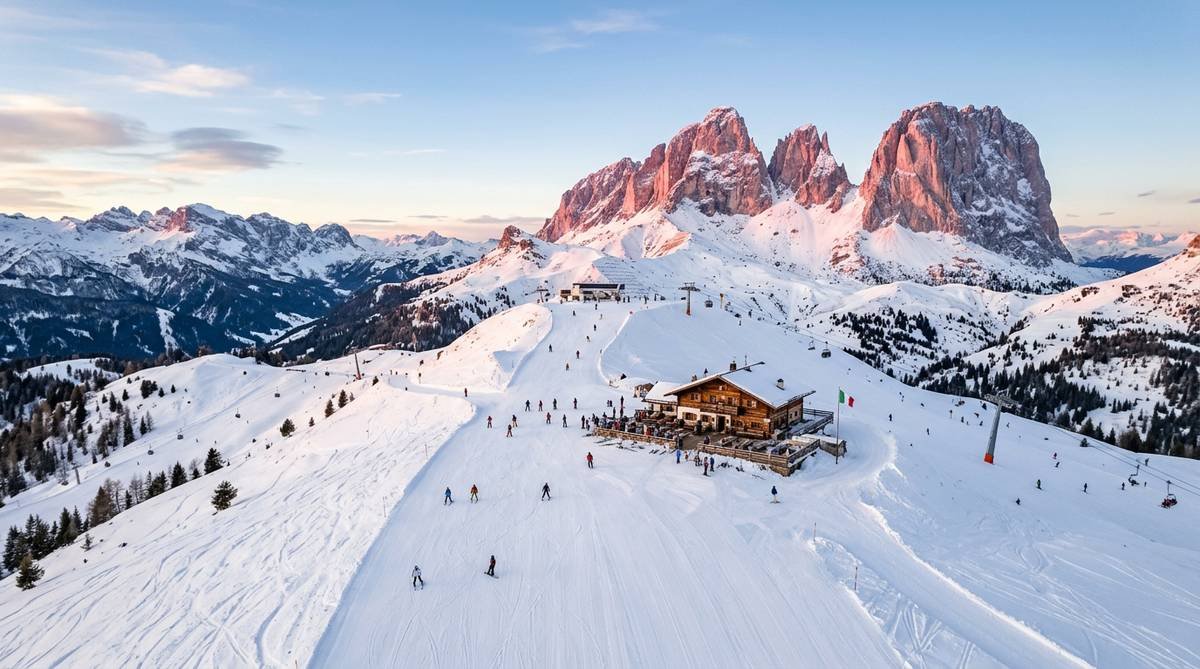
Val Gardena — Best for Intermediates and Foodies
Val Gardena is the heartbeat of Dolomites skiing for intermediate skiers. The Saslong descent — home to the annual FIS Alpine Ski World Cup downhill — drops roughly 870 metres of vertical and gives recreational skiers a genuine taste of speed along the groomed race corridor.
Beyond the Saslong, Val Gardena plugs directly into the Sella Ronda, the famous 26-kilometre ski carousel linking four valleys in a single loop. Hours of blue and red cruisers unfold across this circuit, and modern high-capacity gondolas keep lift queues short even during peak weeks.
The food is the real hook. Val Gardena’s rifugios serve venison goulash, fresh pasta, and homemade apple strudel at altitude, and the village of Ortisei holds a Michelin-starred dining scene that surprises first-time visitors. Ski hard, eat well — this resort rewards both instincts.
Cortina d’Ampezzo — Best for Beginners and Luxury Travelers
Cortina is the Dolomites’ most glamorous address. Wide, impeccably groomed blue runs dominate the Socrepes and Faloria sectors, giving beginners generous room to build confidence without steep pitches or narrow chutes pressing in from the sides.
The après-ski scene on Cortina’s Corso Italia is world-class — fur-trimmed jackets, Aperol spritzes, and designer boutiques steps from the base area. The town hosted the 1956 Winter Olympics and is a co-host for the 2026 Milano-Cortina Winter Olympics, triggering major new investment in lifts, snowmaking, and accommodation.
For non-skiers in a mixed group, Cortina punches above its weight: ice skating, snowshoe trails through the Ampezzo Dolomites Natural Park, and horse-drawn sleigh rides fill rest days easily. Nobody in the group feels shortchanged here.
Alta Badia and Arabba — Best for Advanced Skiers
Alta Badia and Arabba sit side by side on the Sella Ronda circuit but deliver genuinely different challenges — which is exactly why advanced skiers should treat them as a pair.
Alta Badia’s terrain is rolling and rhythmic: long red runs built for high-speed carving, linked by a refined rifugio lunch culture anchored by the annual Alta Badia Gourmet Skisafari event, where Michelin-starred chefs cook at altitude. The Gran Risa slope, host to the World Cup giant slalom, is the marquee run.
Arabba is where the gradient sharpens. The Porta Vescovo sector delivers sustained black-run pitches above 2,400 metres, with north-facing slopes that hold snow quality long after other areas turn slushy. The Marmolada glacier connection — the highest skiable point in the Dolomites at 3,265 metres — adds a genuinely alpine dimension that no other resort in the network matches. This is the spot for skiers who want to feel the mountain push back.
Ski Resort Comparison Table
| Resort | Skill Level | Skiable Km | Lifts | Highlight | Best For |
|---|---|---|---|---|---|
| Val Gardena | Intermediate | 175 km | 79 | Saslong World Cup descent, Sella Ronda access | Intermediates, food lovers |
| Cortina d’Ampezzo | Beginner–Intermediate | 120 km | 37 | 2026 Olympics host, wide groomed blues | Beginners, luxury travelers |
| Alta Badia | Intermediate–Advanced | 130 km | 53 | Gran Risa World Cup slope, gourmet rifugios | Carving enthusiasts, foodies |
| Arabba | Advanced | 63 km | 26 | Marmolada glacier (3,265 m), steep north faces | Expert skiers, off-piste explorers |
Dolomiti Superski Pass: What You Need to Know
One Dolomiti Superski pass unlocks access to 1,200+ km of marked runs and more than 450 lifts across 12 connected ski areas — no resort-by-resort ticketing required. Prices scale down sharply with trip length, and booking online 2–3 weeks ahead typically saves 10–15% over window rates.
What the Dolomiti Superski Pass Covers
A single pass covers Val Gardena, Alta Badia, Cortina d’Ampezzo, Arabba, and eight other ski areas — all loaded onto one keycard. Ski from Selva into Alta Badia and back in the same afternoon without touching your wallet again. The pass also includes ski bus access connecting resort villages within the network, which matters if you are basing yourself in one valley and day-tripping to another.
Pass Tiers and Pricing
The longer the pass, the lower the effective daily rate. The table below reflects approximate adult rates for the 2024–25 season — always verify current pricing directly on the official Dolomiti Superski website before purchasing.
| Pass Type | Approx. Adult Price | Effective Daily Rate | Best For |
|---|---|---|---|
| 3-Day Pass | EUR 165–185 | ~EUR 55–62/day | Long weekenders |
| 6-Day Pass | EUR 285–315 | ~EUR 47–52/day | One-week trips |
| Season Pass | EUR 700–850 | Unlimited days | Frequent or resident skiers |
| Flexi Pass (6 of 7 days) | ~EUR 295–325 | ~EUR 49–54/day | Mixed ski/non-ski groups |
Children under 8 ski free when accompanied by a pass-holding adult. Reduced rates apply for children up to 15 and seniors over 65 — typically a 20–30% discount. The Flexi Pass is genuinely underrated for groups that include non-skiers or plan a rest day mid-week.
Buy Online vs. At the Resort
Buy online. The early-bird discount through the official Dolomiti Superski portal runs 10–15% below window prices, and the process takes under ten minutes. You pay a small refundable keycard deposit (typically EUR 5) on collection at the resort.
Timing matters most during the holidays. Christmas week and New Year period allocations sell out — sometimes weeks in advance. If your trip falls between December 26 and January 6, treat the pass purchase the same way you would treat a flight booking: do it early or pay full price at the window.
Best Time to Ski the Dolomites: Season Timing Guide
The Dolomites ski season typically runs from early December through mid-April, but the experience varies dramatically depending on when you arrive. Getting the timing right can mean the difference between powder days and ice sheets, empty lifts and 20-minute queues.
Early Season (December 1–20)
Snow coverage builds through December, supported by extensive snowmaking across the Dolomiti Superski network. Crowds are thin before Christmas, lift queues barely exist, and accommodation prices sit 20–30% below peak rates. The trade-off: some higher-altitude connections and off-piste terrain may not open until mid-December depending on natural snowfall.
Peak Season (December 21 – Late February)
Christmas week through New Year is the busiest and most expensive window. Expect full hotels, premium pricing, and longer lift queues at popular base stations. January and February deliver the most reliable snow conditions and the coldest temperatures, which keep piste quality high throughout the day. For the best balance of snow quality and manageable crowds, target the second and third weeks of January.
Spring Skiing (March – Mid-April)
Longer daylight hours, warmer temperatures, and sun-softened snow define spring skiing in the Dolomites. Rifugio terraces open for outdoor lunches with full panoramic views. Prices drop again after mid-March, and the atmosphere shifts from high-intensity skiing to a more relaxed pace. The Marmolada glacier and north-facing runs at Arabba hold firm snow quality latest into the season.
Getting to the Dolomites: Airports, Transfers, and Road Tips
Three airports serve as practical gateways for Dolomites skiing. Innsbruck offers the shortest drive. Venice handles the most international long-haul connections. Verona splits the difference.
Nearest Airports Compared
| Airport | Drive Time | Key Routes From | Shuttle Cost (approx.) | Car Rental Cost (approx.) |
|---|---|---|---|---|
| Innsbruck (INN) | ~1.5 hrs | London, Amsterdam, Frankfurt | EUR 60–90/person | EUR 40–70/day |
| Verona (VRN) | ~2 hrs | London, Brussels, Munich | EUR 70–100/person | EUR 35–65/day |
| Venice Marco Polo (VCE) | ~2.5 hrs | Transatlantic, Middle East, Asia | EUR 80–120/person | EUR 35–65/day |
Getting Around Once You Arrive
A rental car gives you genuine flexibility for multi-resort days, but winter mountain driving is not casual. Snow chains are legally required on many Dolomite roads between November and April — rental companies charge extra for them, so confirm before signing the contract.
The car-free alternative is more viable than most visitors expect. Dolomiti Bus operates regional routes connecting major valley towns, and nearly every resort runs its own free or low-cost shuttle loop between accommodation and lift bases. Skiers staying in a single resort area can skip the car entirely.
Base Town Recommendations
Ortisei (Val Gardena) sits centrally within the network and offers the best access to multiple interconnected ski areas in a single day. Corvara (Alta Badia) delivers a quieter, more authentically Ladin village atmosphere without sacrificing lift access. Cortina d’Ampezzo is the right call if luxury hotels and designer après-ski are non-negotiable.
South Tyrol’s agriturismo farms and traditional mountain chalets offer a genuinely different stay from standard ski hotels — wood-panelled rooms, home-cured speck, and breakfast with valley views. These fill fast; reserve at least two months ahead for peak weeks.
Frequently Asked Questions About Dolomites Skiing
Is the Dolomites good for skiing?
The Dolomites are exceptional for skiing. The Dolomiti Superski network connects 1,200+ kilometres of pistes across 12 valleys, making it one of the largest ski areas in the world. Terrain ranges from gentle beginner slopes in Cortina to steep black runs on the Marmolada glacier. The region also holds UNESCO World Heritage status for its dramatic limestone scenery — no other major ski destination matches that combination of scale, variety, and natural beauty.
How much does it cost to ski in the Dolomites?
A 6-day Dolomiti Superski pass costs approximately EUR 285–315 for adults during the 2024–25 season, working out to about EUR 47–52 per day. Children under 8 ski free with a pass-holding adult. Add accommodation (EUR 80–200/night depending on resort and category), meals, and equipment rental (EUR 30–50/day) for a full budget picture. Booking passes online 2–3 weeks ahead saves 10–15% over window prices.
What is the best month to ski in the Dolomites?
January offers the best combination of reliable snow conditions, cold temperatures that preserve piste quality, and manageable crowd levels compared to the Christmas–New Year rush. February is a close second, with slightly longer daylight hours. March and April suit skiers who prefer warmer weather, sun-softened snow, and rifugio terrace lunches — though off-piste options narrow as the season progresses.
Can beginners ski in the Dolomites?
Absolutely. Cortina d’Ampezzo is purpose-built for beginners, with wide groomed blue runs across the Socrepes and Faloria sectors and multiple ski schools offering English-language instruction. Val Gardena also has dedicated beginner zones near Ortisei. The Dolomiti Superski pass means beginners can explore easy runs across several resorts without buying additional tickets.
How do I get to the Dolomites for skiing?
The three closest airports are Innsbruck (~1.5 hours by car), Verona (~2 hours), and Venice Marco Polo (~2.5 hours). Innsbruck offers the shortest transfer and strong connections from northern European hubs. Venice handles the most transatlantic and long-haul flights. Shared shuttle services run EUR 60–120 per person depending on the airport; car rental costs EUR 35–70 per day. Snow chains are legally required on many Dolomite roads in winter.
What is the Sella Ronda?
The Sella Ronda is a 26-kilometre ski circuit looping around the Sella massif, connecting four valleys — Val Gardena, Alta Badia, Arabba, and Val di Fassa. Skiers can complete the full loop clockwise or counter-clockwise in roughly 5–6 hours of skiing, passing through dramatically different terrain and stopping at rifugios along the way. It is one of the signature experiences of Dolomites skiing and is fully covered by the Dolomiti Superski pass.
Do I need a car in the Dolomites?
Not necessarily. Dolomiti Bus runs regional routes between major valley towns, and most resorts operate free shuttle loops connecting accommodation to lift stations. A car adds flexibility for multi-resort days, but skiers based in a single area — particularly Val Gardena, Cortina, or Alta Badia — can manage comfortably without one. If you do rent, confirm snow chain availability with the rental company before signing.