Spring skiing is one of the best days you can have on a mountain — and one of the most uncomfortable, if you dress for it wrong. The sun is blazing, the snow is softening into heavy cream by noon, and the temperature at the base might be 30°F warmer than it was at the summit two hours ago. That’s not a minor fluctuation. That’s a full wardrobe problem.
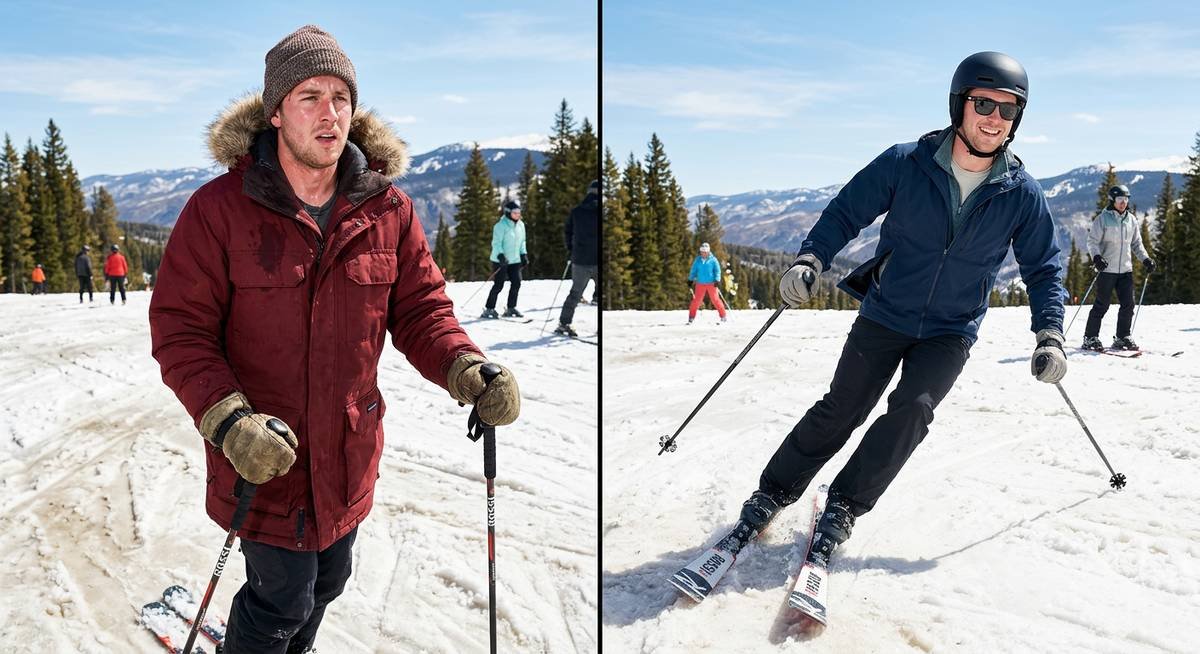
Standard winter ski gear fails here. A thick insulated parka that kept you warm in January becomes a sweat-soaked liability by 11 AM in March. Heavy insulated pants, cotton layers, non-vented shells — all of them turn against you when the mountain decides it’s practically spring break. Knowing what to wear spring skiing means thinking in time blocks, not just temperature ranges.
The approach that actually works is a day-arc layering system — gear chosen not just for the cold morning but for the warm, wet, high-UV afternoon waiting on the other side of it. That’s exactly what this breakdown delivers: fabric science, timing strategy, and the specific pieces worth buying or skipping.
Why Spring Skiing Demands a Different Wardrobe
A single spring day can swing from 22°F at the summit during first chair to 50°F at the base by early afternoon. The UV index regularly hits 8–10, even under partial cloud cover. Dressing for winter in those conditions doesn’t just make you uncomfortable — it actively works against you, trapping sweat, blocking airflow, and leaving you cooked by noon.
The Spring Conditions Problem
The mountain environment in spring is genuinely bipolar. Summit temperatures at 8 AM can hover between 20–28°F with wind chill, demanding some insulation. By 1 PM, the base lodge thermometer reads 45–55°F, the snow is heavy and wet, and you’re generating serious body heat on every run.
The UV situation is equally aggressive. According to the World Health Organization, UV radiation increases approximately 10–12% for every 1,000 meters of altitude gained. At a resort sitting above 8,000 feet, that translates to UV exposure roughly 25–35% more intense than at sea level — and spring’s longer daylight hours extend that exposure window significantly.
Wet, slushy snow compounds everything. Unlike the dry powder of January, spring snow saturates gear on contact. A jacket or pant that performs adequately in cold, dry conditions can become waterlogged and heavy within hours on a spring mountain. Breathability and waterproofing matter more in April than they do in December.
What NOT to Wear (Common Mistakes)
This is the advice most skiers never get — and the reason so many spring days end early with soaked, overheated, or sunburned skiers heading in before noon. The gear that fails in spring isn’t bad gear. It’s simply the wrong tool for the conditions.
| Gear to Avoid | Why It Fails in Spring | What to Use Instead |
|---|---|---|
| Heavy insulated ski pants (200g+ fill) | Causes rapid overheating; sweat saturates insulation, making it cold and heavy | Softshell or lightly insulated pants (60–80g fill) |
| Thick winter parkas with no ventilation | No airflow = heat buildup; non-removable insulation can’t adapt to afternoon temps | Vented hardshell or softshell with pit zips |
| Cotton base layers | Cotton absorbs sweat and holds moisture against skin, accelerating chilling and chafing | Lightweight merino wool or synthetic moisture-wicking fabrics |
| Non-waterproof denim or joggers | Slushy spring snow soaks through within minutes; no DWR coating means instant saturation | Waterproof ski pants with minimum 10,000mm rating |
| Single-layer fleece (unlined, uncoated) | No wind or water resistance; saturates quickly when wet spring snow hits | Wind-resistant fleece or softshell mid-layer |
The Spring Skiing Layering System Explained
Forget about staying warm. In spring, the goal is staying dry and staying adjustable. Your three layers need to move sweat away from skin, block wind and wet snow on the outside, and let you shed pieces fast when the mountain swings 20–30°F between your first run and your last.
Base Layer — Moisture Management First
Fabric choice at the skin level is the single most consequential decision in a spring ski outfit. Warmer air temperatures mean your body generates significantly more heat during runs — and more sweat. A base layer that traps that moisture against your skin will leave you cold, clammy, and miserable by 10 AM.
Lightweight merino wool (150–175gsm) is the gold standard here. Merino naturally wicks moisture away from skin, resists odor even through a full day of sweating, and regulates temperature better than pure synthetics in fluctuating conditions. If budget is a constraint, a lightweight polyester or nylon-blend synthetic performs nearly as well for moisture transport at a lower price point — it just won’t manage odor as effectively over a long day.
Avoid midweight or heavyweight base layers unless you’re skiing above 10,000 feet in the early morning window before 9 AM. The extra thermal mass becomes a liability the moment the sun clears the ridgeline. A fitted lightweight long-sleeve top and slim-cut bottoms is the right call for most spring conditions.
Mid Layer — Insulate Only What You Need
The mid layer’s job in spring is targeted warmth, not blanket insulation. A lightweight fleece (100-weight) or a thin synthetic insulated vest — think 40–60g fill — gives your core enough warmth for cold morning groomer runs without trapping heat in your arms during aggressive afternoon skiing.
The vest strategy is worth understanding. Your arms generate significant body heat during pole planting and carving. Keeping them free while insulating the torso strikes the right balance. Many experienced spring skiers pull the mid layer off entirely by 11 AM, stuffing it into a jacket pocket or a small summit pack.
Outer Shell — Breathability Over Bulk
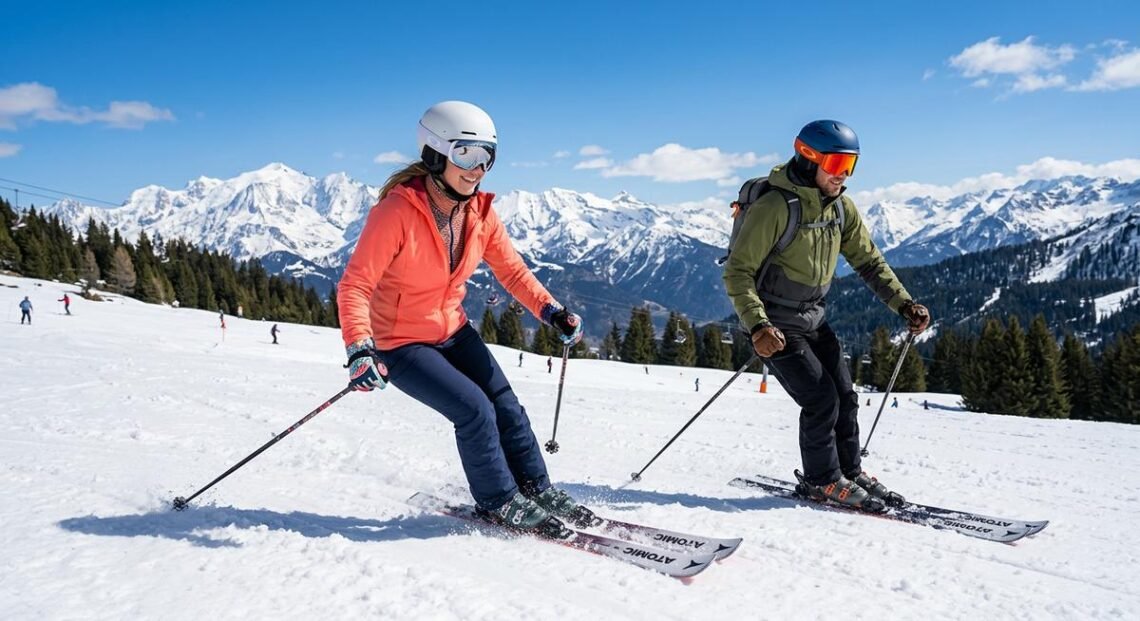
A traditional insulated ski jacket is the wrong tool for spring. What you want is either a vented softshell or a 2.5-layer waterproof-breathable hardshell — a shell that blocks wind and wet spring snow without trapping the heat your base and mid layers are working to expel.
Pit zips and mesh-lined underarm vents are essential. They function as a manual thermostat, letting you dump heat instantly on sun-drenched south-facing runs without removing a layer. For waterproofing, target a minimum 10,000mm hydrostatic head rating — spring snow is heavy and saturated, and a budget shell rated below that threshold will wet out by early afternoon.
Bright shell colors — yellows, oranges, reds — have a practical edge in spring beyond aesthetics. High-altitude UV index values regularly reach 8–10 on spring days, even under partial cloud cover, and high-visibility colors make you easier to spot on crowded, slushy spring runs where reaction times matter.
| Layer | Best Fabric Choice | Spring-Specific Function | What to Avoid |
|---|---|---|---|
| Base | Lightweight merino wool (150–175gsm) or polyester blend | Wicks sweat during high-output spring runs; regulates temp across 30°F swings | Cotton, heavyweight merino (250gsm+) |
| Mid | 100-weight fleece or synthetic insulated vest (40–60g fill) | Targeted core warmth without overheating arms; packable for afternoon removal | Down puffer jackets, heavy fleece (300-weight) |
| Outer Shell | Vented softshell or 2.5L waterproof-breathable hardshell | Blocks wet spring snow and wind while dumping heat through pit zips | Insulated parkas, unventilated shells |
Spring Ski Pants, Gloves, and Accessories
For spring skiing, prioritize waterproofing over insulation in every piece of gear below the waist. Softshell ski pants or lightly insulated shells (60–80g synthetic fill) outperform heavy bibs because wet, slushy snow saturates fabric fast — and soaked insulation loses its thermal value entirely. A minimum 10,000mm waterproof rating with a fresh DWR coating is the floor.
Pants — Go Lighter and Waterproof
Heavy insulated ski pants become portable saunas once midday temps push past 40°F. Ventilated thigh zips solve this instantly — unzip on the chairlift, dump heat in seconds, zip back up when the wind picks up on the next run. Skiers who switch to vented pants for spring consistently stay on the mountain two to three hours longer before heat drives them inside.
Avoid bib overalls unless they feature front mesh venting. The extra coverage bibs provide is a liability when you’re generating heat on corn snow under direct sun at altitude.
Gloves, Mittens, Goggles, and Sunglasses
Spring hand protection is a morning-to-afternoon decision. Warmer, thinner gloves with touchscreen-compatible fingertips handle the 10 AM–close window comfortably. Mittens run warmer and suit early-morning groomers when temps sit below freezing at the summit.
Eye protection follows the same time-of-day logic. Goggles dominate in flat morning light and any wind; polarized sunglasses with Category 3 or 4 lenses take over once the sun climbs and glare off wet snow intensifies. The UV Index at elevations above 8,000 feet regularly reaches 8–10 in spring — equivalent to a beach in midsummer — making lens darkness a genuine safety consideration, not just a style choice.
| Gear | Best For | Spring Advantage | Watch Out For |
|---|---|---|---|
| Thin Gloves | Mid-morning onward, 35°F+ | Dexterity, breathability | Insufficient for sub-freezing summit starts |
| Mittens | Early morning, high-elevation runs | Warmer in wind and cold | Less grip on poles, overheat quickly |
| Ski Goggles | Flat light, wind, morning runs | Full UV and wind protection | Fog and overheat in afternoon warmth |
| Polarized Sunglasses | Bright afternoon sun, corn snow | Cuts glare off wet snow effectively | No peripheral wind or impact protection |
One often-missed detail: apply broad-spectrum SPF 50 sunscreen around goggle and sunglass edges every two hours. Spring UV penetrates those small gaps of exposed skin faster than you’d expect, and altitude amplifies the burn. Lip balm with SPF 30+ is equally important — chapped, sunburned lips are one of the most common post-spring-ski complaints.
Boots and Socks — The Overlooked Layer
Ski boots don’t change between seasons, but socks absolutely should. Swap your thick winter ski socks for a thin-to-midweight merino blend. Thinner socks improve boot feel and responsiveness, and they dry faster when spring slush inevitably seeps in around the cuff. Wool-synthetic blends in the 50–70% merino range hit the sweet spot — enough cushion for comfort, enough wicking to keep feet dry across a full day.
Avoid cotton socks entirely. A cotton sock inside a plastic ski boot on a warm spring day creates a humid micro-environment that leads to blisters, hotspots, and cold feet once sweat pools. Bring a spare pair in your bag. Swapping socks at lunch is one of the simplest comfort upgrades most skiers never consider.
Spring Skiing Clothing FAQ
What temperature is considered spring skiing?
Spring skiing typically happens when base temperatures at the resort climb above 35–40°F during the day, usually from mid-March through May depending on the region. Summit temperatures can still dip into the low 20s at first chair, but the defining characteristic is a wide daytime swing — 25–30°F or more between early morning and early afternoon. That swing is exactly why layering flexibility matters more than raw insulation.
Can you wear jeans skiing in spring?
No. Denim absorbs water rapidly, dries slowly, and offers zero insulation when wet. Spring snow is heavy, slushy, and saturated — jeans will soak through within a few runs. Even on a warm, sunny spring day, wet denim against skin causes rapid heat loss and discomfort. Stick with waterproof ski pants rated at 10,000mm or higher.
Do I need a helmet for spring skiing?
Yes. Spring snow conditions shift throughout the day — icy hardpack in the morning, heavy slush by afternoon — and both surfaces increase the risk of falls compared to consistent mid-winter powder. A lightweight, well-vented helmet is more comfortable in warm spring conditions than a non-vented model designed for deep winter. Many spring skiers prefer helmets with removable ear pads for extra airflow.
Should I wear sunscreen while spring skiing?
Absolutely, and more aggressively than most people realize. UV radiation at 8,000+ feet is 25–35% stronger than at sea level, and spring snow reflects up to 80% of UV rays back at your face. Apply SPF 50 broad-spectrum sunscreen 20 minutes before exposure, reapply every two hours, and pay special attention to the nose, ears, under-chin area, and the skin around goggle edges. A single spring ski day without sunscreen can produce a severe burn equivalent to hours on a tropical beach.
What should I pack in my ski bag for spring?
Build your spring ski bag around adaptability: a lightweight base layer, a packable mid-layer vest or fleece, a vented shell, thin gloves and mittens (both), goggles and polarized sunglasses (both), SPF 50 sunscreen, SPF lip balm, a spare pair of thin merino ski socks, and a small backpack or hip pack to stash layers as the day warms up. Leave the heavy insulated gear at home.
Is a softshell or hardshell better for spring skiing?
Both work, with trade-offs. A softshell offers superior breathability and stretch — ideal for bluebird spring days with low precipitation risk. A 2.5-layer hardshell provides better waterproofing for wet spring storms or slushy conditions where snow saturates everything it touches. If you can only bring one, a hardshell with pit zips covers more scenarios. If the forecast is clear and warm, a softshell is more comfortable.
Gear Up and Get Out There
Spring skiing rewards skiers who plan for change. The mountain will hand you freezing summits at dawn, blazing sun by midmorning, and slushy corn snow all afternoon — sometimes within the same run. The gear system that handles all of it is lighter, more breathable, and more layered than anything you’d wear in January.
Start with a thin merino base, add a packable vest or light fleece for the cold window, top it with a vented shell, and carry both goggles and sunglasses. Swap thick winter socks for thin merino. Bring sunscreen like you’re headed to the beach, because at altitude, you effectively are. The rest is just skiing — which, in spring, tends to be the best skiing of the year.