June Mountain sits 20 miles north of Mammoth on U.S. Route 395, and most Southern California skiers blow right past it. Fewer than 500 acres, 35 runs, seven lifts — the numbers don’t scream destination resort. But the skiing is genuine: 2,590 feet of vertical drop, an average of 250 inches of annual snowfall, and lift lines that barely exist even on Presidents’ Day weekend. Kids 12 and under ski free with a paying adult, no strings attached.
The mountain operates as part of the Ikon Pass family, which means pass holders already have access. Everyone else gets lift ticket prices well below what Mammoth charges — and a fraction of the crowds. The Eastern Sierra town of June Lake (population ~600) wraps around the base, and the whole scene feels closer to a European ski village than a California megaresort.
What to Expect at June Mountain Ski Resort
June Mountain is a mid-sized Eastern Sierra ski area with a 10,135-foot summit and 2,590 feet of vertical — enough to fill a full day of skiing without the sensory overload of a 3,500-acre resort. The season typically runs from mid-December through early April, though exact dates shift with snowpack each year. Current conditions are posted daily on junemountain.com.
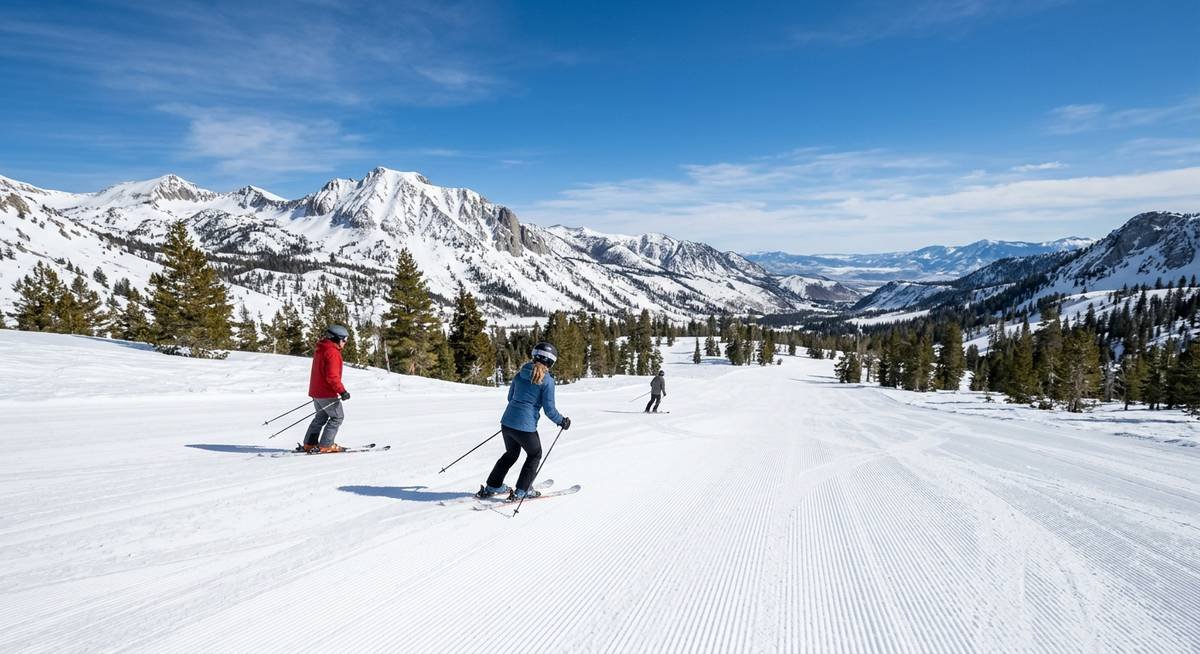
Mountain Stats at a Glance
| Stat | Detail |
|---|---|
| Summit Elevation | 10,135 ft (per junemountain.com) |
| Base Elevation | 7,545 ft |
| Vertical Drop | 2,590 ft |
| Named Runs | 35 |
| Lifts | 7 (2 high-speed quads) |
| Avg. Annual Snowfall | ~250 inches |
| Typical Season | Mid-December through early April |
| Terrain Mix | 35% beginner / 45% intermediate / 20% advanced |
The Atmosphere
Lift lines on a packed Saturday here look like a slow Tuesday at Mammoth — five-minute waits are considered long. The base lodge has the energy of a neighborhood coffee shop, not an airport terminal. Families set their own pace, beginners don’t get steamrolled, and the parking lot is free. That last detail sounds trivial until you’ve paid $40 to park at a competing resort.
The intimate scale also makes the mountain readable in a single session. First-timers can orient themselves within a run or two. Instructors are easy to find. Different ability levels stay naturally separated by the lift layout — a design choice that matters far more than resort marketing ever acknowledges.
June Mountain Trail Map & Difficulty Breakdown
What makes June Lake skiing so approachable is the terrain mix: 35 runs split roughly 35% beginner, 45% intermediate, and 20% advanced. That distribution makes June Mountain one of the strongest family and learning mountains in the Eastern Sierra. The layout is compact and logical — orient yourself within a run or two rather than spending half the day studying a trail map.
Beginner Terrain (35%)
The dedicated learning area sits at the base, served by the June Meadows Chalet and accessible from the Rainbow lift. Silverado is the classic first run — wide, consistently groomed, graded gently enough that a five-year-old can find their footing. Green terrain is physically separated from the main traffic flow, so new skiers aren’t dodging intermediates mid-lesson.
Ski school pickup points are adjacent to the learning area. No trekking across a frozen parking lot in rental boots with a reluctant kindergartner.
Intermediate Runs (45%)
Blue runs are the mountain’s backbone. The progression from greens to blues is unusually intuitive — once Silverado feels easy, the natural next step is moving onto runs served by the July and June lifts, where pitch increases just enough to build confidence without punishing hesitation. Corridor and Comet are reliable intermediate favorites: consistent fall lines, good width, satisfying vertical.
At nearly half the total terrain, the intermediate zone gives improving skiers genuine variety across multiple lift pods rather than forcing them to lap the same run all day.
Advanced & Expert Terrain (20%)
The upper mountain delivers legitimate challenge. Black runs like Tsunami and the steeper pitches off the June lift offer sustained vertical and narrower fall lines that reward precision. After a solid dump, the chutes accessible from the ridge provide real off-piste skiing — tight, consequential, and far less tracked-out than equivalent terrain at larger resorts simply because fewer people show up.
Double-black options are limited compared to Mammoth. But for advanced skiers, the draw is lapping serious terrain without a 45-minute lift queue eating into the day.
| Difficulty | % of Terrain | Key Runs | Best For |
|---|---|---|---|
| Beginner (Green) | 35% | Silverado, Rainbow learning area | First-timers, young children, ski school |
| Intermediate (Blue) | 45% | Corridor, Comet, July Bowl runs | Progressing skiers, families, day-trippers |
| Advanced (Black/Double-Black) | 20% | Tsunami, upper ridge chutes | Experienced skiers, off-piste exploration |
June Mountain Lift Tickets, Passes & Booking Tips
One of the biggest draws of June Lake skiing is the price. June Mountain consistently ranks among the most affordable lift ticket options in California, and the kids-ski-free policy makes it arguably the best family value anywhere in the Sierra. Advance online pricing runs meaningfully below window rates, and Ikon Pass holders ski here at no additional cost.
Kids Ski Free: How It Works
Children 12 and under ski free when accompanied by a paying adult. No voucher codes, no app redemption, no multi-day minimum. Buy an adult ticket at the window or online, and the child’s lift access is included. For a family of two adults and two kids, you’re buying two tickets instead of four — that’s potentially $200+ in savings on a single day versus Mammoth’s standard pricing.
Most California resorts cap the free age at 5 or 6, or bury the benefit inside a multi-day package. June Mountain applies it to every single-day ticket. Straightforward.
Advance Purchase vs. Window Pricing
Walk-up window rates carry a premium — booking online in advance, especially mid-week or outside holiday windows, yields real savings. The earlier you lock in, the better. Check junemountain.com for current pricing, as rates shift by date and demand.
Ikon Pass holders — including Base Pass — receive access to June Mountain as part of their pass benefits, subject to blackout dates on the Base tier. For frequent Sierra skiers who already carry an Ikon, June Mountain days cost nothing extra. Multi-day tickets are also available at a per-day discount over consecutive single-day purchases.
| Ticket Type | Who It’s For | Key Advantage |
|---|---|---|
| Advance Online (Adult) | Anyone booking ahead | Best price; buy early for deepest discount |
| Window Rate (Adult) | Walk-up visitors | No planning required; highest cost |
| Child (12 & Under) | Kids with paying adult | Free lift access, no purchase needed |
| Ikon Pass / Base Pass | Season pass holders | Included; check blackout dates on Base tier |
| Multi-Day Ticket | Weekend or extended trips | Per-day savings vs. buying singles |
Rentals & Lessons
On-mountain rentals cover skis, boots, poles, and helmets in tiered packages from basic to performance equipment. Snowboard setups follow the same structure. Helmets are available as a standalone add-on — worth noting for families who don’t own their own gear.
Group lessons are the most cost-effective entry for beginners, with options for adults and children. Private lessons move faster but cost more. Book lessons ahead on holiday weekends — slots fill up, and showing up without a reservation often means your kid spends the morning on a waitlist instead of learning to pizza.
June Mountain vs. Mammoth Mountain: Honest Comparison
June Mountain is the better choice for families, beginners, and skiers who value uncrowded runs over sheer resort scale. Mammoth wins on terrain variety, snowfall volume, and amenities. The real question: do you want more mountain, or a better day on the mountain?
Terrain & Vertical
Mammoth’s numbers are hard to argue with: 3,500 acres, an 11,053-foot summit, and over 150 named runs. June Mountain covers roughly 500 acres with 35 runs. But June’s 2,590-foot vertical drop is genuinely substantial — most intermediate skiers won’t exhaust the mountain in a full day. And the compact layout means less transit time between lifts and more actual skiing.
Crowds & Lines
Mammoth regularly draws massive Los Angeles weekend crowds, with holiday lift lines stretching 20-40 minutes. June Mountain, 20 miles north on the same highway, pulls a fraction of that traffic. On a busy Presidents’ Day weekend, you might wait five minutes at June. Or nothing.
That difference compounds across a full ski day. Six or seven extra runs is not a trivial gap.
Price, Drive Time & Logistics
| Factor | June Mountain | Mammoth Mountain |
|---|---|---|
| Drive from Los Angeles | ~5 hours via US-395 | ~5 hours via US-395 |
| Kids 12 & under | Free with paying adult | Paid ticket required |
| Ikon Pass access | Yes | Yes (home resort) |
| Weekend lift wait | 0-5 minutes | 20-40 minutes |
| Parking | Free | $20-$40 |
| Dining & nightlife | Limited (June Lake Loop) | Extensive (Mammoth Village) |
Drive time from Southern California is essentially identical — both sit along the US-395 corridor. Mammoth has more lodging, more restaurants, and a full resort village. The June Lake Loop offers a quieter, more authentic Eastern Sierra base with fewer options but considerably lower prices.
Planning Your June Lake Ski Trip
Getting the most out of June Lake skiing means sorting out the logistics: where to stay, how to get there, and when to go. June Lake sits along the June Lake Loop (State Route 158), a 16-mile scenic road that branches off US-395. The loop passes four lakes and a handful of small lodges, rental cabins, and restaurants — enough to support a weekend trip without the resort-town markup.
Where to Stay
Lodging clusters along the June Lake Loop within five minutes of the ski area. Options range from rustic cabin rentals (often bookable through local property managers) to the established Double Eagle Resort & Spa, which sits lakeside. Budget-conscious visitors can also base in the town of Lee Vining, 15 minutes north, where motel rates tend to drop further.
Mammoth Lakes is 20 minutes south and has the widest selection of hotels, condos, and vacation rentals. Some skiers split a trip: Mammoth lodging, one day at each mountain.
Getting There & Road Conditions
From Los Angeles, take US-395 north through the Owens Valley — roughly five hours in clear conditions. From the Bay Area, the fastest winter route runs through Reno and south on US-395 (about six hours). Chains or snow tires may be required on the loop road and on US-395 through Mono County. Check Caltrans QuickMap before you leave.
Best Time to Visit
January through mid-March typically delivers the deepest snowpack and most consistent conditions. Mid-week visits any time during the season virtually guarantee empty slopes. Avoid Presidents’ Day weekend if crowds bother you — it’s June Mountain’s busiest period, though “busy” here still means single-digit lift waits.
June Lake Skiing FAQ
Is June Mountain good for beginners?
Yes. Roughly 35% of terrain is rated beginner, and the green runs are physically separated from faster traffic. The ski school operates out of the base area with both group and private lesson options. The uncrowded conditions mean beginners get more practice time per run without dodging aggressive skiers.
Do kids ski free at June Mountain?
Children 12 and under ski free with a paying adult — every day, no blackout dates, no voucher required. Just purchase an adult lift ticket and the child’s access is included.
Is June Mountain on the Ikon Pass?
Yes. Both the full Ikon Pass and the Ikon Base Pass include access to June Mountain. Base Pass holders should check the Ikon Pass website for blackout dates, as a handful of peak days may be restricted.
How far is June Mountain from Mammoth?
About 20 miles, or roughly 25 minutes by car heading north on US-395. Many visitors stay in Mammoth Lakes and drive up for a day of uncrowded skiing at June Mountain.
When does June Mountain open and close for the season?
The season typically runs from mid-December through early April, though exact dates depend on snowfall. The resort posts opening and closing dates, along with daily snow conditions, on junemountain.com.
What is the best time to ski June Mountain?
January through mid-March offers the deepest snowpack. Mid-week visits any time during the season guarantee the emptiest slopes. Even on holiday weekends, lift waits rarely exceed five minutes.
June Lake skiing won’t overwhelm you with acreage or après-ski nightlife. What it delivers is harder to find: genuine vertical, short lift lines, affordable family pricing, and an Eastern Sierra setting that still feels like a mountain town rather than a branded experience. For families and intermediates tired of getting squeezed at Mammoth, the June Lake skiing trade-off isn’t even close.