Roughly 80% of recreational skiers never advance beyond an intermediate level, according to the Professional Ski Instructors of America (PSIA). That is an enormous number of people white-knuckling the same blue groomers year after year, not because they lack athletic ability, but because they never address the specific technique gaps and fitness weaknesses holding them back.
The fix is more targeted than most people expect. A handful of deliberate drills, terrain variety beyond your comfort zone, off-season conditioning, and properly fitted equipment can compress years of stagnation into a single season of real progress, regardless of whether you started skiing at seven or forty-seven.
Build Your Foundation: Beginner and Adult Skiing Essentials
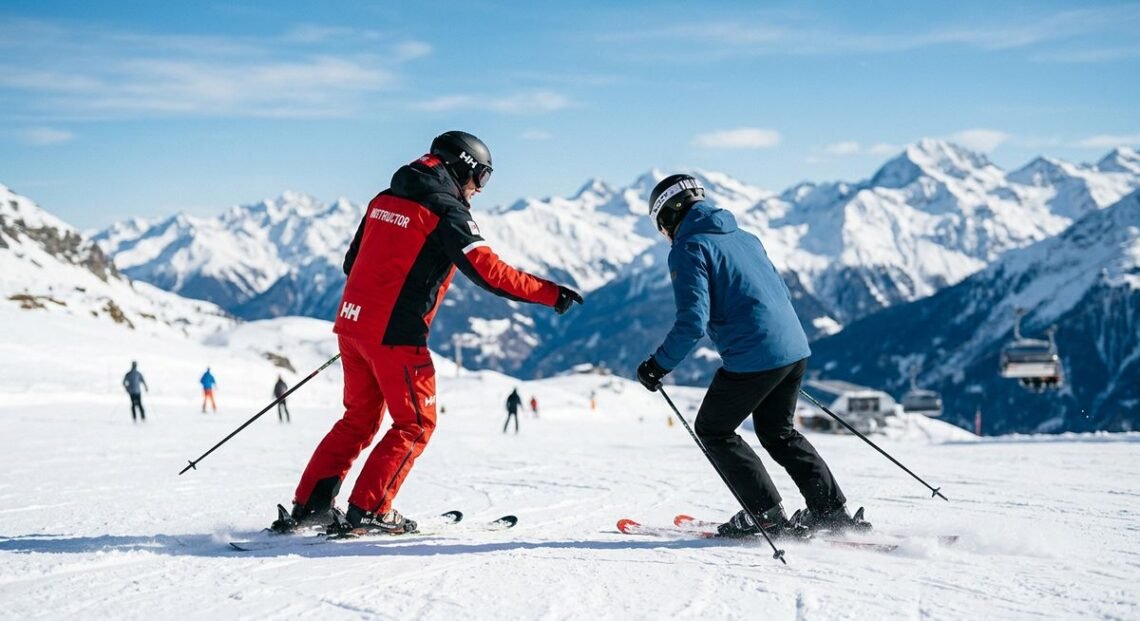
Five to seven dedicated ski days, combined with at least two structured lessons, take most beginners from wedge-turn survival to confident parallel skiing on blue groomers. The National Ski Areas Association (NSAA, 2024) reports that first-year retention hits 65% with early lesson investment, versus 28% for skiers who go it alone. That gap is not about talent. Structure matters.
Adult learners face a steeper psychological curve than children. Fear of falling, self-consciousness around teenagers ripping past, and stiff muscle memory from decades of non-skiing movement all slow progress. But adults compensate with faster verbal comprehension and better self-correction once they feel what a centered stance actually is. The biggest unlock for any adult beginner is accepting that wobbling and falling are part of the process, not evidence of failure.
Getting to Parallel Skiing
The single biggest leap in skiing skill is the shift from snowplow to parallel turns. Keeping both skis aimed in the same direction demands weight transfer to the outside ski, a forward shin-to-boot-tongue stance, and the confidence to let gravity initiate each turn rather than muscling the skis around.
A reliable drill: traverse the slope on a gentle blue run, then lift the uphill ski an inch off the snow for three seconds. If you can hold balance on the downhill ski alone, your weight distribution is correct. Repeat on both sides until it feels automatic.
Improving Without Formal Lessons
Lessons accelerate progress, but they are not the only path. Filming yourself on a phone, then comparing your stance to slow-motion footage of certified instructors, reveals posture errors that feel invisible in real time. Many self-taught skiers on Reddit’s r/skiing community cite video self-analysis as their single most effective free tool.
Skiing with friends who are one level ahead also forces adaptation. Following their line through varied terrain builds pattern recognition faster than solo laps on the same groomer.
Realistic Progression for Adult Beginners
| Skill Stage | Typical Days on Snow | What You Can Do |
|---|---|---|
| First turns (wedge) | 1-2 days | Controlled stops, green runs |
| Linking turns | 3-5 days | Smooth S-turns on greens, easy blues |
| Parallel skiing | 7-12 days | Confident blue runs, occasional black diamonds |
| All-mountain competence | 20-30 days | Variable terrain, moderate steeps, light powder |
Break Through the Intermediate Plateau
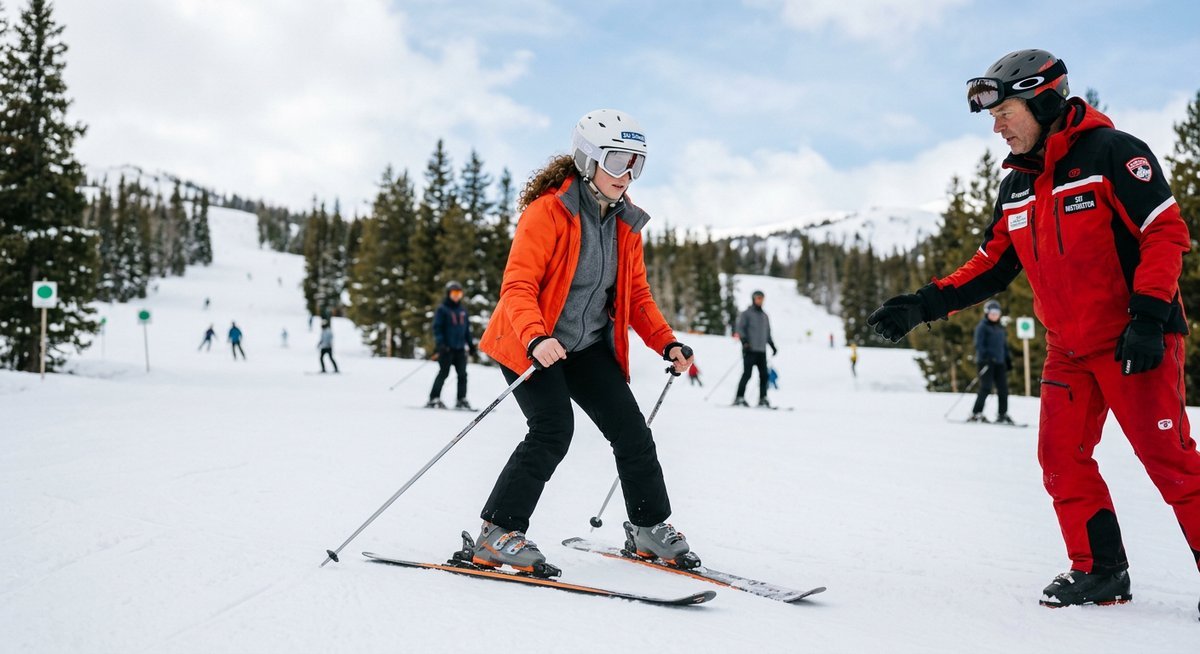
The number one intermediate plateau-breaker is fixing backseat stance, where the skier’s center of mass sits too far behind the bindings. Carv, a ski coaching technology company that analyzed over 2 million runs in 2024, found this single fault in the majority of self-assessed intermediates, with weight averaging 15-20% too far back. Fix the backseat problem and nearly everything else, from turn initiation to edge grip on ice, improves within a few runs.
Fixing this single error unlocks nearly everything else. Pressing shins firmly into the boot tongue and driving hands forward shifts weight to the ski’s sweet spot. Within two or three runs of deliberate shin pressure, most skiers notice a dramatic improvement in turn initiation and confidence on steeper pitches.
Carving: Higher Edge Angles, Cleaner Arcs
True carving means the ski bends into an arc and follows its sidecut radius without skidding. Getting better at carving on skis starts with a simple test: look behind you after a turn. Two clean pencil-thin tracks mean you are carving. Smeared snow means the ski is still sliding sideways.
To get higher edge angle skiing, focus on angulation rather than leaning. Tilt the knees into the hill while keeping the torso upright and stacked over the outside ski. Hip angulation and ankle flex generate edge angle; whole-body inclination just makes you fall over.
Getting More Forward in Ski Boots
A boot that forces you upright guarantees a backseat position. Most modern boots allow forward lean adjustment via a bolt or ratchet on the rear spoiler. Increasing forward lean by two to three degrees encourages the shin-to-cuff contact that keeps weight centered. Boot-fitters at specialty shops can also grind heel lifts or adjust ramp angle to match individual anatomy.
Downhill Skiing on Steeper Terrain
Steeper slopes amplify every technique flaw. The instinct to sit back and lean uphill is the exact opposite of what works. Committing the upper body downhill, keeping pole plants active, and making shorter turn radii all help control speed without sacrificing balance. Ski Portillo’s coaching staff identifies the two biggest intermediate mistakes on steeps as looking at the ski tips instead of three turns ahead and locking the knees instead of maintaining flexion.
Advanced Terrain: Moguls, Powder, Glades, and Park
Moguls demand leg absorption, powder demands patience, glades demand vision, and park demands flat-base balance. Each terrain type requires its own skill set that groomed-run technique simply does not build. The International Ski and Snowboard Federation (FIS) classifies these as “variable terrain competencies,” meaning the skier must adjust absorption, stance width, and turn shape on literally every turn. Mastering even one of these terrains transforms how you read the mountain.
Moguls: Absorption and Line Selection
Getting better at skiing moguls starts with the legs, not the brain. Keep the upper body quiet and facing downhill while the knees act as shock absorbers, extending into troughs and compressing over bumps. The ideal mogul line follows the zipper pattern straight down the fall line rather than traversing, which builds uncontrollable speed between bumps.
Hands stay forward and slightly wider than normal. Each pole plant on the top of a mogul triggers the next turn. Rhythm matters more than power.
Powder Skiing: Float and Flow
Deep snow rewards a centered or slightly aft stance, equal weight on both feet, and a narrower stance than hardpack skiing. The skis need to plane rather than cut, so bouncing or pumping the legs at each turn creates the rhythm. Modern fat skis (100mm+ underfoot) have made powder dramatically more accessible, but technique still separates survival from actual enjoyment.
Glade Skiing: Vision and Spacing
Tree skiing is 90% visual and 10% physical. Look at the gaps between trees, not at the trunks. Keeping the eyes on the spaces three to five turns ahead lets the body steer automatically toward openings. Short, controlled turns with active pole plants maintain rhythm and prevent runaway speed in tight glades.
Park and Rail Progression
Terrain park progression follows a strict small-to-large protocol. Getting better at skiing park starts on the smallest features: rollers, side hits, and XS boxes before touching any actual rail. Rails demand a flat-base approach with knees slightly bent and arms out for balance. Locking into a rail with edges catches and ejects you, so sliding on the base of the ski is the fundamental skill.
Get Faster: Speed Techniques and Ski Racing
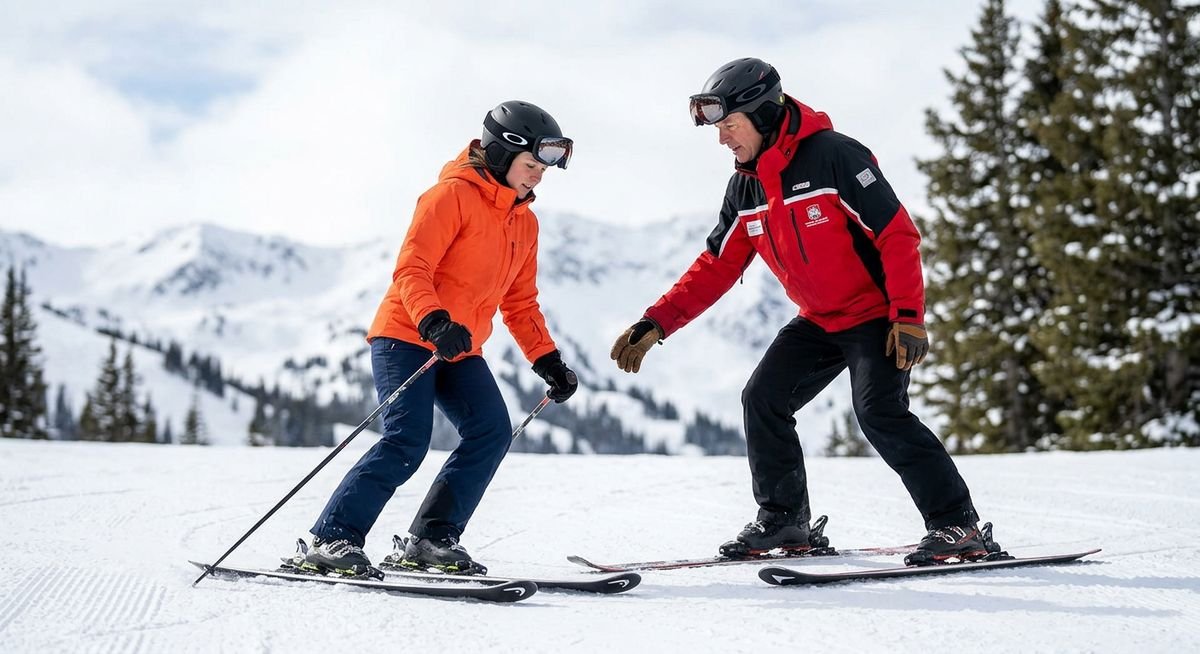
Line efficiency and carved turn shape account for 60-70% of the speed advantage that elite racers hold over recreational skiers, according to coaching data from the U.S. Ski and Snowboard Association (USSA). Raw courage barely registers. The fastest skiers take the shortest path between turns, initiate late, finish early, and let the ski’s sidecut do the work rather than scrubbing speed through skidded pivots.
To go faster in skiing without racing gates, tighten your tuck on straight sections, minimize skidding by carving cleaner arcs, and reduce vertical movement between turns. Every time you rise and drop, you bleed kinetic energy.
| Speed Factor | What It Does | How to Improve |
|---|---|---|
| Aerodynamic tuck | Reduces drag by up to 40% | Practice low stance with hands forward on mellow groomers |
| Carved (not skidded) turns | Maintains momentum through arcs | Rail-to-rail edge transitions, minimal pivot |
| Line selection | Shortens travel distance | Study race footage, practice hitting apex points on open runs |
| Wax and base maintenance | Reduces friction on snow surface | Hot wax every 3-5 ski days, match wax temperature to conditions |
Ski racing specifically rewards gate-training repetition. Many resorts offer weekend race leagues for adults, and even a handful of sessions through gates dramatically improves edge awareness and turn timing.
Off-Snow and Off-Season Training That Actually Works
Single-leg squats, lateral lunges, SkiErg intervals, and balance board work are the four highest-carryover exercises for skiing improvement when snow is not available. A 2022 study in the Journal of Strength and Conditioning Research found that skiers following a structured dryland program improved slalom times by an average of 8% compared to a control group. Given that the average recreational skier logs just 7 to 10 days on snow per year according to the NSAA’s 2023-2024 report, those other 350 days represent an enormous untapped training window.
Training at Home Without Snow
Getting better at skiing without skiing and without snow is entirely possible with the right exercises. Single-leg squats, lateral lunges, and wall sits build the quad endurance and hip stability that skiing demands. Balance boards and wobble cushions train proprioception, the same ankle and knee micro-adjustments that happen thousands of times per run.
A simple at-home ski circuit: 3 sets of 15 single-leg squats per side, 3 sets of 20 lateral box step-ups, 60-second wall sits, and 2 minutes of balance board work. Three sessions per week through the off-season produces noticeable on-snow improvement by opening day.
Ski Erg: The Best Off-Snow Cardio for Skiers
The Concept2 SkiErg is the closest gym machine to actual skiing biomechanics. Getting better at the ski erg improves both cardiovascular endurance and the lat-driven pulling motion used in poling and dynamic skiing movements. Start with 4-minute intervals at moderate resistance, building to 8-minute pieces as aerobic capacity improves.
To get faster at ski erg times, focus on hip hinge and core drive rather than arm pulling. The power should originate from the torso folding forward, with the arms following through. Competitive SkiErg times for a 2,000-meter piece sit around 7:00-7:30 for fit recreational athletes.
Cross-Country Skiing: A Different Discipline
Getting better at XC skiing shares some fundamentals with alpine, particularly balance and edge awareness, but the technique is entirely different. Classic-style XC skiing rewards a strong diagonal stride and effective kick timing. Skate-style XC demands lateral push and glide mechanics closer to speed skating. To get faster at XC skiing, prioritize double-pole strength through SkiErg or resistance band training and log volume on roller skis during summer months.
Equipment Choices That Accelerate Progress
Properly matched skis and well-fitted boots produce a larger immediate performance jump than any single technique drill. A 2023 survey by Ski Magazine found that 43% of intermediate skiers were riding rental-grade or hand-me-down gear that was too long, too stiff, or too narrow for their actual ability. Switching to appropriate equipment at any level removes a mechanical ceiling that no amount of practice can overcome.
Buying good used skis is a legitimate strategy. Focus on skis that are two to four seasons old from a reputable brand, check for core delamination along the edges, and avoid skis with deep base gouges that expose the core. Demo days at resorts let you test multiple models before committing, and sites like SidelineSwap and local ski swaps at resort towns offer quality used gear at 40-60% off retail.
| Skier Level | Ski Type | Waist Width | Key Feature |
|---|---|---|---|
| Beginner | All-mountain, soft flex | 75-85mm | Forgiving, easy to turn |
| Intermediate | All-mountain, medium flex | 85-95mm | Stability at speed, versatile |
| Advanced groomer | Frontside carver | 70-80mm | Edge grip, quick turn initiation |
| Powder/off-piste | Freeride | 100-115mm | Float in deep snow, rocker profile |
Frequently Asked Questions
How long does it take to get good at skiing?
Most people reach a confident intermediate level within 10 to 15 full days on snow, assuming deliberate practice and varied terrain. Reaching advanced-level skiing, where you comfortably handle moguls, steep chutes, and variable conditions, typically takes 30 to 50 ski days spread across multiple seasons. Natural athleticism, prior board-sport experience, and consistent off-season training can compress these timelines significantly.
How many days does it take to get good at skiing?
For adult beginners, seven to twelve days of focused skiing typically yields reliable parallel turns on blue runs. Reaching true competence across all terrain takes closer to 30-50 days. The distribution matters as much as the total: five consecutive days early on builds muscle memory faster than five days spread across five months.
Can you get better at skiing without lessons?
Yes, though lessons accelerate the timeline. Self-taught skiers benefit most from video analysis, skiing with more skilled partners, and studying technique resources from PSIA-certified instructors online. The biggest risk of skipping lessons is developing ingrained habits, such as backseat skiing or rotary steering, that become harder to unlearn over time.
Is it harder to get better at skiing as an adult?
Adults learn differently, not necessarily slower. The PSIA reports that adult learners who receive technique-focused instruction, rather than terrain-focused progression, actually retain skills at comparable rates to younger skiers. The main adult disadvantage is fear management and reduced flexibility, both of which respond well to targeted stretching and gradual exposure to steeper terrain.
What is the best way to improve your skiing at home?
Single-leg squats, lateral lunges, wall sits, and balance board work replicate the core demands of skiing. The Concept2 SkiErg adds a cardiovascular and upper-body component. Watching professional ski footage with attention to body position, turn shape, and pole timing also trains the visual pattern recognition that transfers directly to on-snow performance.
How do you buy good used skis?
Check the base for deep gouges, inspect edges for cracks or separation from the ski body, and flex the ski to confirm the core is not delaminated. Skis that are two to four years old from brands like Volkl, Blizzard, Nordica, or Rossignol hold up well. Demo days, resort ski swaps, and online marketplaces like SidelineSwap are the most reliable sources for quality used gear.
How do you get better at cross-country skiing?
Classic XC skiing improves with kick timing drills and double-pole strength work. Skate-style XC rewards hip-drive exercises and lateral balance training. Summer roller-skiing builds sport-specific endurance, and SkiErg intervals at the gym develop the pulling power that drives both techniques. Consistent volume, three to four sessions per week, matters more than intensity for XC progression.
What do experienced skiers on Reddit recommend?
The r/skiing community consistently emphasizes three things: take at least one lesson per season regardless of level, film yourself and compare to instructor footage, and ski varied terrain rather than lapping the same comfortable run. The most upvoted advice thread on the subreddit also highlights that switching from rental boots to properly fitted personal boots produces the single largest immediate improvement in control and comfort.
Conclusion
Getting better at skiing is a stacking process. Nail the fundamentals of stance and weight transfer first. Layer in edge engagement and terrain variety as confidence grows. Use the off-season to build the strength and balance that make on-snow technique work effortless. Every skill compounds on the ones before it, which means even a handful of deliberate practice days each season moves the needle far more than dozens of autopilot cruising days.
The fastest path forward is specific: identify your weakest link, whether that is mogul absorption, carving edge angle, or raw fitness, and attack it with focused drills rather than general mileage. Ski with people who push your comfort zone. And when the lifts stop spinning, keep training. The mountain rewards preparation.